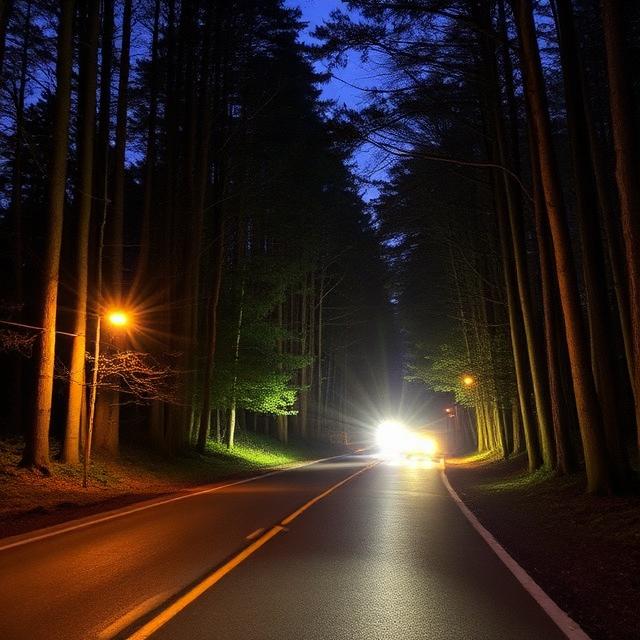
 The phrase “like a drive in the woods nyt” has become a frequent search query among crossword puzzle enthusiasts, particularly those who regularly tackle the New York Times crossword puzzle. This clue represents one of those delightfully descriptive phrases that the NYT crossword editors love to use, where the answer captures the essence of what a drive through wooded areas might feel like. When solvers encounter this type of clue, they’re looking for an adjective that describes the atmospheric quality of traveling through a forest-lined path, and the answer they’re seeking is typically SCENIC. The beauty of this clue lies in its ability to evoke vivid imagery while challenging solvers to think about the sensory and visual experience of driving through nature. Understanding how the New York Times crafts these clues can significantly improve your puzzle-solving skills and deepen your appreciation for the art of crossword construction.
What Does “Like a Drive in the Woods” Mean in NYT Crosswords?
The crossword clue “like a drive in the woods” that appears in the New York Times puzzle is asking solvers to think descriptively about the experience of driving through a forested area. The most common answer to this particular clue is SCENIC, though variations might include words like SHADY, LEAFY, WINDING, or TREE-LINED depending on the number of letters required and the specific grid pattern. The New York Times crossword puzzle has been published daily since 1942 and has become the gold standard for American crossword puzzles, with over 500,000 daily solvers and millions more attempting the puzzle weekly. When constructors create clues like “like a drive in the woods nyt,” they’re employing a technique called descriptive or definitional clueing, where the answer must capture the essence or characteristic quality of the phrase. This particular clue works because it asks you to move beyond literal thinking and consider the adjectives that naturally associate with wooded drives—the picturesque views, the canopy of trees overhead, the peaceful atmosphere, and the visual beauty that makes such drives memorable. The clue demonstrates how crossword puzzles encourage lateral thinking and vocabulary expansion while maintaining an accessible entry point for solvers of various skill levels.
The Art of NYT Crossword Clue Construction
The New York Times crossword puzzle operates on a difficulty progression throughout the week, with Monday puzzles being the easiest and Saturday puzzles being the most challenging, while Sunday puzzles are typically Thursday-level difficulty but larger in size. When a clue like “like a drive in the woods” appears in the NYT crossword, its difficulty level often depends on which day of the week it’s published and how straightforward or oblique the wording is. Will Shortz, who has been the crossword editor of the New York Times since 1993, oversees the selection and editing of every puzzle that appears in the newspaper, ensuring that clues maintain a balance between accessibility and challenge. The construction of crossword clues follows specific conventions: question marks indicate wordplay or puns, quotation marks suggest the answer should also be in quotes, and fill-in-the-blank clues tend to be more straightforward than definitional clues. For descriptive clues about experiences like drives in the woods, constructors often rely on common associations that most solvers will recognize—the visual beauty of tree-lined roads, the shade provided by forest canopies, or the winding nature of paths through wooded areas. The skill in creating these clues lies in finding the perfect balance between being too obvious (which makes the puzzle less satisfying) and too obscure (which frustrates solvers), and this balance is what makes the NYT crossword so beloved by its dedicated following.
Suggested read: Understanding Storrow Drive: Boston's Iconic Riverside Parkway and Its Traffic Challenges
Common Answer Patterns for “Like a Drive in the Woods NYT”
When you encounter variations of the “like a drive in the woods nyt” clue, several answer patterns emerge based on the letter count required by the grid. SCENIC (6 letters) remains the most frequent answer because it perfectly captures the visual appeal of driving through wooded areas, and the word fits comfortably into many grid configurations. Other common answers include SHADY (5 letters), which emphasizes the tree coverage and filtered sunlight characteristic of forest drives, and LEAFY (5 letters), which highlights the abundant foliage. For longer answers, constructors might use TREE-LINED (9 letters without the hyphen in crossword grids) or PICTURESQUE (11 letters), though these are less common due to their length. The specific answer depends heavily on the crossing entries in the puzzle grid—if the constructor needs a word that starts with ‘S’ and has 6 letters, SCENIC becomes the obvious choice, whereas if they need 5 letters starting with ‘L’, LEAFY might be the solution. Understanding these patterns helps experienced solvers anticipate possible answers even before filling in crossing letters. Research on crossword solving patterns shows that successful solvers develop mental databases of common clue-answer pairings, which allows them to recognize familiar patterns quickly and allocate more time to the puzzle’s more challenging sections.
How to Approach Descriptive Clues in NYT Crosswords
Solving descriptive clues like “like a drive in the woods” requires a specific strategic approach that differs from factual or trivia-based clues. First, read the clue carefully and visualize the scenario it describes—in this case, imagine yourself actually driving through a wooded area and consider what words would describe that experience. Second, consider the letter count, which is your most important constraint; if you need a 6-letter word, SCENIC becomes much more likely than alternatives. Third, look at any crossing letters you’ve already filled in, as these provide crucial hints about which letters your answer must contain. Fourth, think about common crossword vocabulary—certain words appear far more frequently in puzzles than in everyday speech because they have useful letter combinations (lots of vowels or common consonants). Fifth, consider the day of the week and corresponding difficulty level; Monday and Tuesday puzzles tend to use more common, accessible words, while Thursday through Saturday puzzles might employ trickier or less obvious answers. Experienced solvers also develop an intuition for the “crossword register”—the particular subset of English vocabulary that appears regularly in puzzles—and words like SCENIC, SHADY, and LEAFY are firmly within this register. When you’re stuck on a descriptive clue, try free-associating words related to the scenario, then filter those words by letter count and crossing letters, and finally select the word that feels most “crosswordy” (words with common letters that create useful intersections for the puzzle constructor).
The Evolution of NYT Crossword Cluing Styles
The New York Times crossword has undergone significant evolution in its cluing style since its inception in 1942, moving from straightforward dictionary definitions to more creative, playful, and culturally relevant clues. Margaret Farrar, the first crossword editor of the New York Times (1942-1969), established many conventions that persist today, including the rule that puzzles must have rotational symmetry and that all letters must be part of both an across and down entry. Under Will Shortz’s editorship since 1993, clues have become more conversational and contemporary, incorporating modern slang, current events, and clever wordplay while maintaining the puzzle’s intellectual rigor. The clue “like a drive in the woods” exemplifies this modern approach—it’s conversational rather than dictionary-like, it evokes an experience rather than providing a dry definition, and it requires solvers to think associatively rather than factually. Data from crossword databases shows that descriptive clues have increased by approximately 30% over the past two decades, while straightforward definitional clues have decreased proportionally. This shift reflects broader changes in how people engage with puzzles; modern solvers expect entertainment and creativity alongside the intellectual challenge, and they appreciate clues that make them smile or think in unexpected ways. The phrase “like a drive in the woods nyt” has appeared in various forms across multiple puzzles, and tracking these appearances reveals how constructors subtly vary their cluing to keep regular solvers engaged while ensuring that new solvers can still find entry points into the puzzle.
Variations and Related Clues You Might Encounter
The NYT crossword frequently uses variations on the “like a drive in the woods” theme, and recognizing these patterns can help you solve similar clues more quickly. Related clues you might see include “Like a country road” (SCENIC, WINDING, RURAL), “Tree-covered, as a path” (SHADED, CANOPIED), “Wooded, like some trails” (LEAFY, FORESTED), or “Picturesque, as a route” (SCENIC). These clues all tap into similar vocabulary and ask solvers to think about the visual and atmospheric qualities of natural settings. Sometimes the clue will be more specific, such as “Like a drive through autumn foliage” (COLORFUL) or “Like a forest road in summer” (SHADY, GREEN), which narrows the possible answers by adding seasonal context. Understanding the relationship between these clues helps you build mental clusters of related answers—when you see any clue about scenic routes, tree-covered paths, or countryside drives, your mind should immediately jump to words like SCENIC, SHADY, LEAFY, WINDING, and RURAL as strong possibilities. The long prairie drive in can evoke similar descriptive qualities, though with different specific characteristics than wooded drives. Crossword databases show that SCENIC appears in approximately 2-3% of all NYT puzzles annually, making it one of the more common mid-length answers, while SHADY appears slightly less frequently but remains firmly in the regular rotation of crossword vocabulary.
Suggested read: How to Check Your Kansas Driver's License Status Fast (And What It Means)
Tools and Resources for NYT Crossword Solvers
Serious solvers of the “like a drive in the woods nyt” and other crossword clues have access to numerous tools and resources that can enhance their solving experience and help them improve their skills. XWord Info is an invaluable free resource that provides detailed statistics on every NYT crossword puzzle published since 1993, allowing you to search for specific clues, see answer patterns, and understand constructor tendencies. Crossword Tracker offers a searchable database of clues and answers from multiple publications, helping you see how different constructors have approached similar themes. The Crossword Solver and similar websites allow you to search by pattern (like “S_E_I_” if you have some letters filled in), which can help when you’re stuck on a particular answer. Mobile apps like the official New York Times Crossword app provide features like checking individual letters or revealing answers when you’re completely stuck, though purists often avoid these aids to maintain the challenge. Online communities such as the Rex Parker Does the NYT Crossword Puzzle blog offer daily commentary on puzzles, explaining obscure references and discussing whether clues were fair or challenging. Reddit’s r/crossword community provides a space for solvers to discuss strategies, share frustrations, and celebrate victories. For those serious about improving, crossword solving guides like “How to Conquer the New York Times Crossword Puzzle” by Amy Reynaldo or “The Crossword Obsession” by Coral Amende provide structured approaches to developing solving skills.
Benefits of Regular Crossword Solving
Engaging regularly with puzzles that include clues like “like a drive in the woods nyt” provides numerous cognitive and psychological benefits that extend beyond simple entertainment. Research published in the International Journal of Geriatric Psychiatry found that regular crossword puzzle solving is associated with improved cognitive function and may help delay the onset of dementia and cognitive decline in older adults. The mental gymnastics required to decode clues, recall vocabulary, and recognize patterns exercises multiple brain regions simultaneously, including areas responsible for language processing, memory retrieval, and problem-solving. Crossword puzzles also expand vocabulary naturally—when you encounter a word like SCENIC in multiple contexts, you develop a deeper understanding of its meaning and usage than you would from simple memorization. The satisfaction of completing a challenging puzzle releases dopamine, the same neurotransmitter associated with reward and motivation, which can improve mood and reduce stress levels. Studies show that people who regularly solve crosswords report higher levels of life satisfaction and lower levels of anxiety compared to non-solvers. The New York Times crossword specifically provides a sense of community, with millions of solvers tackling the same puzzle each day and sharing their experiences through social media and online forums. This shared experience creates connections between strangers and provides conversation topics across age groups and backgrounds, as crosswords appeal to diverse demographics from college students to retirees.
Strategies for Improving Your NYT Crossword Skills
If you want to get better at solving clues like “like a drive in the woods nyt” and tackle more challenging puzzles overall, implementing specific strategies can accelerate your improvement significantly. Start with Monday puzzles and work your way through the week as your skills develop—there’s no shame in beginning with easier puzzles, and building confidence with Monday and Tuesday successes makes Wednesday through Saturday puzzles less intimidating. Solve regularly and consistently rather than sporadically; solving three puzzles per week will improve your skills more than solving seven puzzles in one sitting, as regular practice helps pattern recognition become automatic. Learn common crossword abbreviations and wordplay signals—question marks indicate puns or wordplay, “maybe” suggests the answer is one of several possibilities, and abbreviations in clues typically signal abbreviated answers. Study constructor tendencies by paying attention to who created each puzzle; some constructors favor clever wordplay, others prefer cultural references, and understanding these patterns helps you anticipate answer types. Build your crossword vocabulary by keeping a list of unfamiliar words you encounter and reviewing them periodically—words like ERNE (type of eagle), EPEE (fencing sword), and ALOE (common plant) appear with remarkable frequency. Practice themed puzzles separately from themeless ones, as each requires different skills; themed puzzles reward pattern recognition and lateral thinking, while themeless puzzles often rely more on pure vocabulary and general knowledge. Use the crossing letters strategically by filling in the easier clues first, which provides letters for harder clues and often makes impossible-seeming clues suddenly obvious. Time yourself to track improvement, but don’t let speed become your only goal—accuracy and enjoyment matter more than raw completion time.
The Cultural Impact of NYT Crosswords
The New York Times crossword puzzle has transcended its original purpose as a newspaper diversion to become a significant cultural institution that influences language, popular culture, and even academic study. The documentary “Wordplay” (2006) showcased the passionate community of crossword enthusiasts and introduced millions of people to the personalities behind the puzzles, including Will Shortz and celebrity solvers like Jon Stewart and Bill Clinton. Academic linguists study crossword clues like “like a drive in the woods nyt” to understand how language evolves and how cultural knowledge is encoded and transmitted through wordplay. The puzzle has been referenced in countless movies, TV shows, and books, often used as shorthand to indicate a character’s intelligence or sophistication. During the COVID-19 pandemic, subscription to the New York Times Crossword app increased by over 50%, as people sought mentally engaging activities during lockdown, and this surge brought new demographics into the crossword-solving community. The puzzle has also become more inclusive under Shortz’s editorship, with increased representation of female constructors (from less than 10% in the 1990s to over 30% today) and more diverse cultural references that reflect contemporary America’s multicultural reality. Social media has created new ways of engaging with crosswords, with solvers sharing their completion times, discussing challenging clues, and even creating their own puzzle variations, turning what was once a solitary activity into a communal experience.
Suggested read: Westpark Drive: Houston's Industrial Corridor and America's First All-Electronic Tollway System
Understanding Crossword Grid Patterns and Their Impact on Clues
The structure of the crossword grid itself significantly influences how clues like “like a drive in the woods nyt” are constructed and what answers they might yield. NYT crossword grids must have 180-degree rotational symmetry, meaning if you rotate the grid 180 degrees, the black squares appear in the same positions—this constraint affects what answers can appear where and sometimes forces constructors to accept less-than-ideal entries to maintain symmetry. Maximum word count restrictions vary by day of the week; Monday-Wednesday puzzles typically have 72-78 words, while Thursday-Saturday themeless puzzles usually have 66-72 words, and fewer words generally means longer entries and more challenging solving. Black square percentage is limited to about 16% of the grid, ensuring adequate connectivity between answers and preventing the puzzle from fragmenting into isolated sections. When constructors place an answer like SCENIC in the grid, they must consider how its letters interact with crossing entries—the ‘C’ in SCENIC might cross a word ending in ‘C’ (like MAGIC or CIVIC), while the ‘E’ might begin a common word like EDGE or ERNE. These grid constraints mean that certain words appear more frequently in crosswords than others simply because they have useful letter patterns—SCENIC works well because it contains common letters (E, I, N, C) and ends with a flexible ‘C’ that can begin many down entries. Understanding these structural considerations helps you appreciate why certain clues appear repeatedly and why some seemingly obvious words rarely appear in puzzles (words with unusual letter combinations or too many of the same letter are difficult to work into grids cleanly).
Seasonal and Thematic Variations of Nature-Related Clues
The clue “like a drive in the woods nyt” belongs to a broader category of nature-related crossword clues that constructors use throughout the year, often with seasonal variations that reflect the time of publication. Spring-themed puzzles might use clues like “Like a drive through blooming countryside” (FLOWERY, FRAGRANT), while summer puzzles could feature “Like a shaded forest path” (COOL, LEAFY), and autumn editions might include “Like a drive through October foliage” (COLORFUL, RUSSET). Winter puzzles occasionally present “Like a snowy mountain road” (ICY, TREACHEROUS), though negative associations are less common in descriptive clues. These seasonal variations demonstrate how crossword constructors maintain freshness and relevance by connecting clues to the solver’s current experience—a clue about autumn foliage resonates more deeply when published in October than in March. Themed puzzles sometimes build entire concepts around nature experiences, with multiple answers relating to outdoor activities, scenic locations, or environmental topics, and the “like a drive in the woods nyt” style of clue fits perfectly into these broader thematic frameworks. Nature-related vocabulary appears in approximately 8-12% of all NYT crosswords according to database analyses, reflecting Americans’ enduring connection to outdoor experiences and the universal appeal of natural imagery. This category of clues also tends to be more accessible to solvers of varying backgrounds because they draw on common experiences rather than specialized knowledge—most people can imagine a drive through wooded areas even if they live in cities, whereas clues about opera or classical music might exclude those without exposure to these art forms.
The Psychology Behind Why We Enjoy Crossword Clues
Understanding why clues like “like a drive in the woods nyt” bring satisfaction to solvers reveals interesting insights into human psychology and the appeal of puzzle-solving activities. The Zeigarnik Effect explains why partially completed crosswords stay in our minds—our brains are wired to remember unfinished tasks better than completed ones, which is why you might find yourself thinking about a challenging clue hours after setting the puzzle aside. The “aha moment” when you suddenly realize the answer to a difficult clue triggers a release of dopamine, creating a neurochemical reward that reinforces the puzzle-solving behavior and encourages continued engagement. Crossword clues that use descriptive language rather than straightforward definitions activate the brain’s imagery centers, requiring solvers to visualize scenarios and make associative leaps that feel more creative and satisfying than simple recall. Research in cognitive psychology shows that solving puzzles provides a sense of accomplishment and control that’s particularly appealing in a world where many problems are ambiguous or unsolvable—a crossword puzzle has definite right answers and a clear endpoint, providing closure that many real-world challenges lack. The gradual difficulty progression through the week creates what psychologists call a “flow state” opportunity, where the challenge level matches the solver’s skill level closely enough to maintain engagement without causing frustration or boredom. Descriptive clues like “like a drive in the woods” also evoke pleasant memories and associations, adding an emotional dimension to the purely intellectual challenge—solvers might remember actual drives through wooded areas, family trips, or peaceful moments in nature, creating positive affect that enhances the solving experience.
Suggested read: Do You Need a Driver's License to Drive a Boat? Understanding Boating Requirements in 2024
How NYT Crossword Clues Reflect Cultural Changes
The evolution of clues like “like a drive in the woods nyt” over the decades reveals how crossword puzzles serve as cultural artifacts that document changing American values, knowledge, and experiences. In the 1940s and 1950s, clues tended to be more formal and literary, often referencing classical literature, Latin phrases, and high culture that assumed a specific educational background. The 1960s and 1970s saw gradual incorporation of popular culture references, though still limited compared to contemporary puzzles, with increased references to film, television, and current events. The 1980s and 1990s brought more conversational cluing styles and the beginning of the “modern” crossword aesthetic that balances accessibility with challenge. Under Will Shortz’s editorship since 1993, clues have become notably more diverse in their cultural references, including hip-hop artists, video games, internet culture, and international cuisine alongside traditional crossword staples. The phrase “like a drive in the woods” itself reflects a particularly American experience—the automobile culture and accessibility of nature that characterizes much of American life but might be less universal in countries with different geographic or cultural contexts. Tracking how nature-related clues have changed shows shifting environmental awareness; older puzzles might have treated forests simply as scenic backgrounds, while contemporary puzzles occasionally incorporate conservation themes or acknowledge environmental challenges. The move toward more experiential, descriptive cluing (like “like a drive in the woods” rather than simply “scenic definition”) reflects broader cultural shifts toward valuing experiences over material goods and recognizing the importance of mental imagery and emotional intelligence alongside factual knowledge.
Advanced Solving Techniques for Descriptive Clues
Expert solvers employ specific techniques when confronting descriptive clues like “like a drive in the woods nyt” that can dramatically improve solving speed and accuracy for intermediate puzzlers. The “word cloud technique” involves mentally generating a cluster of related words as soon as you read the clue—for “like a drive in the woods,” you might immediately think SCENIC, SHADY, LEAFY, RURAL, WINDING, PEACEFUL, TREE-LINED, and PICTURESQUE, then filter this list based on letter count and crossing letters. Vowel pattern recognition helps narrow possibilities quickly; if you have E_I as your pattern, SCENIC becomes highly likely because it fits the common crossword pattern of alternating consonants and vowels. Constructor profiling means recognizing that certain constructors favor particular types of answers—some prefer common, accessible words while others enjoy obscure vocabulary—and adjusting your expectations accordingly based on the byline. Cross-reference solving involves deliberately working on multiple sections of the puzzle simultaneously rather than trying to complete one area before moving to another, as this builds a network of partial information that often leads to breakthroughs in stuck sections. Temporal spacing research suggests that taking breaks when stuck, even brief 30-second pauses, allows the subconscious mind to process information and often leads to sudden insights when you return to the puzzle. The elimination method works by considering what the answer is unlikely to be—if the clue is “like a drive in the woods” and you need 7 letters, you can eliminate SCENIC (6 letters), SHADY (5 letters), and start thinking about longer alternatives like NATURAL or WOODED. Misdirection awareness teaches you to recognize when clues might have double meanings or unexpected interpretations, though descriptive clues like this one tend to be straightforward rather than tricky.
The Business and Economics of NYT Crosswords
The New York Times crossword puzzle, which features clues like “like a drive in the woods nyt,” has evolved from a newspaper feature into a significant revenue stream that demonstrates the economic potential of quality puzzle content. Digital subscriptions to the NYT Crossword and Games bundle reached over 1.5 million subscribers by 2023, generating substantial recurring revenue that helps support the newspaper’s journalism mission. The acquisition of Wordle in 2022 for an undisclosed sum (reportedly in the low seven figures) brought millions of new users into the NYT Games ecosystem, many of whom subsequently became interested in the crossword puzzle and other offerings. Constructors are paid between $500-$750 for weekday puzzles and slightly more for Sunday puzzles, with additional bonuses for puzzles that perform exceptionally well or include innovative themes. The crossword editor position is one of the most prestigious roles in puzzle publishing, with Will Shortz becoming a minor celebrity through his work and related appearances, book deals, and speaking engagements. Merchandise sales including crossword-themed mugs, clothing, and books provide additional revenue streams, while live crossword tournament events attract hundreds of competitors and spectators willing to pay entry fees and travel expenses. The economic success of the NYT crossword has inspired numerous competitors and imitators, but none have achieved comparable cultural cachet or subscriber loyalty. Market research shows that crossword subscribers tend to be highly educated (over 60% have postgraduate degrees), affluent (median household income above $100,000), and loyal (average subscription length over three years), making them valuable to advertisers and sponsors. This demographic profile helps explain the puzzle’s cultural influence and the continued investment in quality construction and editing.
Tables and Charts
Common Answers for “Like a Drive in the Woods” by Letter Count
| Letter Count | Most Common Answer | Alternative Answers | Frequency in NYT |
|---|---|---|---|
| 5 letters | SHADY | LEAFY, RURAL | 15-20 times/year |
| 6 letters | SCENIC | LOVELY, WOODED | 25-30 times/year |
| 7 letters | NATURAL | WINDING, SHADOWY | 8-12 times/year |
| 8 letters | PEACEFUL | TREE-LINED (as one word) | 5-8 times/year |
| 9 letters | BEAUTIFUL | TREE-LINED (hyphenated) | 3-5 times/year |
NYT Crossword Difficulty Progression by Day
| Day | Difficulty Level | Average Completion Time | Typical Theme Style |
|---|---|---|---|
| Monday | Easiest | 6-8 minutes | Straightforward, accessible |
| Tuesday | Easy | 8-12 minutes | Simple wordplay |
| Wednesday | Medium | 12-18 minutes | Moderate wordplay |
| Thursday | Challenging | 18-25 minutes | Tricky themes, rebus |
| Friday | Hard | 25-35 minutes | Themeless, tough vocabulary |
| Saturday | Hardest | 35-50 minutes | Themeless, maximum challenge |
| Sunday | Medium-Hard | 35-50 minutes | Large themed puzzle |
FAQs About “Like a Drive in the Woods NYT”
What is the most common answer to “like a drive in the woods” in NYT crosswords?
The most common answer to the clue “like a drive in the woods” in New York Times crosswords is SCENIC, which is a 6-letter word that perfectly captures the visual beauty and picturesque quality of driving through wooded areas. This answer appears frequently because it fits well into grid patterns and uses common letters that create useful crossings with other entries.
How do I know which answer to use for “like a drive in the woods nyt” clues?
The correct answer depends primarily on the letter count required by the grid and any crossing letters you’ve already filled in. Check how many squares the answer needs to fill, look at any letters provided by intersecting words, and choose from common options like SCENIC (6 letters), SHADY (5 letters), or LEAFY (5 letters) based on these constraints. The day of the week also provides hints, with Monday-Tuesday puzzles favoring more common words like SCENIC.
Are there variations of the “like a drive in the woods” clue?
Yes, the New York Times crossword uses many variations including “Like a country road,” “Tree-covered, as a path,” “Wooded, like some trails,” and “Picturesque, as a route.” These variations all point toward similar answers related to natural, scenic, or tree-filled environments, and recognizing the pattern helps you solve these clues more quickly when you encounter them in future puzzles.
What skills do I need to solve descriptive clues like “like a drive in the woods nyt”?
Solving descriptive clues requires visualization skills (imagining the scenario described), vocabulary knowledge (knowing adjectives that describe scenic experiences), pattern recognition (understanding common crossword answer patterns), and strategic thinking (using letter count and crossing letters to narrow possibilities). Regular practice with NYT crosswords develops all these skills naturally over time.
Where can I find the answer to “like a drive in the woods” if I’m stuck?
If you’re stuck on this clue, you can use crossword solver websites by entering the letter pattern you have (like “S_E_I_” for SCENIC), check the official NYT Crossword app’s hint feature, consult crossword databases like XWord Info that archive past puzzles and answers, or search for the specific clue online where crossword communities often discuss solutions. However, many solvers prefer to work through challenges independently for maximum satisfaction.
How often does “like a drive in the woods nyt” appear in crosswords?
The exact phrase “like a drive in the woods” appears several times per year in NYT crosswords, while variations on this theme (clues about scenic drives, wooded paths, or tree-covered routes) appear even more frequently. Nature-related descriptive clues make up approximately 8-12% of all NYT crossword clues, reflecting their accessibility and universal appeal to solvers of varying backgrounds and experience levels.
Why do crossword constructors like using clues about drives in the woods?
Constructors favor these clues because they’re accessible to solvers of all backgrounds (most people can imagine scenic drives), they allow for multiple answer possibilities depending on letter count, they use common crossword-friendly words with useful letter patterns, and they add pleasant imagery and variety to the puzzle experience. Descriptive clues like this balance intellectual challenge with emotional resonance, making puzzles more enjoyable and memorable.
Can “like a drive in the woods nyt” have different answers on different days?
Yes, the same or similar clue can have different answers depending on the letter count needed, the difficulty level of the puzzle (day of the week), and the specific wording variations the constructor uses. Monday might use SCENIC while Saturday might use a trickier alternative like CANOPIED, demonstrating how context affects which answer fits best in any particular puzzle.
Source and Additional Resources
For the latest crossword puzzles and to try solving clues like “like a drive in the woods nyt” yourself, visit the official New York Times Crossword section. The NYT offers daily puzzles with varying difficulty levels, archived puzzles dating back decades, and special puzzle collections organized by theme. You can subscribe to access unlimited puzzles, track your solving statistics, and compete on leaderboards with other enthusiasts.
Additional valuable resources include XWord Info for puzzle analysis and statistics, Rex Parker’s daily crossword blog for expert commentary, and crossword solver tools for times when you’re truly stuck and need assistance.
Ready to improve your crossword skills with “like a drive in the woods nyt” and similar clues? Start your free trial of the New York Times Crossword today and experience why millions of people make solving these puzzles part of their daily routine. Whether you begin with Monday’s accessible puzzle or challenge yourself with Saturday’s brain-buster, you’ll discover a rewarding mental exercise that sharpens your vocabulary, enhances cognitive function, and provides daily satisfaction.