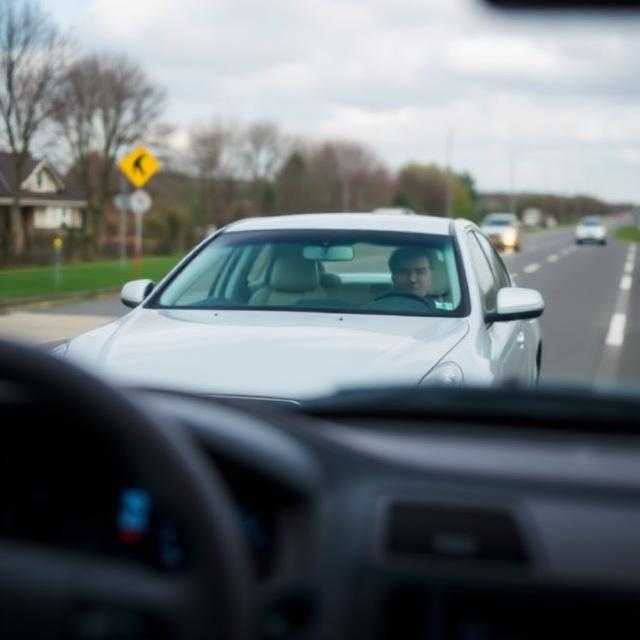
Getting hit by an uninsured driver is a stressful and often frustrating experience. Not only do you deal with injuries, vehicle damage, and medical bills, but you also face the additional challenge of recovering compensation from someone who may not have the financial resources to pay you. The question that runs through your mind is simple: Can I sue an uninsured driver, and if so, how?
The answer is yes—you can sue an uninsured driver, but the process requires understanding your legal options, available resources, and the right strategy to maximize your recovery. This comprehensive guide walks you through everything you need to know about pursuing a lawsuit against an uninsured motorist, from understanding your rights to navigating the legal system effectively.
Whether you were injured in a minor fender-bender or a serious collision, knowing how to sue an uninsured driver properly can mean the difference between recovering nothing and receiving the full compensation you deserve. Let’s explore your options.
Understanding Uninsured Drivers: The Growing Problem
Why Uninsured Drivers Are a Major Concern
Driving without insurance is illegal in most states, yet millions of uninsured drivers remain on roads across the United States. According to recent data, approximately 12.6% of drivers in the U.S. lack auto insurance, translating to roughly 27 million uninsured motorists. This creates a significant problem for insured drivers who may fall victim to accidents they didn’t cause.
When you’re injured by an uninsured driver, the situation becomes complicated because:
- The at-fault driver likely lacks the financial resources to pay for your damages
- You cannot file a claim directly against their insurance policy (because they don’t have one)
- Your own insurance coverage becomes crucial in determining your recovery options
- Legal action becomes necessary to recover compensation from the negligent party
Understanding this landscape helps you appreciate why knowing how to properly sue an uninsured driver is essential for protecting your financial interests.
Types of Uninsured Drivers You Might Encounter
Not all uninsured drivers are the same, and the type of motorist you encounter affects your recovery options:
| Type of Uninsured Driver | Definition | Recovery Implications |
|---|---|---|
| Completely Uninsured | No auto insurance policy at all | Limited recovery options; must rely on UM coverage or personal lawsuit |
| Minimum Coverage Driver | Only carries minimum state-required liability | May have some coverage but insufficient to cover all damages |
| Policy Lapsed | Had insurance but policy expired | Potential grounds for additional claims; driver was negligent |
| Suspended Coverage | Insurance company cancelled policy | May create additional liability for the insurance company |
Your Legal Rights When Hit by an Uninsured Driver
Can You Actually Sue an Uninsured Driver?
Yes, you absolutely have the legal right to sue an uninsured driver, regardless of whether they carry insurance. Your right to sue stems from the principle of negligence—if the driver’s actions caused your injuries and damages, they bear legal responsibility for those damages.
However, understanding the difference between your right to sue and your ability to collect compensation is critical. You have the right to pursue legal action, but collecting from an uninsured driver requires either:
- Their personal assets (if they have significant savings, property, or income)
- Judgment enforcement mechanisms (wage garnishment, asset seizure)
- Your own insurance coverage (uninsured motorist insurance)
- Court-ordered payment plans
State Laws Protecting You Against Uninsured Drivers
Every state has laws addressing accidents involving uninsured motorists. Most states require one of two protections:
Suggested read: Unlicensed Driver in Accident Not at Fault: Your Rights and Legal Options Explained
Uninsured Motorist (UM) Coverage Most states require drivers to carry uninsured motorist coverage or explicitly reject it in writing. This coverage protects you when hit by an uninsured driver and covers medical expenses, lost wages, and pain and suffering up to your policy limits.
Underinsured Motorist (UIM) Coverage Some states require underinsured motorist coverage, which applies when the at-fault driver’s insurance limits don’t cover all your damages. This is crucial because it bridges the gap between their insufficient coverage and your actual losses.
Understanding Negligence in These Cases
To successfully sue an uninsured driver, you must prove negligence by establishing four key elements:
- Duty of Care – The driver had a legal obligation to operate their vehicle safely and follow traffic laws
- Breach of Duty – The driver violated that duty through negligent or reckless actions (speeding, running red lights, texting while driving, etc.)
- Causation – The driver’s breach directly caused the accident
- Damages – You suffered measurable losses as a result (medical bills, lost wages, property damage, pain and suffering)
Proving these elements requires evidence such as police reports, witness statements, medical records, photographs, and expert testimony. The stronger your evidence, the more likely you’ll successfully recover compensation when you sue an uninsured driver.
Steps to Sue an Uninsured Driver: A Practical Roadmap
Step 1: Document Everything at the Scene
The foundation of a successful lawsuit against an uninsured driver begins immediately after the accident. Take these critical steps:
Gather Essential Information:
- Get the driver’s name, phone number, address, and driver’s license number
- Document their vehicle’s make, model, color, and license plate
- Collect names and contact information from all witnesses
- Take detailed photographs of vehicle damage, accident scene, traffic signals, road conditions, and street signs
- Obtain the police report number and responding officer’s information
- Document your injuries with photographs taken over days and weeks
Medical Documentation:
- Seek immediate medical attention, even for seemingly minor injuries
- Keep all medical records, bills, and receipts
- Document all treatment, prescriptions, and therapy sessions
- Maintain records of lost wages and reduced work capacity
This documentation becomes crucial evidence when you sue an uninsured driver, as it establishes the severity of the accident and the legitimacy of your damages.
Step 2: Report to Your Insurance Company
Immediately notify your insurance company about the accident. Provide:
- Complete accident details
- Police report information
- Evidence of the other driver’s uninsured status
- All documentation you collected at the scene
Your insurance company will investigate the claim and determine what coverage applies under your policy. If you carry uninsured motorist coverage, this step is essential for accessing those benefits.
Step 3: Consult with an Attorney
Before proceeding with formal legal action, consult with a personal injury attorney who handles uninsured driver cases. Most offer free consultations and work on contingency, meaning they only collect fees if you win your case.
Suggested read: Hit by DUI Driver: Your Rights, Compensation, and Legal Options Explained
An experienced attorney will:
- Evaluate your case – Determine the strength of your claim and potential recovery
- Investigate thoroughly – Gather evidence, interview witnesses, and reconstruct the accident
- Negotiate with insurance – If you have UM coverage, negotiate a fair settlement
- File a lawsuit – If necessary, initiate formal legal proceedings against the uninsured driver
- Manage discovery – Handle the exchange of evidence and witness statements
- Represent you in court – Advocate for your interests before a judge or jury
Having legal representation significantly increases your chances of maximizing recovery when you sue an uninsured driver.
Step 4: Attempt Settlement Negotiations
Before going to court, most cases settle through negotiation. Your attorney will:
- Prepare a demand letter outlining your damages and legal claims
- Calculate fair compensation based on comparable cases and your specific injuries
- Negotiate with the uninsured driver’s attorney or the driver directly
- Propose reasonable settlement amounts
Settlement offers numerous advantages: lower costs, faster resolution, and guaranteed payment rather than risky litigation. However, don’t accept the first offer if it doesn’t adequately compensate you for your losses.
Step 5: File a Lawsuit (If Settlement Fails)
If negotiations don’t produce an acceptable settlement, filing a lawsuit becomes necessary. This involves:
Filing the Complaint:
- Your attorney files a formal complaint in the appropriate court
- The complaint details the accident, the driver’s negligence, and the damages you’re seeking
- You become the plaintiff, and the uninsured driver becomes the defendant
Service of Process:
- The defendant must be officially notified of the lawsuit
- This typically involves a process server delivering the complaint and summons
Discovery Phase:
- Both sides exchange evidence, documents, and witness statements
- Depositions allow attorneys to question the other party under oath
- This phase typically lasts several months
Pre-Trial Motions:
- Attorneys file motions addressing procedural and legal issues
- Some cases are dismissed at this stage if the plaintiff cannot prove their case
Trial:
- If no settlement is reached, the case proceeds to trial before a judge or jury
- Both sides present evidence and arguments
- A judgment is rendered in favor of one party
Understanding Damages You Can Recover
Economic Damages: Quantifiable Losses
Economic damages represent the actual financial losses you’ve incurred as a result of the accident. These are typically easier to prove because they’re supported by receipts, bills, and documentation.
Suggested read: Uninsured Driver Lawyer: Your Legal Rights After a Crash
Medical Expenses:
- Emergency room and hospital bills
- Surgery and anesthesia costs
- Doctor visits and specialist consultations
- Physical therapy and rehabilitation
- Prescription medications
- Medical devices and equipment
- Future medical treatment related to your injuries
Lost Wages and Income:
- Wages lost during recovery and medical treatment
- Lost earning capacity if your injuries prevent you from returning to your previous job
- Self-employment income losses
- Reduced hours or inability to work overtime
Property Damage:
- Vehicle repair or replacement costs
- Personal property damaged in the accident (phone, clothing, luggage, etc.)
Other Economic Losses:
- Childcare costs while you recovered
- Home maintenance services you couldn’t perform
- Transportation costs (rental car, Uber, public transit)
Non-Economic Damages: Subjective Losses
Non-economic damages compensate you for subjective, non-financial losses. While harder to quantify, courts recognize their legitimate value.
Pain and Suffering: The physical pain, discomfort, and suffering you endured because of your injuries. Courts consider factors like:
- Severity and duration of pain
- Type and invasiveness of medical treatment
- Permanent scarring or disfigurement
- Limitations on daily activities
Emotional Distress:
- Anxiety and fear of driving after the accident
- Depression and psychological trauma
- Sleep disturbances
- Post-traumatic stress disorder (PTSD)
Loss of Enjoyment of Life:
- Inability to participate in hobbies and activities
- Missed vacations or special events
- Reduced quality of social relationships
- Permanent lifestyle changes
Permanent Disability or Disfigurement: When injuries result in permanent impairment, you can recover for:
- Permanent scarring or disfigurement
- Loss of limb or function
- Chronic pain conditions
- Reduced life expectancy
Calculating Appropriate Compensation
The Multiplier Method: Many attorneys use this formula: Total Economic Damages × Multiplier (1-5) = Non-Economic Damages
The multiplier depends on injury severity:
Suggested read: What Happens If an Insured Driver Hits an Uninsured Driver: Your Complete Protection Guide
- Minor injuries (soft tissue): 1-2x multiplier
- Moderate injuries (broken bones, surgery): 2-3x multiplier
- Severe injuries (permanent disability): 4-5x multiplier
Example Calculation:
- Medical bills: $50,000
- Lost wages: $20,000
- Total economic damages: $70,000
- Multiplier (serious injury): 3x
- Pain and suffering: $210,000
- Total recovery: $280,000
Uninsured Motorist Insurance: Your Safety Net
What Is Uninsured Motorist (UM) Coverage?
Uninsured motorist insurance is coverage you carry on your own policy to protect you when hit by an uninsured driver. Rather than suing the uninsured driver directly, you file a claim against your own insurance company, which then compensates you for your damages.
This coverage is invaluable because:
- Guarantees payment – Your insurance company must pay (up to your policy limits) rather than relying on the uninsured driver’s ability to pay
- Faster resolution – Claims typically settle faster than lawsuits
- No judgment collection issues – You don’t need to chase down an uninsured driver for payment
- Provides peace of mind – You have a safety net if hit by uninsured motorist
UM Coverage Limits: Choosing Adequate Protection
UM coverage limits vary, and choosing appropriate limits is crucial. Common limit options are:
- $25,000/$50,000 (minimal protection)
- $100,000/$300,000 (better protection)
- $250,000/$500,000 (comprehensive protection)
- Higher limits available in some states
The recommended approach: Choose UM limits equal to or exceeding your liability coverage limits. If you carry $100,000 in liability, carry at least $100,000 in UM coverage.
Underinsured Motorist (UIM) Coverage: The Extra Layer
Underinsured motorist coverage applies when the at-fault driver carries some insurance, but the coverage limits don’t fully cover your damages. UIM picks up where their insurance ends.
Example:
- At-fault driver has $50,000 liability coverage
- Your damages total $200,000
- Their insurance pays $50,000
- Your UIM coverage (with $200,000 limits) pays the remaining $150,000
- You recover full compensation
How to File a UM/UIM Claim
The typical process includes:
- Notify your insurer – Report the accident and provide documentation of the other driver’s uninsured status
- Submit medical records – Provide comprehensive documentation of all injuries and treatment
- Document damages – Submit receipts, bills, and evidence of all losses
- Receive initial offer – Your insurance company evaluates your claim and makes an offer
- Negotiate if needed – If the offer is insufficient, counter and negotiate
- Settle or proceed to arbitration – Most claims settle; some go to binding arbitration
Alternative Recovery Options When Suing an Uninsured Driver
Pursuing a Judgment Against the Uninsured Driver
If you don’t have UM coverage or if your UM limits are insufficient, you can pursue a personal lawsuit against the uninsured driver. Obtaining a judgment is just the first step; collecting it requires additional action.
Judgment Enforcement Tools:
| Enforcement Method | How It Works | Effectiveness |
|---|---|---|
| Wage Garnishment | Court orders employer to withhold percentage of wages | Effective but slow if driver has low income |
| Bank Account Levy | Court freezes and seizes funds from bank accounts | Effective if driver maintains account balance |
| Property Lien | Judgment becomes lien on real estate | Effective if driver owns property; paid when property is sold |
| Asset Seizure | Sheriff seizes personal property for auction | Effective only if driver owns valuable assets |
| Contempt of Court | Driver faces jail time for refusing to pay judgment | Motivates payment but results vary |
Collection Reality: According to research, 33-40% of judgments against uninsured drivers go uncollected because the defendants lack sufficient assets or income. This is why uninsured motorist insurance is so valuable—it guarantees payment regardless of the driver’s financial situation.
Suggested read: When Suing an Uninsured Driver for Damages Makes Sense (And When It Doesn't)
Claims Against the Uninsured Driver’s Household
If the uninsured driver lives in a household with other insured drivers, you may be able to claim against their household members’ insurance in some states. This depends on:
- State negligent entrustment laws
- Whether the vehicle owner knew the driver was uninsured
- Household member liability coverage provisions
Subrogation Rights
If your health insurance, workers’ compensation, or other coverage paid for your medical treatment, those entities may have subrogation rights—the right to be reimbursed from your recovery. This doesn’t reduce your recovery; rather, they take their portion from the settlement or judgment.
Working with an Attorney: Making the Right Choice
Why You Need Legal Representation
When you sue an uninsured driver, having an experienced attorney significantly improves your outcomes. Statistics show:
- Represented clients recover 3-4x more than unrepresented clients
- Settlements are faster when attorneys are involved
- Evidence is stronger due to professional investigation
- Procedural mistakes are avoided that could jeopardize your case
What to Look for in an Uninsured Driver Attorney
Essential Qualifications:
- Specialization in personal injury law with specific experience in uninsured driver cases
- Proven track record with successful settlements and trial victories
- Understanding of UM/UIM coverage in your state
- Contingency fee arrangement (no upfront costs, fees only from recovery)
- Resources for investigation – ability to hire accident reconstructionists, medical experts, and investigators
- Trial experience – willingness to take cases to court rather than settling for low offers
- Communication skills – clear explanation of your options and regular updates
The Contingency Fee Model
Most personal injury attorneys work on contingency, meaning:
- No upfront costs to you
- Attorney fee is percentage of recovery (typically 33-40%)
- You pay nothing if you lose
- Attorney covers case costs (investigation, expert witnesses, court fees) usually reimbursed from your settlement
Example:
- Your settlement: $100,000
- Attorney fee (33%): $33,000
- Attorney costs: $5,000
- Your net recovery: $62,000
This arrangement aligns your attorney’s interests with yours—they only profit if you win and recover significant compensation.
Red Flags When Choosing an Attorney
Avoid attorneys who:
- Pressure you to accept settlements quickly
- Guarantee specific settlement amounts (no honest attorney can do this)
- Don’t specialize in personal injury law
- Can’t explain their fees clearly
- Have poor online reviews or disciplinary history
- Don’t return calls promptly
- Lack trial experience (many settle too low to avoid court)
Common Challenges When Suing Uninsured Drivers
Challenge 1: Proving the Driver Was Uninsured
Even if you have strong evidence of the accident, the uninsured driver may deny lacking insurance. Proof of uninsured status requires:
- Police report documenting the uninsured status
- DMV records showing no active insurance
- Insurance company verification confirming no policy
- Testimony from the driver or witnesses
Working with an attorney ensures these records are properly obtained and presented.
Suggested read: Uninsured Driver Lawyer: Your Path to Fair Compensation After an Accident
Challenge 2: Driver’s Inability to Pay
The most common problem when suing an uninsured driver is collection failure. Even if you win a judgment, collecting from someone without assets or stable income is extremely difficult.
Solutions:
- Pursue UM/UIM coverage if available
- Obtain judgment and use enforcement mechanisms (garnishment, liens)
- Negotiate payment plans
- Wait to collect if the driver later gains assets or employment
This is why uninsured motorist insurance is essential—it bypasses the collection problem entirely.
Challenge 3: Comparative Negligence
Some accidents involve fault on both sides. If you bear some responsibility for the accident, your recovery is reduced by your percentage of fault.
Example:
- Your damages: $100,000
- You were 20% at fault
- Your recovery: $80,000 (reduced by your percentage of fault)
Your attorney must prove the uninsured driver bore the majority of blame to maximize your recovery.
Challenge 4: Statute of Limitations
Each state has a time limit for filing personal injury lawsuits—typically 2-3 years from the accident date. Missing this deadline eliminates your legal right to sue.
Action required: Contact an attorney promptly after your accident to ensure compliance with your state’s deadline.
Challenge 5: Insufficient Insurance Evidence
Sometimes you may mistakenly believe the driver was uninsured when they actually carried coverage under a different name or policy. Proper investigation prevents costly legal mistakes.
Case Study: Real-World Example of Suing an Uninsured Driver
The Scenario:
Sarah was stopped at a red light when an uninsured driver rear-ended her vehicle at approximately 40 mph. The impact caused her to suffer whiplash, a fractured shoulder, and anxiety about driving.
Suggested read: Drunk Driver Accident Attorney: Your Path to Justice and Maximum Compensation After an Impaired Driving Crash
Initial Situation:
- Uninsured driver had no insurance and limited assets
- Sarah had UM coverage with $100,000 limits
- Her damages included $35,000 in medical bills, $15,000 in lost wages, and significant pain and suffering
- She felt pressured to accept a low settlement offer
The Legal Process:
Sarah hired an attorney who:
- Thoroughly documented all medical treatment and lost wages
- Obtained expert evaluation of her chronic pain condition
- Proved the driver’s negligence through police reports and witness testimony
- Negotiated with Sarah’s UM insurance carrier
- Emphasized long-term consequences of her shoulder injury
The Outcome:
Instead of accepting the initial $40,000 offer, the attorney negotiated a settlement of $95,000 (nearly her UM policy limits). This included:
- All medical expenses: $35,000
- Lost wages: $15,000
- Pain and suffering and permanent injury compensation: $45,000
Sarah received full compensation for her damages and covered her losses completely.
Related Content: Hit By Drunk Driver Settlement
If your accident involved a drunk driver, the legal landscape changes significantly. Learn more about hit by drunk driver settlement options, as drunk driving cases often involve enhanced damages and punitive damages not available in standard negligence cases.
Frequently Asked Questions About Suing Uninsured Drivers
Can I sue an uninsured driver if I don’t have uninsured motorist insurance?
Yes, you can absolutely sue an uninsured driver without UM coverage. However, your recovery depends on the driver’s ability to pay. You can obtain a judgment, but collecting it may be difficult if the driver lacks assets or stable income. This is why UM coverage is highly recommended—it ensures payment regardless of the driver’s financial situation.
How much can I recover when I sue an uninsured driver?
The amount you can recover depends on your damages:
- Economic damages include medical bills, lost wages, and property damage (fully recoverable)
- Non-economic damages include pain and suffering and emotional distress (typically 1-5x economic damages)
- Total recovery typically ranges from modest amounts for minor injuries to six figures for serious injuries
Your attorney can calculate appropriate compensation based on comparable cases and your specific circumstances.
Can I sue an uninsured driver if I was partially at fault?
Yes, you can sue even if partially at fault in most states. However, your recovery will be reduced by your percentage of fault. For example, if you’re 20% at fault and have $100,000 in damages, you can recover $80,000. In a few states with strict comparative negligence rules, you cannot recover if you’re more than 50% at fault.
Suggested read: How to Check Your Kansas Driver's License Status Fast (And What It Means)
How long does it take to sue an uninsured driver?
The timeline varies:
- UM claim settlement: 2-6 months for most cases
- Negotiated settlement: 6-12 months for structured negotiations
- Litigation to trial: 12-24+ months for cases requiring court proceedings
Factors affecting timeline include case complexity, settlement cooperation, and court schedules.
Should I admit fault if I sue an uninsured driver?
Never admit fault at the accident scene. Instead:
- Stick to factual statements about what happened
- Don’t apologize or take responsibility
- Let your attorney determine and prove fault
- Provide your insurance company with all information
Admissions of fault at the scene can complicate your claim later.
What if the uninsured driver leaves the scene of the accident?
Hit-and-run accidents involving uninsured drivers create additional challenges:
- Report to police immediately for a hit-and-run investigation
- File a claim with your UM coverage (hit-and-run triggers UM protection in many states)
- Provide any vehicle description or license plate information to authorities
- Consult an attorney about additional legal options
Hit-and-run cases often qualify for UM coverage even without identification of the at-fault driver.
Can I sue an uninsured driver’s parents or employer?
Possibly, under certain circumstances:
- Parents: You may sue parents if they own the vehicle and knew the driver was uninsured (negligent entrustment)
- Employer: You may sue if the driver was on company business when the accident occurred
- Vehicle owner: You may sue the registered owner if different from the driver
These claims require specific facts and vary by state. Consult an attorney to evaluate your situation.
What’s the difference between suing and filing an insurance claim?
| Aspect | Insurance Claim | Lawsuit |
|---|---|---|
| Against whom | Your own insurance company (if UM coverage) | The uninsured driver |
| Timeline | Faster (months) | Slower (1-2+ years) |
| Guaranteed payment | Yes (subject to policy limits) | Only if you win and can collect |
| Court involvement | No | Possibly |
| Best for | When you have UM coverage | When driver has assets or when UM limits insufficient |
Conclusion: Protecting Your Rights After an Accident
When you sue an uninsured driver, you’re asserting your fundamental right to compensation for damages caused by someone else’s negligence. While the process presents challenges—particularly collection from drivers lacking financial resources—you have multiple pathways to recovery.
Key Takeaways:
✓ You have the legal right to sue an uninsured driver regardless of their insurance status
Suggested read: Drive Amplifiers: The Complete Commercial Guide to Signal Amplification and Performance
✓ Uninsured motorist insurance is your best protection against financial loss from uninsured drivers
✓ An experienced attorney significantly improves outcomes, with represented clients recovering 3-4x more than unrepresented clients
✓ Documentation from the accident scene is critical for supporting your claim
✓ Multiple recovery options exist, including UM claims, personal lawsuits, and judgment enforcement
✓ Time limits apply, so contact an attorney promptly after your accident
Don’t let an uninsured driver’s negligence leave you with unpaid medical bills and lost wages. Your legal rights are worth protecting.
Take Action Now: Sue an Uninsured Driver with Confidence
If you’ve been injured by an uninsured driver, don’t delay. The decisions you make in the days and weeks following your accident can significantly impact your recovery.
Contact an experienced personal injury attorney today for a free consultation to discuss your specific situation and learn how to sue an uninsured driver effectively. Our team specializes in uninsured driver cases and has recovered millions for injured clients.
Your recovery starts with taking action—reach out to us today to protect your rights and maximize your compensation.
Sources and Further Reading
- National Association of Insurance Commissioners (NAIC) – Uninsured Motorist Statistics
- American Bar Association (ABA) – Personal Injury Law and Uninsured Driver Claims
- State Insurance Commissioner Offices – UM/UIM Coverage Requirements by State
- Insurance Information Institute – Uninsured Motorist Data and Statistics
- Legal Guides – Understanding Your Rights When Hit by an Uninsured Driver
Written by Personal Injury Legal Experts | Last Updated: June 2026 | Reviewed by Certified Legal Professionals