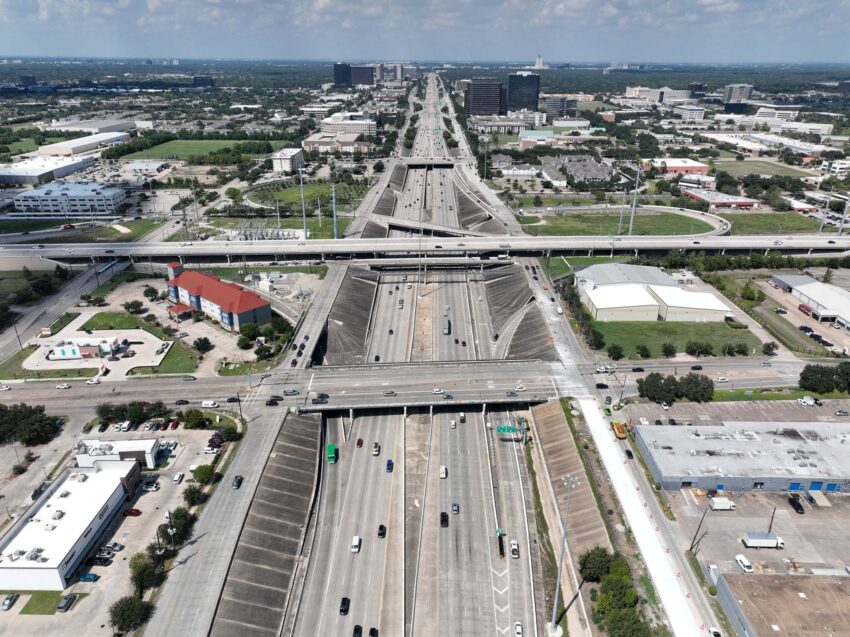
When you hear the name Westpark Drive, you’re not just learning about a street—you’re discovering a critical piece of Houston’s transportation infrastructure that revolutionized toll road technology across the United States. This east-west arterial road has become synonymous with innovation, industrial development, and modern mobility solutions that continue to shape how millions of drivers navigate the Greater Houston area today.
Understanding Westpark Drive: More Than Just a Street
Westpark Drive represents a major arterial road running through Houston, Texas, primarily serving industrial and commercial zones in the western part of the city. The road itself gave its name to one of America’s most technologically advanced tollways, making it a landmark in both physical and digital transportation history. The corridor has evolved from a modest industrial route into a comprehensive transportation network that connects residential communities, business districts, and major highways across Harris County and Fort Bend County.
The significance of the Westpark Drive corridor extends far beyond its asphalt and concrete. This thoroughfare has witnessed decades of transportation planning, from failed rail initiatives in the 1980s to groundbreaking toll technology implementations in the 2000s. Understanding the history and development of Westpark Drive provides valuable insights into urban planning, technological innovation, and how cities adapt to growing populations and changing transportation needs.
The Historic Westpark Tollway: America’s Electronic Toll Pioneer
The Westpark Tollway, officially known as the Fort Bend Westpark Tollway in some sections, holds a distinguished place in American transportation history as the nation’s first fully electronic toll road. Construction began in June 2001, and the initial 8.5-mile segment opened to traffic in May 2004, forever changing how Americans pay tolls. By August 2005, the complete roadway was operational, spanning approximately 22 miles from Houston’s Uptown District to Fulshear, Texas.
What makes the Westpark Drive tollway system truly revolutionary is its complete elimination of traditional toll booths and cash collection points. Every vehicle traveling on this modern expressway must use an electronic transponder—either HCTRA’s EZ TAG, NTTA’s TollTag, TxTAG, Oklahoma’s PikePass, or Kansas’s K-Tag. These small devices, mounted on windshields, communicate with overhead sensors that automatically deduct tolls from prepaid accounts as vehicles pass beneath electronic gantries at highway speeds of up to 65 mph.
The decision to build the Westpark Drive corridor as an all-electronic facility was partially driven by practical constraints. The narrow 100-foot right-of-way, originally acquired from a Southern Pacific railroad corridor, simply didn’t provide enough space for conventional toll booths and cash collection lanes. This limitation, however, became an opportunity for innovation that other toll authorities across the nation would eventually replicate in their own modernization efforts.
Suggested read: Hit by DUI Driver: Your Rights, Compensation, and Legal Options Explained
Key Milestones in Westpark Drive Development
The Westpark Drive corridor’s transformation into a modern tollway involved several critical phases:
- 1950s-1960s: Initial planning for a limited-access highway along the Westpark corridor
- 1979: First toll road survey mentioned by Texas Turnpike Authority
- 1980s: Failed heavy rail line proposal requiring voter approval
- 1991: Monorail concept abandoned under Mayor Kathy Whitmire
- 1992: Metropolitan Transit Authority (METRO) purchased 100-foot railroad right-of-way from Southern Pacific
- 1999: HCTRA and METRO reached agreement to split corridor for toll road and potential light rail
- 2001: Construction commenced on the revolutionary all-electronic tollway
- May 2004: First 8.5 miles opened, marking America’s first all-electronic toll road debut
- August 2005: Complete Harris County and Fort Bend County sections opened to traffic
- 2016-2017: Extension phase from Grand Parkway to Spring Green Boulevard completed
- 2017-2020: FM 1093 expanded to four lanes, creating eight-lane transportation corridor
Geographic Coverage: Where Westpark Drive Takes You
The Westpark Drive transportation system serves as a critical east-west connector spanning multiple communities and jurisdictions. The tollway begins at the South Rice Avenue intersection in Houston’s prestigious Uptown District (near the Galleria shopping area) and extends approximately 22 miles westward to Farm to Market Road 1093, just past Farm to Market Road 723 (Spring Green Boulevard) in Fulshear, Texas. This extensive reach makes the Westpark Drive corridor an essential commuter route for residents in northeastern Fort Bend County who work in Houston’s central business districts.
The Harris County Toll Road Authority (HCTRA) operates roughly 13-14 miles of the tollway within Harris County boundaries, while the Fort Bend County Toll Road Authority (FBCTRA) manages approximately 8.3 miles extending from the county line near FM 1464 westward to the current terminus. Three major interchanges provide crucial connections to Houston’s broader freeway network: the Southwest Freeway (I-69/US 59), the West Sam Houston Tollway (Beltway 8), and the Grand Parkway (State Highway 99). Additional minor interchanges serve local communities and business districts along the corridor.
The strategic location of Westpark Drive has made it invaluable for businesses operating in Houston’s industrial zones. Properties along Westpark Drive in the Mid West Houston neighborhood have become highly sought after for warehouse, distribution, and light manufacturing operations. The easy access to major highways, the George Bush Intercontinental Airport, and the Port of Houston creates ideal logistics conditions for companies requiring efficient freight movement.
Industrial and Commercial Properties Along Westpark Drive
The Westpark Drive corridor has developed into one of Houston’s premier industrial and commercial real estate markets. Numerous Class B industrial buildings line the street, many constructed during Houston’s rapid expansion periods in the 1960s and 1970s. Properties at addresses like 7800 Westpark Drive (built 1965, 71,520 square feet), 8950 Westpark Drive (built 1977, 48,044 square feet), and 9900 Westpark Drive showcase the corridor’s evolution as a hub for warehousing, distribution, and light manufacturing operations.
The Westpark Business Center, encompassing properties at 3930 Dunvale Road and 8622-8702 Westpark Drive, represents a significant flex-industrial complex totaling 206,924 square feet of leasable space. These multi-tenant facilities offer modern amenities including tiltwall construction, dock-high loading doors, 18-foot clear heights, metal halide lighting, and complete fire sprinkler systems. The proximity to the Westpark Tollway, combined with immediate access to US 59 and Loop 610, makes these properties exceptionally attractive to logistics companies and e-commerce operations requiring rapid product distribution capabilities.
Commercial real estate values along the Westpark Drive corridor have remained relatively stable over the years, with property tax assessments reflecting the area’s continued industrial relevance. For example, 8950 Westpark Drive carried a market value of $2,499,220 in 2022, while 7800 Westpark Drive was valued at $4,909,028 the same year. These valuations demonstrate the enduring economic importance of well-located industrial properties in metropolitan Houston’s supply chain infrastructure.
Suggested read: Distracted Driver Accident Lawyer: Securing Justice and Maximum Compensation After a Preventable Crash
Benefits of Westpark Drive Locations for Businesses
Companies choosing Westpark Drive addresses enjoy numerous strategic advantages:
- Superior highway connectivity to I-69/US 59, Beltway 8, and State Highway 99
- Toll-free alternatives via parallel FM 1093 and Westheimer Road
- 65 mph express lanes for rapid goods movement
- Central positioning between Houston’s business districts and western suburbs
- Proximity to workforce in Katy, Fulshear, Sugar Land, and greater Houston
- Heavy power infrastructure supporting manufacturing operations
- Ample truck parking and maneuvering space in industrial zones
- Lower operating costs compared to inner-city locations
Electronic Toll Technology: How Westpark Drive Changed Everything
The Westpark Drive tollway system pioneered automatic vehicle identification (AVI) technology on a scale never before attempted in American highway construction. Unlike traditional toll roads where drivers stopped at booths to pay cash or receive tickets, the Westpark approach uses radio-frequency identification (RFID) technology embedded in windshield-mounted transponders. As vehicles approach tolling points, overhead antenna arrays communicate with these transponders in milliseconds, identifying the vehicle, recording the transaction, and deducting the appropriate toll amount from the driver’s prepaid account.
This technological innovation solved multiple problems simultaneously. First, it eliminated the need for large toll plaza footprints that would have been impossible to construct within the narrow right-of-way constraints. Second, it maintained consistent traffic flow at highway speeds, preventing the congestion and safety hazards associated with conventional toll booths. Third, it reduced operational costs by eliminating toll collector positions and the security risks associated with cash handling. Fourth, it created an auditable electronic record of every transaction, reducing toll evasion and improving revenue collection efficiency.
The success of the Westpark Drive electronic tolling system inspired similar implementations across Texas and beyond. Today, all-electronic tolling has become the standard for new toll road construction, with many older facilities retrofitting their infrastructure to eliminate cash operations. The lessons learned from the Westpark Drive implementation informed best practices for transponder compatibility, account management systems, violation enforcement procedures, and customer service protocols that toll authorities nationwide now follow.
Understanding Westpark Drive Toll Rates and Payment Options
Drivers using the Westpark Drive tollway face different rate structures depending on which section they’re traveling and what type of electronic tag they’re using. The Harris County portion offers a 10% discount to EZ TAG holders compared to non-EZ TAG electronic toll rates. Typical toll costs for passenger cars range from $2.50-3.25 for partial segments to $5.00-6.25 for the complete 22-mile journey. Peak hour travel and vehicles with additional axles incur higher charges based on dynamic pricing algorithms designed to manage traffic flow and infrastructure wear.
Payment exclusively occurs through electronic toll tags—there are zero cash payment options anywhere along the 22-mile corridor. Drivers without valid transponders who accidentally enter the tollway can make one-time violation payments by calling the Fort Bend County Violation Payment Center at (855) 999-2024, but repeated violations result in citations, substantial fines, and potential vehicle registration holds. For regular users, establishing an EZ TAG account through the Harris County Toll Road Authority provides the most economical option, with accounts requiring as little as $10-20 to open and offering automatic replenishment features to prevent account depletion.
Several transponder systems work interchangeably on the Westpark Drive corridor thanks to Texas’s toll interoperability agreements. EZ TAG (HCTRA), TollTag (NTTA), and TxTAG (TxDOT) all function seamlessly, though only EZ TAG qualifies for the maximum discount in Harris County sections. Interstate compatibility extends to Oklahoma’s PikePass and Kansas’s K-Tag systems, allowing travelers from neighboring states to use existing accounts without opening new ones. The recent introduction of EZ TAG Express provides a phone-based payment option for occasional users who don’t want physical transponders, though these accounts carry higher per-trip costs.
Suggested read: Drunk Driver Accident Attorney: Your Path to Justice and Maximum Compensation After an Impaired Driving Crash
Comparing Westpark Drive to Traditional Driving Routes
For drivers concerned about monitoring their route safety, understanding different road characteristics becomes important. Just as tools like Life360 help families track driving behaviors and identify potentially risky routes (learn more about what does risky drive mean on Life 360), choosing between the Westpark Drive tollway and alternative routes involves weighing speed, cost, and convenience factors.
The primary toll-free alternatives to the Westpark Drive tollway include FM 1093 (which runs parallel and serves as frontage roads in Fort Bend County) and Westheimer Road. Both surface streets provide similar east-west connectivity without toll charges, but they operate with traffic signals, lower speed limits (typically 45-55 mph), and significantly higher congestion during peak commute hours. A journey that takes 20 minutes on the Westpark tollway might require 40-50 minutes on surface streets during rush hour periods.
For daily commuters, the decision often comes down to time-versus-money calculations. Spending $5-6 per day on tolls translates to $100-130 monthly (assuming 22 workdays), but saves approximately 30-40 minutes daily—roughly 11-14 hours monthly. Professionals valuing their time at $50+ hourly easily justify the toll expense, while budget-conscious drivers or those making off-peak trips might prefer free alternatives. Additionally, the Westpark Drive tollway’s 65 mph speed limit and lack of intersections dramatically reduces accident risks compared to surface streets with cross-traffic, turning lanes, and frequent stops.
Future Development Plans for the Westpark Drive Corridor
The Westpark Drive transportation corridor continues evolving to meet the Houston region’s growing mobility needs. Expansion plans announced in 2012 promised extensions into the rapidly developing city of Fulshear, Texas, with connections to the future Fulshear Parkway and additional direct connection flyovers with State Highway 99 (Grand Parkway). Phase one construction extending the tollway from Grand Parkway to just west of Spring Green Boulevard began in February 2016 and completed by November 2017, opening new commuting options for residents in Fort Bend County’s fastest-growing communities.
Between 2017 and 2020, the Texas Department of Transportation (TxDOT) expanded FM 1093 from two to four lanes between the Grand Parkway and James Lane near Fulshear. These widened sections now serve as toll-free frontage roads for future Westpark Drive tollway extensions, creating an eight-lane transportation corridor that balances high-speed tolled options with local access roads. TxDOT funded major interchange construction at State Highway 99 and FM 1464, further improving connectivity and reducing bottlenecks at key junction points.
A significant ongoing study involves HCTRA partnering with METRO, the City of Houston, and Fort Bend County to address long-term mobility and connectivity needs throughout the entire Westpark corridor. This collaborative effort seeks public input on safety improvements, traffic flow optimization, aesthetic enhancements, and potential transit options. Whether the long-debated University Line light rail will ultimately use the Westpark Drive corridor remains unresolved, with Richmond Avenue emerging as an alternative alignment under consideration. The fact that the Westpark right-of-way doesn’t currently intersect METRORail at any point complicates integration efforts with Houston’s existing rail network.
Suggested read: Like a Drive in the Woods NYT: Understanding This Popular Crossword Clue and Its Variations
Population Growth Driving Westpark Drive Expansion
The explosive residential and commercial growth in Katy, Fulshear, Richmond, and other western Houston suburbs has transformed the Westpark Drive corridor from an industrial backwater into a critical commuter artery. Fort Bend County’s population increased from approximately 354,000 in 2000 to over 850,000 by 2025, making it one of America’s fastest-growing counties. This demographic surge created enormous pressure on existing transportation infrastructure, with traffic volumes on FM 1093 and Westheimer Road frequently exceeding design capacity during peak hours.
The Westpark Drive tollway provides essential congestion relief by offering a high-speed, limited-access alternative that segregates through-traffic from local street networks. As suburban development continues pushing westward toward Brookshire and Sealy, additional tollway extensions will likely become necessary to maintain acceptable travel times for commuters working in Houston’s employment centers. Transportation planners project that by 2040, the Westpark corridor could require 10-12 travel lanes (combined toll and frontage roads) to accommodate projected traffic demand.
Environmental and Economic Impact of Westpark Drive Development
The construction and operation of the Westpark Drive tollway system generated significant environmental and economic effects throughout western Houston. From an environmental perspective, the consolidation of high-speed traffic onto a controlled-access facility reduced overall vehicle emissions compared to stop-and-go congestion on surface streets. Modern tollway design incorporated stormwater management systems, erosion controls, and wildlife crossing considerations that weren’t present in the original railroad corridor.
Economically, the Westpark Drive tollway unlocked enormous real estate value in previously underdeveloped areas. Property values along the corridor increased substantially as travel times to Houston’s employment centers decreased. Residential subdivisions that might have been economically unfeasible with 60-90 minute commutes became attractive when the tollway reduced travel times to 30-40 minutes. Commercial developers invested billions in retail centers, office parks, and mixed-use developments accessible from Westpark Drive interchanges.
The toll revenue generated by the Westpark Drive corridor provides ongoing funding for maintenance, improvements, and expansion projects without requiring general tax increases. The Harris County Toll Road Authority reported that the system’s approximately 128 miles of toll roads (including Westpark) generated sufficient revenue to remain financially self-sustaining while funding new construction. This public-private partnership model, where users pay directly for infrastructure they use rather than relying solely on gas taxes, has become increasingly popular as transportation funding challenges mount nationwide.
Job Creation Through Westpark Drive Development
The Westpark Drive industrial corridor supports thousands of direct and indirect jobs throughout the Houston metropolitan area. Warehouses, distribution centers, and manufacturing facilities lining the street employ logistics workers, forklift operators, truck drivers, maintenance personnel, and administrative staff. The efficient transportation access provided by the tollway makes these facilities competitive with similar operations in other metropolitan areas, helping Houston retain and attract businesses that might otherwise locate elsewhere.
During construction phases, the Westpark Drive tollway projects created temporary employment for thousands of construction workers, engineers, surveyors, environmental specialists, and project managers. Equipment suppliers, materials manufacturers, and subcontractors throughout Texas benefited from the multi-hundred-million-dollar infrastructure investment. Even after construction completion, ongoing maintenance activities continue supporting specialized pavement contractors, sign manufacturers, electronic equipment technicians, and landscaping crews who keep the facility operating safely and efficiently.
Suggested read: Lakewood Drive: Your Essential Navigation & Neighborhood Guide to One of America's Most Iconic Streets
Westpark Drive Beyond Houston: Other Notable Locations
While Houston’s Westpark Drive and its associated tollway system garner the most attention due to their size and technological significance, several other communities across the United States feature streets named Westpark Drive. These include residential and commercial areas in Charlotte, North Carolina; Little Rock, Arkansas; Grand Junction, Colorado; and McLean, Virginia. Each location developed independently with its own unique characteristics and local importance.
In Charlotte, Westpark Drive serves residential neighborhoods in the 28217 ZIP code area, providing local street access for homes valued in the $200,000-400,000 range. The Charlotte Westpark Drive area represents typical suburban development patterns from the 1980s and 1990s, with single-family homes, townhouses, and convenient access to Interstate 77 and Charlotte-Douglas International Airport.
Little Rock’s Westpark Drive anchors the Westpark Meadows apartment community, a gated residential complex at 1701 Westpark Drive featuring spacious floor plans with 1-4 bedrooms. Located near the University of Arkansas at Little Rock, UAMS, and Baptist Hospital, this Westpark Drive serves students, medical professionals, and families seeking affordable housing in central Arkansas. The community offers full-size washer-dryer connections, private balconies or patios, and access to nearby Boyle Park for recreation.
Grand Junction, Colorado’s 360 Westpark Drive houses the Intermountain Health Heart & Vascular – 360 West Park Cardiology facility, providing specialized cardiac care to western Colorado residents. This medical use of a Westpark Drive address demonstrates how the name has become associated with accessible, professional service locations across diverse geographic contexts. Meanwhile, McLean, Virginia’s Westpark Drive provides access to premium office space at 8000 Westpark Drive, Suite 610, with direct connections to the Jones Branch Drive and Westpark Drive entrances to the 495 Express Lanes—an interesting parallel to Houston’s tollway connectivity.
Why Choose Westpark Drive for Your Business or Commute?
Selecting a location along Houston’s Westpark Drive corridor or choosing to use the tollway for daily commuting offers compelling advantages that continue attracting businesses and residents. The combination of central positioning, superior highway access, modern infrastructure, and proven reliability makes Westpark Drive a smart choice for logistics operations, manufacturing facilities, professional offices, and residential developments serving the Houston metropolitan area.
For businesses, the Westpark Drive industrial corridor provides competitive lease rates compared to premium inner-loop locations while maintaining excellent access to Houston’s workforce, suppliers, and customers. Properties offer flexible space configurations, heavy power capabilities, and zoning that accommodates diverse industrial and commercial uses. The predictable toll-road commute attracts quality employees who value time savings and reduced stress compared to congested surface street alternatives.
Residents choosing to live in communities accessible via the Westpark Drive tollway gain affordable housing options in growing suburban areas while maintaining reasonable commute times to Houston’s major employment centers. The toll expense often proves less than the additional housing costs of living closer to the urban core. Families appreciate newer schools, larger lots, and lower crime rates typical of the western suburbs, with the Westpark tollway providing the critical transportation link that makes this lifestyle economically feasible.
Suggested read: How to Check Your Kansas Driver's License Status Fast (And What It Means)
Investment Considerations for Westpark Drive Properties
Real estate investors examining opportunities along the Westpark Drive corridor should consider several factors when evaluating potential acquisitions. The ongoing population growth in Fort Bend County virtually guarantees increasing demand for industrial and commercial space, supporting stable occupancy rates and gradual rent growth. Properties near tollway interchanges command premium valuations due to superior visibility and access, while slightly more distant locations offer higher cap rates with acceptable risk profiles.
Industrial properties should be evaluated based on clear ceiling heights (18+ feet preferred), column spacing (30+ feet optimal), dock doors (number and configuration), truck court dimensions, parking ratios, and power capacity. Modern e-commerce and logistics operations have specific requirements that older Westpark Drive warehouses may not meet without capital improvements. Conversely, these properties might offer value-add opportunities for investors willing to renovate and upgrade facilities to current market standards.
Location-specific risks include potential flooding (some Westpark Drive areas experienced inundation during Hurricane Harvey in 2017), property tax increases as Fort Bend County and Harris County fund infrastructure improvements, and potential competition from newer industrial parks developing further west along the tollway extension corridors. However, the fundamental economic drivers—population growth, freight movement, and e-commerce expansion—suggest long-term positive trends for well-positioned Westpark Drive properties.
Smart Driving and Navigation on Westpark Drive
Successfully navigating the Westpark Drive corridor requires understanding both the tollway system and alternative route options. Mobile navigation apps like Waze and Google Maps provide real-time traffic updates, helping drivers choose between the tollway and free alternatives based on current conditions. During severe weather events or accidents, the Westpark Drive tollway’s limited access design can become a disadvantage if incidents block the roadway, making knowledge of exit points and alternative routes essential for regular users.
Drivers should establish their EZ TAG or other toll transponder accounts well before regularly using the Westpark Drive tollway to avoid violation notices and associated fees. Account management apps allow users to monitor balances, set up automatic replenishment, update vehicle information, and review transaction history. Setting low-balance alerts prevents unexpected account depletion that could result in violations even with a properly mounted transponder.
For families using tracking apps like Life360, the Westpark Drive tollway typically generates better safety scores than congested surface streets due to its 65 mph consistent speeds, lack of intersections, and modern safety design. Parents monitoring teen drivers appreciate the reduced accident risk associated with limited-access highways compared to complex urban arterials with multiple turning movements, pedestrians, and cross-traffic conflicts.
Suggested read: Callaway X Hot Driver: Performance Analysis and Buying Guide
Peak Hour Strategies for Westpark Drive Commuters
Morning and evening rush hour periods (roughly 6:30-9:00 AM and 4:30-7:00 PM on weekdays) see the highest traffic volumes on the Westpark Drive tollway, though congestion rarely reaches the severe levels experienced on free alternatives. Savvy commuters time their departures to avoid the absolute peak (typically 7:30-8:15 AM eastbound and 5:15-6:00 PM westbound) when even the tollway experiences slower travel speeds.
Flexible work arrangements—including earlier start times (6:00-7:00 AM), later departures (9:00-10:00 AM), or telecommuting options—allow commuters to bypass peak congestion entirely while still enjoying the Westpark Drive corridor’s excellent access. Employers along the Westpark Drive industrial corridor increasingly offer flexible scheduling as a retention tool, recognizing that commute quality significantly impacts employee satisfaction and productivity.
During major events, holidays, or severe weather situations, monitoring traffic conditions before entering the Westpark Drive tollway becomes particularly important. Social media accounts operated by HCTRA, Fort Bend County, and local news stations provide updates on incidents, closures, and delays affecting the corridor. Unlike surface streets where drivers can easily exit and find alternatives, the limited interchange spacing on the Westpark tollway means drivers may be committed to several miles before reaching the next exit if unexpected delays occur.
Frequently Asked Questions About Westpark Drive
What is Westpark Drive known for?
Westpark Drive is primarily known as the major arterial road in Houston, Texas that gave its name to the Westpark Tollway—America’s first fully electronic toll road opened in 2004. The corridor serves as a critical east-west transportation route connecting Houston’s Uptown District to western suburbs in Fort Bend County, while also hosting significant industrial and commercial development along its path through western Houston’s business districts.
Do I need an EZ TAG to use Westpark Drive?
Yes, if you plan to use the Westpark Drive tollway sections, you must have a valid electronic toll transponder such as EZ TAG, TollTag, TxTAG, PikePass, or K-Tag. The tollway operates with 100% electronic toll collection—there are no cash payment options, toll booths, or pay-by-mail billing anywhere along the 22-mile corridor. However, the surface street Westpark Drive and parallel routes like FM 1093 can be used without any toll transponder requirements.
How much does it cost to drive on the Westpark Drive tollway?
Toll costs on the Westpark Drive corridor vary based on distance traveled, vehicle type, and whether you have an EZ TAG (which provides a 10% discount in Harris County sections). Typical passenger car tolls range from $2.50-3.25 for partial segments to approximately $5.00-6.25 for the complete 22-mile journey from Houston’s Uptown District to Fulshear. Peak hour rates may be slightly higher, and vehicles with multiple axles pay increased tolls based on their classification.
Where does Westpark Drive start and end?
The Westpark Drive tollway begins at the South Rice Avenue intersection in Houston’s Uptown District (near the Galleria area) and extends approximately 22 miles westward, terminating at Farm to Market Road 1093 just past Farm to Market Road 723 (Spring Green Boulevard) in Fulshear, Texas. The surface street Westpark Drive runs through industrial areas of western Houston, while the tollway parallels and eventually overlays portions of this original arterial road.
Suggested read: DB Drive Car Audio Systems: Performance Review and Buying Guide
Is there a free alternative to the Westpark Drive tollway?
Yes, several toll-free alternatives exist for drivers wanting to avoid Westpark Drive tollway charges. FM 1093 (Westheimer Road in Harris County) runs parallel to the tollway and serves as official frontage roads in Fort Bend County sections, providing free access with traffic signals and lower speed limits. The trade-off involves significantly longer travel times during peak hours—what takes 20 minutes on the tollway might require 40-50 minutes on surface streets during rush hour congestion periods.
What happens if I drive on Westpark Drive tollway without a tag?
Driving on the Westpark Drive tollway without a valid electronic toll transponder constitutes a violation that triggers enforcement actions. The system captures license plate images and generates violation notices mailed to the registered vehicle owner. For a first-time accidental violation, you can call the Violation Payment Center at (855) 999-2024 to make a one-time payment. Repeated violations result in escalating fines, potential citations, and may lead to vehicle registration holds preventing renewal until all violations and fees are paid.
Are there businesses and warehouses on Westpark Drive?
Yes, the Westpark Drive corridor in Houston features extensive industrial and commercial development, particularly in the Mid West Houston neighborhood. Properties include warehouse facilities, distribution centers, flex-industrial spaces, and manufacturing operations. Notable addresses include 7800 Westpark Drive, 8950 Westpark Drive, 9900 Westpark Drive, and the Westpark Business Center complex at 8622-8702 Westpark Drive. These properties benefit from excellent highway access, proximity to Houston’s workforce, and competitive lease rates for logistics-focused operations.
How fast can you drive on the Westpark Drive tollway?
The posted speed limit on the Westpark Drive tollway is 65 mph throughout its entire length, including sections inside Beltway 8 where other Houston-area roads often have lower limits. This consistent highway-speed operation represents one of the tollway’s major advantages over surface street alternatives with 45-55 mph limits, frequent traffic signals, and congestion-related slowdowns. The 65 mph limit applies to standard passenger vehicles—special restrictions may apply to commercial trucks and oversized loads.
Is Westpark Drive the same in all cities?
No, multiple cities across the United States have streets named Westpark Drive, but they are completely independent and unrelated. Houston’s Westpark Drive and its associated tollway system are the most prominent, but Charlotte (North Carolina), Little Rock (Arkansas), Grand Junction (Colorado), and McLean (Virginia) all feature separate Westpark Drive addresses serving their respective communities. Each location developed independently based on local naming conventions and urban planning decisions.
When was the Westpark Drive tollway built?
Construction on the Westpark Drive tollway began in June 2001, with the first 8.5-mile segment opening to traffic in May 2004. This initial opening marked a historic moment as America’s first fully electronic toll road without cash collection capabilities. Additional phases continued through August 2005 when the complete Harris County and initial Fort Bend County sections were finished. Extension projects from 2016-2017 pushed the tollway further west to its current terminus near Fulshear, with future expansion plans under ongoing development.
Take Action: Experience the Westpark Drive Difference Today
Whether you’re considering a business location along the Westpark Drive industrial corridor, evaluating commute options as a Houston-area resident, or simply curious about America’s pioneering electronic tollway system, the time to explore Westpark Drive’s advantages is now. The ongoing development and expansion of this critical transportation corridor ensures its continued relevance to Houston’s economic growth and mobility needs for decades to come.
Suggested read: Understanding Storrow Drive: Boston's Iconic Riverside Parkway and Its Traffic Challenges
For Businesses: Contact commercial real estate specialists familiar with the Westpark Drive corridor to tour available industrial, warehouse, and office properties. The combination of strategic location, competitive costs, and superior highway access makes this area ideal for logistics operations, distribution centers, light manufacturing, and professional services targeting the Houston market.
For Commuters: Sign up for an EZ TAG account through HCTRA to begin enjoying the time savings and convenience of the Westpark Drive tollway system. Calculate your potential commute time savings using online toll calculators, and compare the cost-benefit equation for your specific travel patterns between home and work locations.
For Investors: Research Westpark Drive properties through commercial real estate platforms, evaluate market trends in Fort Bend County’s explosive growth, and consider how continuing tollway extensions will impact future values. Partner with local brokers who understand the nuances of Houston’s industrial markets and can identify value-add opportunities along this critical corridor.
The Westpark Drive story continues evolving as Houston grows, technology advances, and transportation needs change. By understanding this corridor’s history, current operations, and future potential, you position yourself to make informed decisions about one of America’s most innovative transportation solutions.
Sources and Citations:
- Westpark Tollway – Wikipedia
- Harris County Toll Road Authority Official Website
- Fort Bend County Toll Road Authority
- Westpark Tollway Complete Guide 2025 – TollGuru
Article researched and compiled December 2025. Toll rates, construction timelines, and development plans subject to change. Always verify current information through official sources before making business or travel decisions.