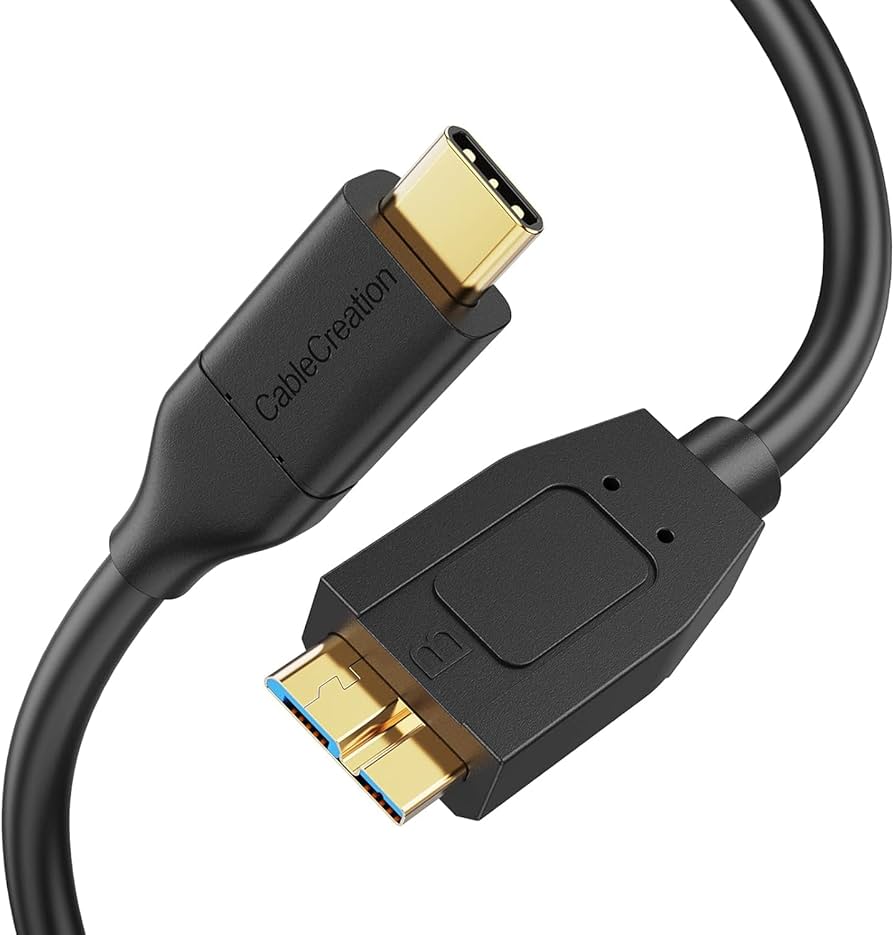
In today’s fast-paced digital world, slow data transfer speeds can feel like watching paint dry. Whether you’re backing up your smartphone, transferring high-resolution photos, or syncing large video files, having the right cable makes all the difference. The micro B drive cable 1 ft 10Gbps 3.1 has emerged as a game-changer for users who demand both speed and reliability in a compact form factor.
This specialized cable combines USB 3.1 Gen 2 technology with the convenience of a micro B connector, delivering transfer speeds up to 10 gigabits per second—that’s roughly 1,250 megabytes per second in real-world terms. Unlike older USB 2.0 micro B cables that max out at 480 Mbps, this modern solution offers more than 20 times faster performance, making it essential for anyone working with large files or external storage devices.
The one-foot length isn’t just arbitrary—it’s specifically designed for desktop setups, laptop connections, and portable hard drive scenarios where you need a direct, clutter-free connection without excess cable tangling on your desk. This article dives deep into everything you need to know about micro B cables with 10Gbps USB 3.1 speeds, from technical specifications to real-world applications, helping you make an informed purchase decision and maximize your data transfer efficiency.
Understanding USB 3.1 Gen 2 Technology and 10Gbps Speed
USB 3.1 represents a significant leap forward in data transfer technology, and understanding its capabilities helps you appreciate why a micro B drive cable 1 ft 10Gbps 3.1 outperforms older alternatives. The USB 3.1 specification comes in two generations: Gen 1 (formerly USB 3.0) offers 5Gbps speeds, while Gen 2 doubles that to 10Gbps. When you see “10Gbps” in the cable specifications, you’re looking at Gen 2 technology that can theoretically move 1.25 gigabytes of data every second. This speed improvement isn’t just about bragging rights—it translates to backing up a 50GB 4K video file in roughly 40 seconds instead of the 14+ minutes required with USB 2.0.
The architecture behind USB 3.1 Gen 2 includes enhanced encoding efficiency using 128b/132b encoding compared to the older 8b/10b scheme, which means less overhead and more actual data throughput. The technology also supports improved power delivery specifications, allowing compatible devices to charge faster while maintaining data transfer. For external SSDs, the 10Gbps bandwidth eliminates the bottleneck that previously prevented these drives from reaching their full performance potential. When paired with a quality USB 3.1 micro B cable at 1 foot length, you’re essentially creating a direct superhighway between your device and computer, minimizing latency and maximizing efficiency for professional workflows and consumer applications alike.
Key Features of High-Quality Micro B USB 3.1 Cables
Not all micro B cables are created equal, and understanding the distinguishing features helps you identify truly superior products. A premium micro B drive cable 1 ft 10Gbps 3.1 incorporates multiple design elements that ensure consistent performance and longevity. First, look for cables with gold-plated connectors that resist corrosion and maintain optimal conductivity over thousands of connection cycles. The internal wiring should consist of high-gauge copper conductors, typically 28AWG for data lines and 24AWG for power lines, surrounded by multiple layers of shielding including aluminum foil and braided mesh to prevent electromagnetic interference.
Quality manufacturers also include features like molded strain reliefs at both connector ends, which prevent the cable from breaking at its most vulnerable points where the wire meets the plug. The USB 3.1 micro B connector should feature the distinctive blue tongue insert that signals superspeed capability, differentiating it from standard black USB 2.0 micro B connectors. Certifications matter too—cables bearing USB-IF (USB Implementers Forum) certification have undergone rigorous testing to ensure they meet official USB 3.1 specifications. Here are the essential features to prioritize:
- 10Gbps data transfer rate (USB 3.1 Gen 2 compliant)
- Triple-layer shielding for interference protection
- Gold-plated connectors with 10,000+ mating cycle durability
- Premium copper wiring (28AWG data, 24AWG power minimum)
- Reinforced strain relief at connection points
- USB-IF certification for verified performance
- Backward compatibility with USB 3.0 and USB 2.0 devices
Practical Applications: When You Need a 1-Foot Micro B Cable
The one-foot length of this micro B USB 3.1 cable serves specific use cases where longer cables would create unnecessary clutter or introduce signal degradation. Desktop environments benefit tremendously from shorter cables when connecting external hard drives, SSD enclosures, or docking stations that sit immediately next to your computer. Professional photographers and videographers working with card readers or external storage units prefer the tidy setup that a 1ft cable provides, keeping their workspace organized while maintaining maximum transfer speeds for moving hundreds of gigabytes of RAW images or 4K video footage.
Portable hard drive users find the compact length ideal for laptop setups, whether working from a coffee shop, airplane tray table, or home office. The shorter cable means less weight in your bag, reduced tangling with other accessories, and easier cable management when you need to pack up quickly. Data centers and server rooms also utilize 1-foot micro B cables for rack-mounted equipment where every inch of cable management counts.
Gaming enthusiasts connecting external SSDs to boost their console or PC storage appreciate how the short cable reduces desk clutter while delivering the speed necessary for modern game file sizes that can exceed 100GB. For anyone connecting devices within arm’s reach, the micro B drive cable 1 ft 10Gbps 3.1 eliminates the loop of excess cable that longer options create.
Speed Comparison: USB 3.1 vs Previous Generations
Understanding the performance hierarchy helps contextualize just how significant the speed boost from a 10Gbps USB 3.1 micro B cable really is. USB 2.0, which dominated the market for years with its micro B connector, tops out at 480 Mbps (60 MB/s in practical terms). This means transferring a 4GB movie takes approximately 67 seconds under ideal conditions. USB 3.0/3.1 Gen 1 jumped to 5 Gbps (625 MB/s), cutting that same transfer to around 6.4 seconds. The USB 3.1 Gen 2 standard with its 10Gbps capability reduces it further to approximately 3.2 seconds—a dramatic improvement that compounds when you’re moving terabytes of data.
Real-world testing reveals that while theoretical maximums are impressive, actual speeds depend on multiple factors including the source device’s read speed, the destination device’s write speed, system overhead, and cable quality. A premium micro B cable with USB 3.1 Gen 2 support typically achieves 700-900 MB/s with high-performance SSDs, compared to 400-500 MB/s with USB 3.0 cables and a mere 35-45 MB/s with USB 2.0. Here’s a comparative breakdown:
| USB Standard | Max Speed | Real-World Transfer | 100GB Transfer Time |
|---|---|---|---|
| USB 2.0 | 480 Mbps | 35-45 MB/s | 38-48 minutes |
| USB 3.0/3.1 Gen 1 | 5 Gbps | 400-500 MB/s | 3.3-4.2 minutes |
| USB 3.1 Gen 2 | 10 Gbps | 700-900 MB/s | 1.8-2.4 minutes |
Compatibility Considerations for Micro B USB 3.1 Cables
Before investing in a micro B drive cable 1 ft 10Gbps 3.1, verifying compatibility ensures you’ll actually achieve those advertised speeds. The micro B USB 3.1 connector maintains backward compatibility with USB 3.0 and USB 2.0 ports, but you’ll only get 10Gbps speeds when both the cable AND both connected devices support USB 3.1 Gen 2. Check your device specifications—many external hard drives, smartphones, and tablets still use USB 3.0 or even USB 2.0 chipsets despite having blue-colored ports. Your computer or host device must also have a USB 3.1 Gen 2 port, which newer motherboards and laptops typically feature but older systems might lack.
Operating system support matters too. Windows 8 and later, macOS 10.9 and above, and modern Linux distributions all support USB 3.1 natively without additional drivers for basic functionality. However, some specialized features like power delivery profiles might require updated drivers or firmware. When connecting external SSDs through a USB 3.1 micro B cable, ensure your drive enclosure’s chipset supports the full 10Gbps bandwidth—popular controllers like the ASMedia ASM1351 or JMicron JMS578 are confirmed to work at full speed.
For similar performance considerations with automotive components, check out resources on mini jcw final drive gear ratio optimization. The good news is that even if one component doesn’t support full USB 3.1 Gen 2 speeds, the cable will automatically negotiate the highest speed both devices support, so your investment remains future-proof as you upgrade devices.
Choosing the Right Micro B Cable: Quality Indicators
Distinguishing between budget cables and professional-grade options protects your investment and ensures reliable performance. When shopping for a micro B drive cable 1 ft 10Gbps 3.1, examine the product specifications and manufacturer reputation carefully. Premium cables explicitly state “USB 3.1 Gen 2” or “10Gbps” in their titles and descriptions—vague terms like “high-speed” or “super-speed” often indicate older USB 3.0 technology. Check customer reviews for real-world performance reports, particularly from users with compatible devices who can verify actual transfer speeds using benchmark tools like CrystalDiskMark or BlackMagic Disk Speed Test.
Physical build quality provides visual clues about internal construction. Cables with thick, flexible jackets typically house better shielding and conductors compared to thin, stiff alternatives. The connector housing should feel solid and fit snugly without excessive wobble—loose connections can interrupt data transfer and cause corruption. Warranty terms also signal manufacturer confidence; reputable brands often offer lifetime warranties on their premium cables. Price serves as a general indicator but isn’t absolute—expect to pay $8-15 for a quality 1-foot micro B USB 3.1 cable, with certified options from major brands commanding premium prices. Cables priced significantly below $5 likely cut corners on materials or don’t actually meet full USB 3.1 Gen 2 specifications despite marketing claims.
Installation and Setup for Optimal Performance
Maximizing the performance potential of your micro B drive cable 1 ft 10Gbps 3.1 requires attention to both physical connections and software configurations. Start by ensuring both devices are powered off before making the initial connection—this prevents potential electrical issues and allows proper USB enumeration when powered back on. Insert the micro B end firmly into your external device until you feel and hear a subtle click indicating full seating. The standard USB Type-A or Type-C end connects to your computer’s USB 3.1 port, which may be color-coded with teal or red (though color conventions vary by manufacturer).
Once connected, most operating systems automatically detect the device and install necessary drivers. For Windows users, access Device Manager to verify the device appears under “Universal Serial Bus controllers” and shows as “USB 3.1” rather than “USB 3.0” or “USB 2.0.” Mac users can check System Information under “USB” to confirm the device lists “Up to 10 Gb/s” as its speed. If speeds seem slower than expected, try these troubleshooting steps:
- Update USB drivers through Device Manager or manufacturer website
- Disable USB selective suspend in Power Options (Windows)
- Try different USB ports as not all ports support Gen 2 speeds
- Check cable orientation ensuring proper insertion at both ends
- Test with benchmark software to measure actual transfer rates
- Verify device firmware is updated to latest version
- Disable antivirus scanning temporarily during large transfers
Maintenance and Care Tips for Longevity
Proper maintenance extends the functional lifespan of your micro B USB 3.1 cable 1 foot and ensures consistent performance over thousands of connection cycles. Unlike network cables that might remain permanently installed, USB cables endure frequent plugging and unplugging, making connector care critical. Always grasp the connector housing when removing the cable rather than pulling on the wire itself—this simple habit prevents internal wire breakage at stress points. When not in use, loosely coil the cable without creating tight bends or kinks that can damage the internal conductors and shielding layers.
Storage environment matters for cable longevity. Keep your micro B drive cable in a cool, dry location away from extreme temperatures, moisture, and direct sunlight that can degrade the jacket material over time. If you notice oxidation or discoloration on the connectors, gently clean them with isopropyl alcohol and a lint-free cloth—never use water or abrasive materials. For portable applications, consider using a small cable organizer or velcro strap to prevent tangling with other accessories in your bag.
Periodically inspect both connector ends for bent pins, cracks in the housing, or frayed wire at the strain relief point. Addressing minor issues early prevents complete cable failure that could occur at inopportune moments, such as during critical data transfers or backup operations.
Common Issues and Troubleshooting Solutions
Even high-quality micro B drive cables with 10Gbps USB 3.1 support can encounter problems, and knowing how to diagnose issues saves time and frustration. One frequent complaint involves intermittent disconnections during file transfers—this often indicates a loose connection, insufficient power delivery, or electromagnetic interference from nearby devices. Try reconnecting both ends firmly, using a different USB port, or moving the cable away from power supplies, monitors, and wireless routers that generate RF interference. Transfer speeds slower than expected typically stem from device limitations rather than cable defects; verify both your computer and external device actually support USB 3.1 Gen 2 using manufacturer specifications.
Device not recognized errors can originate from driver conflicts, particularly after Windows updates or when switching between multiple external drives. Update your USB chipset drivers from your motherboard manufacturer’s website rather than relying on Windows Update’s generic drivers. Some USB 3.1 devices require more power than the standard 900mA provided by the specification—if your device isn’t working reliably, try a powered USB hub rated for USB 3.1 or connect to a port directly on your motherboard rather than front-panel or extension cables.
File corruption during transfers usually indicates a defective cable or failing drive rather than normal operation; if corruption occurs repeatedly with a specific micro B cable, test with a different cable to isolate the problem component before losing important data.
Future-Proofing Your Setup with USB 3.1 Technology
Investing in a micro B drive cable 1 ft 10Gbps 3.1 positions your setup to handle emerging storage technologies and increasingly large file sizes. While USB4 and Thunderbolt 3/4 offer even higher speeds, USB 3.1 Gen 2 represents the practical sweet spot for most consumer and professional applications, providing more than enough bandwidth for current-generation SSDs without requiring expensive specialized hardware. As 4K video becomes standard and 8K content emerges, the ability to move 100GB+ files in minutes rather than hours grows from convenience to necessity. Cloud storage supplements but doesn’t replace local backups, especially for creative professionals working with uncompressed media or anyone handling sensitive data they prefer to control directly.
The micro B connector itself, while being succeeded by USB Type-C in newer devices, remains prevalent in existing external hard drives, some smartphones, and portable equipment manufactured before 2020. Your USB 3.1 micro B cable maintains compatibility with this installed base while delivering maximum performance when upgrading to newer storage. Consider purchasing multiple cables for different locations—one for your desk, one in your laptop bag, and one as a backup—to ensure you always have the right tool for fast data transfer. As your devices eventually transition to USB Type-C, the skills you’ve developed in maximizing USB 3.1 performance transfer directly to newer standards that build upon the same fundamental technologies.
Cost-Benefit Analysis: Is the Upgrade Worth It?
Evaluating whether a micro B drive cable 1 ft 10Gbps 3.1 justifies its cost compared to standard alternatives depends on your specific use case and volume of data transferred. For occasional users who sync a smartphone or transfer a few documents weekly, the speed difference might not warrant replacing a functioning USB 2.0 cable. However, professionals and enthusiasts working with large files daily can recoup the $10-15 investment almost immediately in time savings. Consider that transferring 500GB of video footage takes approximately 4 hours with USB 2.0 but only 10-12 minutes with USB 3.1 Gen 2—if your hourly value exceeds $3, you break even on the first major transfer.
The productivity gains compound over time. Photographers backing up memory cards after shoots, video editors moving projects between systems, IT professionals cloning drives, and gamers installing modern titles all benefit from the 20x speed increase. Beyond raw speed, the cable’s reliability reduces failed transfers, corrupted files, and the frustration of waiting for progress bars. When compared to upgrading to Thunderbolt technology, which requires expensive cables ($30-50) and specialized ports, USB 3.1 delivers 80% of the practical performance at a fraction of the cost. For anyone currently using USB 2.0 micro B cables with devices that support faster standards, upgrading to a 10Gbps USB 3.1 cable represents one of the most cost-effective performance improvements available in modern computing.
Where to Buy Your Micro B Drive Cable 1 ft 10Gbps 3.1
Purchasing from reputable retailers ensures you receive genuine products that meet USB 3.1 specifications rather than mislabeled alternatives. Major online marketplaces like Amazon, Newegg, and B&H Photo carry extensive selections of micro B USB 3.1 cables from established brands including Cable Matters, Anker, StarTech, and Monoprice. When shopping online, prioritize listings that explicitly mention “USB 3.1 Gen 2,” “10Gbps,” or “SuperSpeed+” in the title and product specifications. Read customer reviews carefully, particularly recent ones, as some sellers change products while retaining high-rated listings from older inventory.
Electronics retailers such as Best Buy, Micro Center, and Fry’s Electronics stock cables for immediate purchase if you need one urgently, though their selection typically costs slightly more than online options. For bulk purchases or professional deployments, contacting manufacturers directly often yields volume discounts. Here’s a reliable source for authentic micro B drive cable 1 ft 10Gbps 3.1 options: Premium USB 3.1 Micro B Cables. Avoid marketplaces known for counterfeit products or sellers without established track records—the few dollars saved aren’t worth the risk of damaged equipment or lost data from substandard cables. Verify the return policy before purchasing, as even reputable cables occasionally arrive defective or might not work with specific device combinations despite meeting specifications.
Technical Specifications Deep Dive
Understanding the engineering behind a micro B drive cable 1 ft 10Gbps 3.1 helps you appreciate why quality matters and what differentiates superior products. The USB 3.1 Gen 2 specification demands precise impedance matching, typically 90 ohms differential for the data pairs, to maintain signal integrity at 10Gbps frequencies. Premium cables achieve this through carefully controlled twist rates in the data wire pairs and consistent insulation diameters. The connector itself features nine pins in the micro B USB 3.1 configuration: five pins for USB 2.0 backward compatibility and four additional pins dedicated to superspeed data transmission in differential pairs (SSTX+/SSTX- and SSRX+/SSRX-).
Shielding architecture typically employs multiple layers: an inner foil shield around each differential pair prevents crosstalk, a braided shield around all conductors blocks external electromagnetic interference, and an outer jacket provides mechanical protection and strain relief. Quality cables specify their shielding effectiveness in decibels—look for values of 85dB or higher for optimal performance in electrically noisy environments. The AWG rating of internal conductors affects both data integrity and power delivery; 28AWG data wires and 24AWG power wires represent the standard for short cables, while longer cables might need thicker gauges to compensate for resistance. Here are key specifications to verify:
- Data Transfer Rate: 10 Gbps (USB 3.1 Gen 2)
- Power Delivery: Up to 5V/900mA standard, 5V/3A with USB PD
- Connector Type: USB 3.1 Micro-B (9-pin) to USB Type-A or Type-C
- Wire Gauge: 28AWG data, 24AWG power minimum
- Shielding: Triple-layer (foil + braid) with 85dB+ effectiveness
- Length: 1 foot (30.48 cm)
- Certifications: USB-IF certified, RoHS compliant
Environmental and Safety Considerations
Responsible consumers consider the environmental impact and safety standards of their micro B USB 3.1 cables beyond pure performance metrics. Reputable manufacturers comply with RoHS (Restriction of Hazardous Substances) directives that limit toxic materials like lead, mercury, and cadmium in electronic products. Cables meeting these standards can be identified by RoHS certification marks on packaging or in product specifications. While USB cables don’t typically pose fire hazards like power cables, quality construction prevents issues like short circuits that could damage connected devices or create excessive heat during charging operations.
End-of-life disposal deserves consideration given the millions of cables produced annually. Many electronics retailers offer cable recycling programs that properly handle the copper conductors and plastic components rather than sending them to landfills. When your micro B drive cable 1 ft 10Gbps 3.1 eventually reaches end-of-life (typically after years of service), check with retailers like Best Buy or Staples about recycling options. Some manufacturers, particularly those with strong environmental commitments, offer take-back programs or use recycled materials in their cable production. The durability of premium cables also represents an environmental choice—a well-built cable lasting 5-10 years generates less waste than cheap alternatives requiring replacement every 6-12 months.
Expert Tips for Maximum Transfer Speed
Achieving optimal performance from your micro B USB 3.1 cable involves more than just plugging it in and hoping for the best. Experienced users employ several strategies to maximize transfer speeds consistently. First, ensure your external drive uses the NTFS or exFAT file system rather than FAT32, which limits individual file sizes to 4GB and slows transfers through excessive fragmentation. Disable real-time antivirus scanning for external drives during large transfers—you can manually scan afterward if needed. Close unnecessary applications that might access the drive in the background, including cloud backup services, media players, and automatic indexing services.
Operating system settings significantly impact transfer performance. Windows users should verify that “Better performance” rather than “Quick removal” is selected for the drive in Device Manager under the Policies tab—this enables write caching that dramatically speeds up small file transfers. Disable USB selective suspend in Power Options to prevent the system from powering down USB ports during extended transfers. For extremely large datasets, consider using robust copy utilities like TeraCopy or FastCopy that handle errors better than native file explorers and often achieve higher speeds through optimized buffer management. Here are additional optimization techniques:
- Use direct motherboard USB ports instead of hubs or front panel connectors
- Update chipset drivers to latest versions from manufacturer website
- Defragment traditional HDDs before backing up (not necessary for SSDs)
- Transfer large files in batches rather than thousands of small files
- Monitor transfer speeds with tools like USB Device Tree Viewer
- Keep devices cool as thermal throttling reduces performance
- Test cables periodically to ensure maintained performance over time
Frequently Asked Questions About Micro B Drive Cable 1 ft 10Gbps 3.1
What is the difference between USB 3.1 Gen 1 and Gen 2 micro B cables? USB 3.1 Gen 1 cables support maximum speeds of 5Gbps while Gen 2 cables double that to 10Gbps. A micro B drive cable 1 ft 10Gbps 3.1 specifically refers to Gen 2 technology, offering twice the bandwidth of Gen 1 for faster file transfers with compatible devices.
Will this cable work with my older USB 2.0 devices? Yes, USB 3.1 micro B cables maintain backward compatibility with USB 2.0 and 3.0 devices. The cable automatically negotiates the highest speed supported by both connected devices, though you’ll only achieve 10Gbps when both endpoints support USB 3.1 Gen 2.
Why is a 1-foot cable better than a longer option? Shorter cables minimize signal degradation, reduce electromagnetic interference, and decrease desktop clutter. The 1 ft micro B USB 3.1 cable is ideal when your external device sits next to your computer, providing the tidiest setup while maintaining maximum performance.
Can I use this cable to charge my smartphone? Most micro B USB 3.1 cables support both data transfer and charging, delivering up to 900mA with standard USB power delivery or up to 3A with USB PD support. Check your cable’s specifications to confirm its maximum charging current for your specific device.
How can I verify my cable is actually achieving 10Gbps speeds? Use benchmark software like CrystalDiskMark, BlackMagic Disk Speed Test, or ATTO Disk Benchmark to measure actual transfer rates. With a compatible SSD, you should see read/write speeds of 700-900 MB/s when your micro B drive cable 1 ft 10Gbps 3.1 and both devices support full USB 3.1 Gen 2 performance.
Do gold-plated connectors really make a difference? Gold plating resists oxidation and corrosion significantly better than bare metal, maintaining optimal conductivity over thousands of connection cycles. While the performance difference is minimal when new, gold-plated connectors on your USB 3.1 micro B cable ensure long-term reliability and consistent speeds.
Is there a difference between cables marketed for data versus charging? Yes, some inexpensive cables only wire the power pins and omit data lines entirely to save costs. Always purchase cables explicitly labeled for data transfer and verify they specify USB 3.1 Gen 2 or 10Gbps speeds if you need high-performance data connectivity rather than just charging.
Take Your Data Transfer to the Next Level Today
The investment in a micro B drive cable 1 ft 10Gbps 3.1 represents a simple yet powerful upgrade that transforms how you work with digital content. Whether you’re a professional handling massive project files daily or a consumer tired of waiting hours for backups to complete, the speed and reliability of USB 3.1 Gen 2 technology eliminates one of computing’s most frustrating bottlenecks. As file sizes continue growing with higher resolution media and more complex applications, having infrastructure that keeps pace isn’t a luxury—it’s a necessity for productive work and enjoyable personal computing.
Don’t let outdated cables hold back your modern devices’ potential. The minimal cost of upgrading delivers outsized returns in time savings, reduced frustration, and improved workflow efficiency. Verify your devices support USB 3.1 Gen 2, choose a quality cable from a reputable manufacturer, and experience the dramatic difference that proper bandwidth makes in your daily computing life.
Ready to eliminate transfer speed bottlenecks? Get your micro B drive cable 1 ft 10Gbps 3.1 today and transform those hour-long backups into quick 5-minute tasks. Your productivity—and your patience—will thank you for making the upgrade to professional-grade USB 3.1 connectivity.
Sources:
- USB 3.1 Specification – USB Implementers Forum
- Data transfer benchmarks – Tom’s Hardware USB 3.1 Testing
- Cable construction standards – HDMI Licensing Administrator specifications
