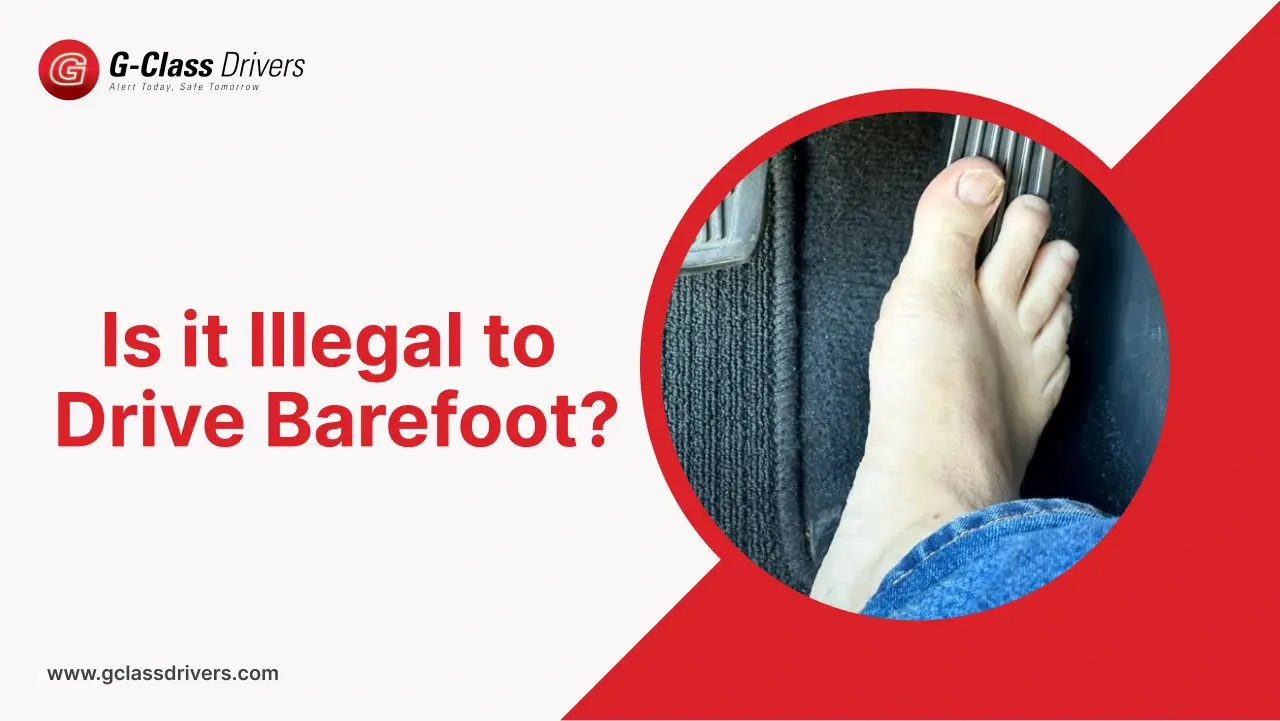
You’re rushing out the door on a hot summer day, flip-flops in hand, when you realize—do you really need to put them on to drive? The question “is it against the law to drive barefoot” has sparked countless debates at dinner tables, online forums, and even police stations across America. Despite what your parents might have told you or what that overly cautious friend insists is true, the answer might surprise you.
Let’s settle this once and for all with facts, legal insights, and practical advice that’ll help you make informed decisions about your footwear choices behind the wheel.
The Legal Reality: Is Driving Barefoot Actually Illegal?
Here’s the truth that shocks most people: driving barefoot is legal in all 50 United States. That’s right—there’s no federal law and no state law that specifically prohibits operating a vehicle without shoes. This widespread myth has persisted for decades, passed down through generations like an urban legend that refuses to die.
According to legal experts and state motor vehicle codes across the country, barefoot driving remains completely legal, though often misunderstood by the general public. The confusion likely stems from a mix of old wives’ tales, misinterpreted safety advice, and assumptions that something this commonly believed must have some legal basis.
Key Legal Facts:
- No state prohibits barefoot driving
- No federal transportation law bans shoeless operation of vehicles
- Police cannot ticket you solely for driving without shoes
- Insurance companies cannot deny claims based on barefoot driving alone
The myth became so pervasive that state DMVs and transportation departments have had to officially address it on their websites and in driver education materials, explicitly stating that while they might not recommend it, barefoot driving isn’t illegal.
Why Do People Think Barefoot Driving Is Against the Law?
The persistence of this myth deserves its own examination. Several factors have contributed to the widespread belief that it is against the law to drive barefoot, even though it absolutely isn’t.
Cultural transmission plays a huge role. Parents tell their children, driving instructors mention it in passing, and friends repeat what they’ve heard without verification. This game of telephone has turned a safety suggestion into perceived legal fact over the course of decades. Once something becomes “common knowledge,” people rarely question it or look up the actual laws.
Safety concerns have morphed into legal assumptions. Because some people genuinely believe barefoot driving could be less safe (a claim we’ll examine shortly), they’ve assumed lawmakers must have banned it. This logical leap from “potentially unsafe” to “definitely illegal” happens frequently with driving behaviors. After all, if something seems risky, shouldn’t there be a law against it?
Liability fears fuel the fire. Some people worry that if they’re in an accident while driving barefoot, they’ll automatically be found at fault or their insurance won’t cover damages. While these concerns are largely unfounded, they’ve reinforced the idea that barefoot driving must be legally problematic. Insurance adjusters and lawyers have had to repeatedly clarify that footwear status alone doesn’t determine liability.
State-by-State Breakdown: The Complete Picture
To thoroughly address whether is it against the law to drive barefoot varies by location, let’s examine how different states handle this issue. Spoiler alert: they all handle it the same way—by not prohibiting it at all.
| Region | Legal Status | Official Position | Notes |
|---|---|---|---|
| All 50 States | Legal | Not prohibited | No specific laws exist |
| Washington D.C. | Legal | Not prohibited | Same as states |
| U.S. Territories | Legal | Not prohibited | No federal prohibition |
California, often cited as having strict driving regulations, explicitly states that barefoot driving is legal. The California DMV has addressed this myth directly in public communications, confirming that no law prohibits it.
Texas, another frequently mentioned state, also permits barefoot driving. The Texas Transportation Code contains no provisions against operating a vehicle without footwear, and state troopers cannot cite drivers solely for being shoeless.
Florida, despite its reputation for unique laws, follows the same pattern. The Florida Highway Patrol has confirmed multiple times that while they recommend appropriate footwear, no law mandates it.
New York, known for comprehensive traffic regulations, similarly has no barefoot driving prohibition. The New York State DMV does not list footwear as a requirement in its driver licensing materials or vehicle operation guidelines.
The pattern holds true from Alaska to Hawaii, from Maine to Arizona. Not a single state has enacted legislation that makes driving without shoes a traffic violation. This universal legal stance suggests that lawmakers nationwide have determined barefoot driving doesn’t pose sufficient risk to warrant prohibition.
Safety Considerations: Should You Drive Barefoot?
Just because something is legal doesn’t automatically make it the best choice. While it is not against the law to drive barefoot, safety experts have varied opinions on whether you should actually do it.
The case for barefoot driving includes several legitimate points. Many drivers report better pedal feel and control without shoes, especially after removing restrictive footwear like high heels, thick boots, or flip-flops. Your bare foot provides direct sensory feedback, potentially allowing for more precise pressure modulation on the accelerator and brake. Some professional drivers and driving instructors actually prefer barefoot operation in certain scenarios because it eliminates the disconnect that thick-soled shoes can create.
The case against barefoot driving has its own merit. In emergency situations requiring quick pedal movements, shoes can provide additional force application and protect your feet from strain. If you need to exit your vehicle quickly due to an emergency—a fire, collision, or roadside hazard—bare feet leave you vulnerable to broken glass, hot pavement, or sharp debris. The extra friction from shoe soles can also help prevent your foot from slipping off pedals in certain conditions.
Real-world considerations matter most. The safety of barefoot driving largely depends on individual circumstances, vehicle type, driving conditions, and personal comfort. A short drive on familiar roads differs significantly from highway driving in bad weather or navigating rush-hour traffic in an unfamiliar city.
Expert opinions vary considerably. Some driving safety organizations suggest keeping appropriate footwear in your vehicle even if you prefer driving barefoot, ensuring you have shoes available for emergencies. Others maintain that dangerous footwear (like loose flip-flops or shoes with excessive heel height) poses greater risks than bare feet ever could.
The Footwear That Actually Poses Risks
Here’s an ironic twist: while people worry about whether is it against the law to drive barefoot (it’s not), they should really worry more about certain types of shoes that create genuine hazards but remain completely legal.
Flip-flops rank among the most dangerous driving footwear. These loose sandals can slide under pedals, get caught between the pedal and floor, or slip off entirely during critical moments. The flimsy sole provides poor pedal control, and the loose fit means your foot isn’t securely connected to your directional input. Yet they’re perfectly legal to wear while driving.
High heels present multiple control issues. The elevated heel changes your ankle angle and reduces your ability to properly modulate pedal pressure. The narrow heel can slip between pedals or get wedged in floor mats. The altered geometry of your foot position can lead to delayed reaction times and less effective braking force. Still completely legal.
Thick winter boots create sensory disconnection. While necessary for harsh weather, extremely thick or bulky footwear reduces your ability to feel the pedals, potentially leading to over-application or under-application of pressure. The wide profile can also make it difficult to operate pedals independently without accidentally pressing two at once.
Platform shoes and wedges combine the worst elements. They alter ankle angles like heels while adding bulk that reduces pedal feel and increases the chance of getting caught on floor mats or between pedals.
The bottom line: Many legal footwear choices pose greater actual risks than barefoot driving. If you’re going to judge barefoot driving as risky, apply the same scrutiny to problematic shoe choices that definitely do increase accident likelihood.
What Happens If You’re in an Accident While Driving Barefoot?
This question concerns many people who wonder about is it against the law to drive barefoot and the potential consequences. Let’s address the insurance and liability angles directly.
Your insurance coverage remains valid. Auto insurance policies don’t include footwear clauses, and companies cannot deny legitimate claims solely because you were driving barefoot at the time of an accident. Your coverage depends on your policy terms, the accident circumstances, and fault determination—not your shoe status.
Fault determination follows normal procedures. Police officers and insurance adjusters evaluate accidents based on traffic violations, right-of-way rules, road conditions, witness statements, and physical evidence. Being barefoot isn’t considered a contributing factor unless specific circumstances make it directly relevant, which would be extremely rare. The officer investigating your accident won’t check your footwear status as part of their report.
Liability concerns are largely theoretical. While an opposing attorney might mention barefoot driving if you’re sued after an accident, it holds no legal weight as proof of negligence since the practice is legal everywhere. Courts require actual evidence of wrongdoing, not speculation about whether shoes might have made a difference. No case law establishes barefoot driving as inherently negligent behavior.
Documentation protects you. If you’re concerned about potential questions, you can always note that barefoot driving is legal in all states and that no law requires specific footwear. This information becomes part of the record and helps counter any unfounded claims about your driving behavior.
The practical reality: Tens of millions of Americans have driven barefoot without incident. The overwhelming majority of accidents involve factors far more significant than footwear choices—distracted driving, impairment, speeding, weather conditions, and vehicle defects rank infinitely higher on the causation scale.
International Perspectives on Barefoot Driving Laws
While we’ve established the answer to “is it against the law to drive barefoot” in the United States, international laws vary significantly and offer interesting comparisons.
The United Kingdom permits barefoot driving, though the Highway Code suggests appropriate footwear. However, UK law does allow officers to charge drivers with “driving without due care and attention” if footwear (or lack thereof) contributed to dangerous driving. This creates a gray area where barefoot driving itself isn’t illegal, but could become a factor in other charges.
Spain explicitly allows barefoot driving with no restrictions or caveats in their traffic laws. Spanish drivers enjoy the same freedom as Americans on this particular issue, with no legal consequences for choosing to drive without shoes.
Germany takes a different approach. While not technically illegal, barefoot driving can affect insurance claims if deemed a contributing factor to an accident. This creates a quasi-legal situation where the act itself is permitted, but consequences might follow in specific circumstances. German driving culture tends toward more conservative footwear choices as a result.
France prohibits certain footwear types including flip-flops and high heels while driving, but interestingly doesn’t ban barefoot driving outright. This seems counterintuitive—banning some shoes but not banning no shoes—but it reflects recognition that certain footwear creates specific hazards while bare feet might actually be safer.
Australia’s states vary slightly, but generally permit barefoot driving with recommendations for appropriate footwear. Some Australian states have issued guidance suggesting drivers keep shoes in their vehicle, but stop short of making footwear mandatory.
These international variations demonstrate that barefoot driving laws reflect cultural attitudes and legal philosophies more than objective safety data. If barefoot driving truly posed extreme danger, we’d expect universal prohibition, yet we see diverse approaches worldwide.
Practical Tips for Barefoot Driving
If you’ve decided that barefoot driving works for you—and remember, it is not against the law to drive barefoot anywhere in the US—these practical tips will help you do it safely and effectively.
Keep emergency footwear accessible. Store appropriate shoes in your vehicle within easy reach. If you need to exit quickly due to an emergency, walk to a gas station, or change a tire, having shoes available prevents injuries and inconvenience. A dedicated pair of driving shoes that live in your car solves this problem elegantly.
Consider your route and conditions. Barefoot driving works better for familiar routes and pleasant weather than for challenging conditions or unfamiliar areas. Use your judgment about when barefoot operation makes sense versus when shoes provide advantages. Long highway drives might differ from quick errands around town.
Maintain your vehicle’s interior. Ensure your floor mats are secured properly and won’t interfere with pedal operation. Remove debris that could create discomfort or distraction when pressing pedals with bare feet. A clean, well-maintained pedal area becomes even more important when you’re not wearing protective footwear.
Practice in safe conditions first. If you’re new to barefoot driving, try it initially in low-risk situations like empty parking lots or quiet residential streets. This helps you develop feel for pedal pressure and responsiveness without surrounding traffic creating pressure or distraction.
Know your own comfort level. Some people find barefoot driving liberating and natural, while others feel uncomfortable or vulnerable. Neither response is wrong—choose what works for you personally rather than following others’ preferences or judgments.
Be prepared to explain if stopped. While police can’t ticket you for barefoot driving, an officer might question it if they stop you for another reason. Politely explaining that it’s legal everywhere in the US typically ends the discussion quickly. Knowledge of the law protects you from misinformation or improper citations.
Common Myths and Misconceptions Debunked
The question “is it against the law to drive barefoot” has spawned numerous related myths that deserve correction. Let’s systematically address these misconceptions with factual information.
Myth #1: “It’s illegal in [insert state name here]”. This myth persists with various states filling in the blank, but the reality remains unchanged—all 50 states permit barefoot driving. No state legislature has enacted such a prohibition, despite decades of this myth circulating. When people claim their specific state bans it, they’re simply repeating misinformation.
Myth #2: “Your insurance will drop you or deny claims”. Insurance companies cannot and do not deny coverage solely based on barefoot driving since it’s completely legal. Policy terms never include footwear requirements, and claims departments don’t investigate shoe status. This myth likely stems from general anxiety about insurance coverage rather than actual policy language.
Myth #3: “You’ll automatically be at fault in any accident”. Fault determination depends on traffic laws, right-of-way, and accident circumstances—not footwear. Being barefoot doesn’t establish negligence because you haven’t broken any law. Courts and insurance adjusters evaluate actual evidence of wrongdoing, not lawful behavior choices.
Myth #4: “It’s technically legal but officers still ticket people”. Officers cannot issue citations for behavior that violates no law. While an officer might personally disapprove of barefoot driving, they lack legal authority to ticket you for it. Any such citation would be dismissed immediately in court and could expose the officer to complaints about improper enforcement.
Myth #5: “Driving schools and DMVs prohibit it in their rules”. While some instructors might have personal policies for their vehicles or express preferences during lessons, official DMV rules and driver testing requirements don’t mandate footwear. You won’t fail a driving test solely for being barefoot, though individual examiners might request you wear shoes in their vehicle—that’s their prerogative as vehicle owners, not a legal requirement.
Expert Opinions and Studies on Barefoot Driving Safety
Academic research and expert analysis on whether is it against the law to drive barefoot tends to focus more on safety aspects than legal status, since the legal question is definitively settled.
Limited formal research exists on barefoot versus shod driving performance, which itself tells us something important. If barefoot driving posed significant safety risks, we’d expect extensive studies demonstrating the danger. The absence of such research suggests the safety difference isn’t dramatic enough to warrant major scientific attention or concern from safety organizations.
Driving instructors hold divided opinions. Some professional instructors argue that proper footwear provides important advantages in emergency situations, citing foot protection and optimal force application. Others maintain that bare feet offer superior pedal feel and control, particularly compared to problematic footwear like flip-flops or heels. This professional disagreement indicates the issue isn’t black-and-white.
Occupational driving safety guidelines from various industries typically don’t address barefoot driving specifically, instead focusing on major risk factors like fatigue, distraction, impairment, and aggressive driving. This omission from professional safety protocols suggests barefoot driving ranks low on the actual risk hierarchy.
Biomechanics researchers have noted that barefoot operation provides better sensory feedback and more natural foot positioning compared to heavily cushioned or elevated footwear. This supports the argument that bare feet might actually enhance control in certain circumstances, contradicting assumptions that shoes always improve driving safety.
The consensus among legal and safety experts: While personal preferences vary and individual circumstances matter, barefoot driving doesn’t pose sufficient risk to warrant legal prohibition or serious safety concern. The practice should be evaluated based on personal comfort, specific conditions, and common sense rather than fear of legal consequences that don’t exist.
When You Should Definitely Wear Shoes While Driving
Even though it is not against the law to drive barefoot, certain situations genuinely call for appropriate footwear regardless of legality or personal preference.
Long-distance highway driving benefits from proper shoes that protect your feet during extended periods of pedal operation. Hours of pressure on your bare foot can cause discomfort, cramping, or numbness that shoes help prevent. The fatigue factor becomes significant on road trips or commutes exceeding an hour.
Unfamiliar vehicles or rental cars deserve extra caution. When you don’t know a vehicle’s pedal spacing, resistance, or sensitivity characteristics, shoes provide a buffer that helps you adapt more safely. Your first time driving any vehicle probably isn’t the best time to experiment with barefoot operation.
Commercial driving situations often have workplace requirements beyond legal minimums. If you drive for work—delivery services, rideshare companies, trucking, or any commercial purpose—check your employer’s policies and insurance requirements. Many companies mandate appropriate footwear regardless of state laws.
Bad weather conditions including rain, snow, ice, or extreme heat suggest wearing shoes. Emergency situations become more likely in challenging weather, and having protected feet better prepares you for unexpected vehicle exits or control maneuvers. Hot summer pavement can burn bare feet if you need to exit quickly.
Areas with potential hazards like construction zones, rural roads with debris, or urban areas with broken glass warrant footwear protection. If you need to stop and inspect your vehicle, change a tire, or walk for help, bare feet become significant liabilities in these environments.
The Bottom Line: Your Barefoot Driving Rights
After this comprehensive examination of whether is it against the law to drive barefoot, we can state definitively: barefoot driving is completely legal throughout the United States, with no federal or state laws prohibiting it. This persistent myth has misled generations of drivers, but the facts clearly support your right to drive without shoes.
Legal status: Not prohibited anywhere in the US. Safety considerations: Largely dependent on individual circumstances, vehicle type, and conditions. Insurance implications: None—your coverage remains valid. Liability concerns: Unfounded—barefoot driving doesn’t establish negligence.
The decision to drive barefoot ultimately comes down to personal comfort, specific situations, and practical judgment rather than legal requirements. You have the freedom to choose what works best for you, armed now with accurate information about your rights and the real considerations involved.
Understanding the truth about barefoot driving empowers you to make informed decisions based on facts rather than myths. Whether you prefer the enhanced pedal feel of bare feet, the protection of proper shoes, or switching between options based on circumstances, you now know the law supports your choice. For more information on automotive accessories and technology, check out our guide on micro b drive cable 1 ft 10gbps 3.1.
Frequently Asked Questions About Barefoot Driving
Is it against the law to drive barefoot in the United States?
No, driving barefoot is completely legal in all 50 states. There are no federal or state laws that prohibit operating a vehicle without shoes. This widespread myth has persisted for decades, but the legal reality is clear—you cannot be ticketed solely for driving barefoot anywhere in America.
Can my insurance company deny my claim if I was driving barefoot during an accident?
No, insurance companies cannot deny legitimate claims solely because you were driving barefoot. Auto insurance policies don’t include footwear requirements, and barefoot driving is legal, so it cannot be used as grounds for claim denial. Fault determination and coverage depend on the actual circumstances of the accident, not your shoe status.
Which states have laws against driving barefoot?
None. Despite common misconceptions and urban legends claiming certain states prohibit barefoot driving, no state has enacted such legislation. This myth often incorrectly names states like California, Texas, Florida, or Virginia, but all of these states—along with the other 46—permit barefoot driving without restriction.
Is barefoot driving safer than wearing flip-flops or high heels?
Many safety experts argue that barefoot driving is actually safer than wearing loose flip-flops or high heels. Flip-flops can slip under pedals or off your feet entirely, while high heels alter your ankle angle and reduce pedal control. Bare feet provide better sensory feedback and won’t create the mechanical interference problems that problematic footwear causes.
Will I be automatically at fault if I’m in an accident while driving barefoot?
No, you will not be automatically at fault. Fault determination follows standard procedures based on traffic laws, right-of-way rules, and accident circumstances. Since barefoot driving is legal and doesn’t violate any traffic regulations, it cannot establish negligence or automatic fault. The investigating officer won’t even typically note footwear status in their report.
Do I need to wear shoes for my driving test?
While official DMV requirements don’t mandate footwear, individual driving examiners might request that you wear shoes in their vehicle during testing. This would be a personal policy rather than a legal requirement. It’s advisable to wear appropriate shoes for your driving test to avoid any potential issues or distractions from the testing process itself.
What should I do if a police officer says barefoot driving is illegal?
Politely inform the officer that barefoot driving is legal in all 50 states and ask what specific law or statute you’re allegedly violating. Officers cannot issue valid citations for behavior that breaks no law. If they persist, accept the ticket and contest it in court—any such citation would be dismissed since no violation occurred. You might also consider filing a complaint about the incorrect enforcement.
Are there any countries where driving barefoot is actually illegal?
Very few countries explicitly prohibit barefoot driving. Most nations either permit it outright or have gray areas where it’s not technically illegal but could become relevant in broader negligence cases. France prohibits certain footwear types like flip-flops but not bare feet. Germany allows it but might consider it during insurance claims. Always check local laws when driving internationally to understand specific requirements.
Share the Truth About Barefoot Driving
Now that you know the facts about is it against the law to drive barefoot, help spread accurate information by sharing this article with friends and family who might believe the myth. Combating misinformation requires collective effort—when someone repeats the claim that barefoot driving is illegal, you can now confidently correct them with factual, legal information. Understanding your rights as a driver empowers you to make informed choices based on comfort and safety rather than unfounded fears of legal consequences. The next time someone insists you must wear shoes while driving, you’ll have the knowledge to explain that while appropriate footwear might be advisable in certain situations, it’s absolutely not required by law anywhere in the United States.
Sources and Citations:
For authoritative information on driving laws and regulations, consult your state’s Department of Motor Vehicles website or official motor vehicle code. Legal databases and state traffic law compilations confirm that no jurisdiction prohibits barefoot driving. Safety recommendations from organizations like the National Highway Traffic Safety Administration (NHTSA) and various driving safety councils provide guidance on footwear choices without claiming legal prohibition.
