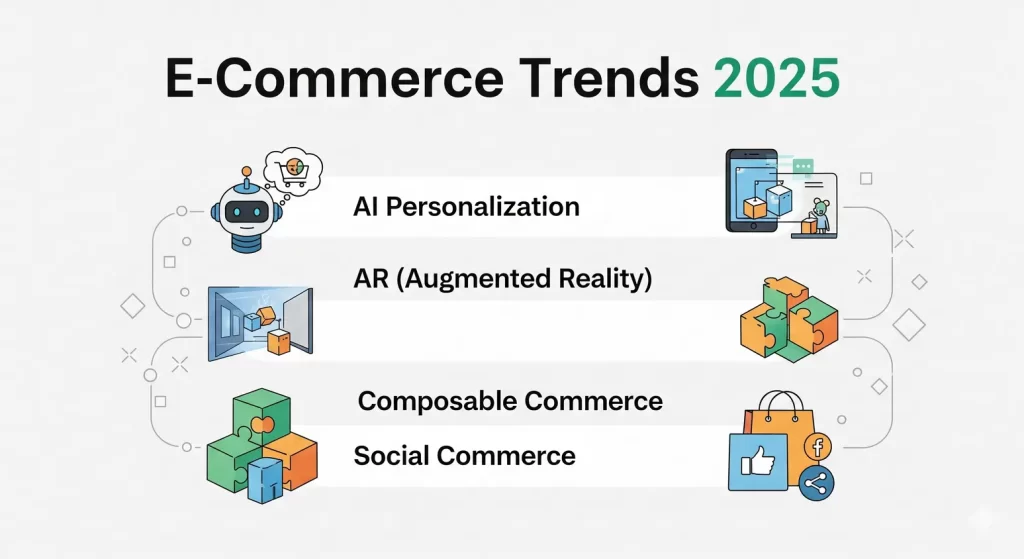
The digital marketplace has evolved dramatically, and understanding how to leverage commerce drive effectively can make or break your business success. Whether you’re a startup founder or an established enterprise, mastering the principles of commerce-driven strategies is no longer optional—it’s essential for survival in today’s competitive landscape.
What Is Commerce Drive and Why Should You Care?
Commerce drive refers to the strategic initiatives and technological implementations that propel businesses toward sustainable growth through optimized sales channels, customer engagement, and revenue generation. Think of it as the engine that powers your entire business ecosystem, connecting everything from your marketing funnel to your checkout process.
At its core, commerce drive encompasses the systematic approach businesses take to increase transactions, improve customer lifetime value, and create seamless buying experiences across multiple touchpoints. It’s not just about making sales—it’s about building a sustainable system that consistently generates revenue while delighting customers.
The beauty of commerce drive lies in its holistic nature. Unlike traditional sales tactics that focus on isolated campaigns, a commerce-driven approach integrates your entire operation around the singular goal of facilitating frictionless transactions. This integration spans your website design, payment processing, inventory management, customer service, and marketing automation.
The Evolution of Commerce-Driven Business Models
Modern businesses have shifted from product-centric to customer-centric models, and commerce drive strategies have evolved accordingly. In the early 2000s, simply having an online store was revolutionary. Today, customers expect personalized experiences, instant gratification, and seamless omnichannel interactions.
The transformation began with the rise of e-commerce giants like Amazon, which set new standards for what commerce could achieve. They demonstrated that driving commerce wasn’t just about listing products—it was about anticipating needs, reducing friction, and creating addictive shopping experiences.
Key Phases of Commerce Drive Evolution:
- Phase 1: Digital Storefronts (2000-2010) – Basic online catalogs with shopping carts and payment gateways
- Phase 2: Personalization Era (2010-2018) – Recommendation engines, targeted marketing, and customer segmentation
- Phase 3: Omnichannel Integration (2018-2022) – Unified experiences across mobile, web, social, and physical stores
- Phase 4: AI-Powered Commerce (2022-Present) – Predictive analytics, conversational commerce, and hyper-personalization
According to recent data, businesses that implement comprehensive commerce drive strategies see an average revenue increase of 23% within the first year. Companies focusing on omnichannel commerce drive initiatives report 89% customer retention rates, compared to just 33% for those with weak omnichannel strategies.
Essential Components of a Successful Commerce Drive Strategy
Building an effective commerce drive system requires multiple interconnected elements working in harmony. Let’s break down the critical components that separate high-performing businesses from those struggling to gain traction.
1. Customer Experience Optimization
Your customer experience (CX) is the foundation of any commerce-driven strategy. Every interaction a customer has with your brand either strengthens or weakens their likelihood to purchase. Commerce drive excellence starts with understanding the customer journey from awareness to advocacy.
Research shows that 86% of buyers are willing to pay more for a great customer experience. This means investing in CX directly impacts your bottom line. Focus on reducing page load times (every second delay decreases conversions by 7%), simplifying navigation, and providing multiple support channels.
Consider implementing live chat features, AI-powered product recommendations, and one-click checkout options. These seemingly small improvements can dramatically boost your commerce drive performance. Companies like Zappos built billion-dollar businesses primarily through superior customer experience rather than product differentiation.
2. Data-Driven Decision Making
Modern commerce drive strategies rely heavily on analytics and insights. You can’t optimize what you don’t measure. Successful businesses track key performance indicators (KPIs) like conversion rates, average order value, customer acquisition cost, and lifetime value.
Tools like Google Analytics, Mixpanel, and Amplitude provide deep insights into customer behavior patterns. By analyzing this data, you can identify bottlenecks in your sales funnel, understand which products drive the most revenue, and predict future trends.
Pro tip: Implement cohort analysis to understand how different customer segments behave over time. This reveals which acquisition channels deliver the most valuable long-term customers, allowing you to allocate your commerce drive budget more effectively.
3. Technology Stack Integration
Your technology infrastructure can either accelerate or hinder your commerce drive initiatives. The right tools create seamless workflows, while disconnected systems create friction that frustrates both customers and employees.
A robust commerce drive technology stack typically includes:
- E-commerce Platform (Shopify, WooCommerce, Magento)
- Customer Relationship Management (Salesforce, HubSpot)
- Marketing Automation (Klaviyo, Mailchimp)
- Analytics Tools (Google Analytics, Hotjar)
- Payment Processing (Stripe, PayPal)
- Inventory Management (TradeGecko, Cin7)
The key is ensuring these systems communicate effectively through APIs and integrations. Data should flow smoothly between platforms without manual intervention, creating a unified view of each customer across all touchpoints.
Commerce Drive vs. Traditional Sales Approaches
Understanding the distinction between commerce drive strategies and traditional sales methods is crucial for modern businesses. While traditional sales focus on pushing products through persuasion and relationship-building, commerce drive emphasizes creating systems that pull customers toward purchases naturally.
| Aspect | Traditional Sales | Commerce Drive |
|---|---|---|
| Focus | Individual transactions | Systemic revenue generation |
| Customer Interaction | Personal, one-on-one | Automated, scalable |
| Measurement | Deals closed, revenue | Conversion rates, LTV, CAC |
| Scalability | Limited by sales team size | Infinitely scalable |
| Technology Dependency | Low | High |
| Customer Experience | Variable, rep-dependent | Consistent, optimized |
Traditional sales approaches still have their place, especially in B2B contexts or high-ticket items requiring consultation. However, the most successful businesses blend both approaches, using commerce drive systems to handle routine transactions while reserving human touchpoints for complex decisions.
The shift toward commerce-driven models has democratized business success. Small teams can now compete with large enterprises by leveraging technology to automate and optimize their sales processes. This levels the playing field in ways previously impossible.
Real-World Commerce Drive Success Stories
Let’s examine how businesses across different industries have leveraged commerce drive principles to achieve remarkable results. These case studies demonstrate practical applications you can adapt to your own business.
Case Study 1: Glossier’s Community-Driven Commerce
Beauty brand Glossier built a billion-dollar valuation by prioritizing commerce drive through community engagement. Instead of traditional advertising, they created a feedback loop where customers influenced product development, marketing, and brand direction.
Their strategy centered on making commerce social and interactive. By encouraging user-generated content and fostering genuine conversations, Glossier transformed customers into brand ambassadors who actively drove commerce through authentic recommendations. The result? A customer acquisition cost 80% lower than industry averages.
Case Study 2: Warby Parker’s Virtual Try-On Innovation
When Warby Parker entered the eyewear market, they faced a significant commerce drive challenge: people hesitated to buy glasses online without trying them first. Their solution revolutionized online eyewear commerce by offering home try-on programs and later, AR-powered virtual try-ons.
This innovation directly addressed the primary friction point preventing online purchases. By removing this barrier, Warby Parker achieved conversion rates 30% higher than traditional eyewear retailers. Their commerce-driven approach combined technology with customer psychology to create a competitive advantage traditional retailers couldn’t match.
Case Study 3: Dollar Shave Club’s Subscription Model Disruption
Dollar Shave Club transformed a commodity product category through innovative commerce drive strategies. By implementing a subscription model, they created predictable recurring revenue while solving a genuine customer pain point—running out of razors.
Their viral marketing combined with frictionless subscription management generated $240 million in revenue by year five, ultimately leading to a $1 billion acquisition. The key was understanding that driving commerce wasn’t about selling razors—it was about eliminating the hassle of buying razors.
Implementing Commerce Drive in Your Business: A Step-by-Step Framework
Ready to transform your business with commerce drive principles? Follow this systematic framework to build a revenue-generating machine that works while you sleep.
Step 1: Audit Your Current Customer Journey
Map every touchpoint a customer experiences from initial awareness through post-purchase. Identify friction points where customers drop off or express frustration. Use tools like Hotjar to watch session recordings and see exactly where people struggle on your site.
Calculate your current conversion rates at each funnel stage. This baseline data is essential for measuring the impact of your commerce drive improvements. Don’t skip this step—you need to know where you’re starting before you can measure progress.
Step 2: Define Your Commerce Drive Goals
Set specific, measurable objectives for your commerce drive initiative. Vague goals like “increase sales” won’t drive focused action. Instead, aim for concrete targets: “Increase checkout completion rate from 67% to 75% within 90 days” or “Reduce customer acquisition cost by 20% this quarter.”
Your goals should align with your broader business objectives while remaining achievable with available resources. Consider both short-term wins (quick optimizations) and long-term strategic initiatives (platform migrations, major feature development).
Step 3: Optimize for Mobile Commerce
With mobile devices accounting for over 70% of e-commerce traffic, mobile optimization is non-negotiable for commerce drive success. Your site must load quickly, display properly on all screen sizes, and make purchasing effortless on smartphones.
Implement responsive design, optimize images for mobile bandwidth, and simplify forms for touchscreen interaction. Consider mobile-specific features like one-tap payments through Apple Pay or Google Pay. Test your mobile experience rigorously—have real users complete purchases while you observe.
Step 4: Implement Personalization Engines
Personalization dramatically improves commerce drive performance. Businesses using advanced personalization see an average revenue increase of 15%. Start with basic product recommendations based on browsing history, then expand to personalized email campaigns, dynamic pricing, and customized homepage experiences.
Amazon attributes 35% of its revenue to its recommendation engine. While you may not need their level of sophistication immediately, even simple “customers who bought this also bought” recommendations significantly boost average order values and overall commerce drive results.
Step 5: Streamline the Checkout Process
Cart abandonment averages 69.8% across industries, representing massive lost revenue. Every unnecessary step in your checkout process costs sales. Analyze your checkout flow and ruthlessly eliminate friction points that hinder commerce drive performance.
Best practices include offering guest checkout, displaying trust signals (security badges, customer reviews), showing progress indicators, and auto-filling information where possible. Consider implementing one-page checkouts for simple purchases and offering multiple payment methods to accommodate customer preferences.
Advanced Commerce Drive Tactics for Competitive Advantage
Once you’ve mastered the fundamentals, these advanced strategies will elevate your commerce drive performance beyond competitors still using basic approaches.
Predictive Analytics and AI Integration
Modern commerce drive leaders use artificial intelligence to anticipate customer needs before they’re explicitly expressed. Predictive analytics analyzes historical behavior patterns to forecast what customers will want, when they’ll want it, and how much they’ll pay.
Implement AI-powered chatbots that provide instant support while collecting valuable data about customer questions and concerns. Use machine learning algorithms to optimize pricing dynamically based on demand, competition, and inventory levels. These technologies might sound complex, but many platforms now offer plug-and-play solutions.
Netflix reportedly saves $1 billion annually through its recommendation algorithm by reducing churn and keeping subscribers engaged. While your scale may differ, the principle applies—using AI to guide customers toward relevant products dramatically improves commerce drive efficiency.
Omnichannel Commerce Integration
True commerce drive excellence requires seamless experiences across all customer touchpoints. Your online store, mobile app, social media channels, email marketing, and even physical locations (if applicable) should function as one cohesive ecosystem.
Customers should be able to start browsing on their phone during their commute, continue on their laptop at home, and complete the purchase on their tablet before bed—without losing their cart or preferences. This level of integration requires sophisticated backend systems but pays dividends in conversion rates and customer satisfaction.
Brands offering strong omnichannel experiences retain 89% of customers, compared to just 33% retention for companies with weak omnichannel strategies. The investment in unified commerce drive systems clearly justifies itself through improved customer lifetime value.
Social Commerce and Shoppable Content
Social platforms have evolved from marketing channels to full-fledged commerce environments. Instagram Shopping, Facebook Marketplace, TikTok Shop, and Pinterest Product Pins enable direct purchases without leaving the app, reducing friction and improving commerce drive results.
Create shoppable posts featuring your products in authentic contexts—lifestyle imagery rather than catalog shots. Collaborate with micro-influencers whose audiences align with your target market. User-generated content showing real customers using your products builds trust while driving commerce through social proof.
Social commerce is projected to reach $2.9 trillion globally by 2026, representing massive opportunity for businesses that embrace this commerce drive channel early. The key is maintaining authenticity while making purchases frictionless.
Measuring Commerce Drive Success: KPIs That Matter
You can’t improve what you don’t measure. These metrics provide insight into your commerce drive performance and highlight areas needing attention.
Primary Commerce Drive Metrics:
- Conversion Rate – Percentage of visitors who complete purchases (industry average: 2-3%)
- Average Order Value (AOV) – Total revenue divided by number of orders
- Customer Lifetime Value (CLV) – Total revenue expected from a customer over their relationship with your brand
- Customer Acquisition Cost (CAC) – Total marketing and sales expenses divided by new customers acquired
- Cart Abandonment Rate – Percentage of started checkouts that aren’t completed
- Return on Ad Spend (ROAS) – Revenue generated per dollar spent on advertising
Secondary Commerce Drive Indicators:
- Time to Purchase – How long between first visit and completed transaction
- Pages Per Session – Average pages viewed during a visit (indicates engagement)
- Email Open and Click Rates – Effectiveness of email marketing in driving traffic
- Net Promoter Score – Customer willingness to recommend your business
- Repeat Purchase Rate – Percentage of customers who buy multiple times
Track these metrics consistently using dashboards that update in real-time. Tools like Google Data Studio or Tableau can visualize your commerce drive performance, making trends and anomalies immediately apparent. Set up automated alerts for significant changes that might indicate problems or opportunities.
Common Commerce Drive Mistakes to Avoid
Even experienced businesses make costly errors when implementing commerce drive strategies. Learn from these common pitfalls to accelerate your success.
Mistake 1: Prioritizing Features Over Benefits
Many businesses obsess over product features while customers care about benefits—what problems get solved. Your commerce drive messaging should emphasize outcomes rather than specifications. Instead of “Our software has 50 integrations,” say “Connect all your tools to save 10 hours weekly.”
This customer-centric approach dramatically improves conversion rates because it speaks directly to pain points. Apple mastered this in their marketing—they didn’t sell “1000 songs storage,” they sold “1000 songs in your pocket.”
Mistake 2: Neglecting Mobile Experience
With mobile comprising the majority of web traffic, a poor mobile experience cripples commerce drive results. Yet many businesses treat mobile as an afterthought, optimizing for desktop then hoping their design “works” on smaller screens.
Take a mobile-first approach. Design and test on smartphones before desktop. Ensure buttons are thumb-friendly sized, text is readable without zooming, and forms are minimal. Your mobile commerce drive performance directly impacts your bottom line.
Mistake 3: Overcomplicating the Purchase Process
Every additional step in your checkout process reduces conversions by approximately 10%. Many businesses unknowingly sabotage their commerce drive efforts by requiring account creation, asking unnecessary questions, or implementing convoluted payment flows.
Strip your checkout down to absolute essentials: shipping address, payment method, confirmation. Anything else is optional and should be clearly marked as such. Amazon’s one-click ordering exists because they understand that friction kills commerce.
Mistake 4: Ignoring Post-Purchase Experience
Your commerce drive strategy shouldn’t end at checkout. The post-purchase experience determines whether customers return and recommend you. Yet many businesses invest heavily in acquisition while neglecting retention.
Send thoughtful thank-you emails, provide detailed tracking information, include personalized product care instructions, and request feedback at appropriate times. These touches cost little but dramatically impact repeat purchase rates and lifetime value—the ultimate measure of commerce drive success.
The Future of Commerce Drive: Emerging Trends
Staying ahead requires understanding where commerce drive is heading. These emerging trends will shape the competitive landscape over the next 3-5 years.
Voice Commerce and Conversational Shopping
Voice-activated shopping through Alexa, Google Assistant, and Siri is growing rapidly. By 2025, voice commerce is expected to reach $40 billion in the US alone. Optimizing for voice search requires different commerce drive tactics—conversational keywords, concise product descriptions, and seamless voice-activated checkout.
Smart businesses are already implementing voice-optimized product listings and exploring partnerships with voice platform providers. This represents a significant commerce drive opportunity for early adopters who establish presence before the channel becomes saturated.
Augmented Reality Shopping Experiences
AR technology is removing the primary barrier to online purchases—inability to experience products physically. IKEA’s app lets customers visualize furniture in their homes. Sephora’s virtual try-on shows makeup application. These innovations directly drive commerce by reducing purchase anxiety.
As AR becomes more accessible through smartphones and eventually AR glasses, expect this technology to become standard in commerce drive strategies across industries. Businesses that implement AR experiences early gain competitive advantages through enhanced customer confidence.
Sustainability-Driven Commerce
Consumers increasingly prioritize sustainability, with 73% of millennials willing to pay more for sustainable products. Integrating sustainability into your commerce drive strategy isn’t just ethical—it’s profitable.
Highlight eco-friendly packaging, carbon-neutral shipping, and ethical sourcing prominently. Partner with organizations like Crescent Drive that support sustainable business practices. Transparency about environmental impact becomes a commerce driver as conscious consumerism grows.
Cryptocurrency and Blockchain Integration
While still emerging, cryptocurrency payments are gaining mainstream acceptance. Offering Bitcoin, Ethereum, or stablecoin payment options appeals to crypto-native audiences while positioning your brand as forward-thinking. Commerce drive strategies incorporating blockchain also enable enhanced security, transparency, and loyalty programs.
The technology remains complex, but payment processors increasingly simplify integration. Businesses serving tech-savvy demographics should explore incorporating crypto payments into their commerce drive infrastructure.
Building Your Commerce Drive Action Plan
Theory means nothing without implementation. Here’s your roadmap for launching a results-driven commerce drive initiative starting today.
Week 1: Assessment and Planning
Conduct a comprehensive audit of your current sales processes, technology stack, and customer experience. Gather baseline metrics for all key performance indicators. Survey customers about their experience and pain points. This research phase informs all subsequent commerce drive decisions.
Create a prioritized list of opportunities based on potential impact and implementation difficulty. Quick wins generate momentum while complex projects develop in parallel. Assemble your team—who owns what aspects of the commerce drive transformation?
Month 1: Quick Win Implementation
Focus on low-hanging fruit that delivers immediate results. This might include streamlining checkout, implementing basic personalization, improving site speed, or optimizing mobile experience. These improvements boost commerce drive performance quickly while building organizational confidence.
Document results meticulously. Showing concrete improvements from early initiatives secures buy-in for larger investments. Even modest gains like 5% conversion improvement translate to substantial revenue increases that justify continued investment.
Quarter 1: Strategic Foundation Building
Implement major infrastructure improvements—platform migrations, integration projects, or significant feature development. These foundational elements enable advanced commerce drive tactics in future phases.
Begin testing more sophisticated strategies like dynamic pricing, advanced segmentation, or omnichannel integration. Establish regular reporting rhythms to monitor commerce drive KPIs and course-correct quickly when metrics deviate from targets.
Year 1: Optimization and Scaling
With foundational systems in place, focus on optimization and scaling what works. Use A/B testing to refine every customer touchpoint. Expand successful initiatives across more products, channels, or customer segments.
Build a continuous improvement culture where commerce drive optimization becomes embedded in daily operations rather than a one-time project. The businesses that sustain competitive advantages treat commerce optimization as an ongoing discipline, not a destination.
Frequently Asked Questions About Commerce Drive
What exactly does commerce drive mean for my business?
Commerce drive refers to the strategic approach and technological systems that enable consistent revenue generation through optimized customer experiences, streamlined sales processes, and data-driven decision making. For your specific business, it means creating a systematic method to convert prospects into customers efficiently and profitably.
How much should I invest in commerce drive initiatives?
Most successful businesses allocate 10-20% of revenue toward commerce drive improvements including technology, marketing, and optimization efforts. Start with smaller investments in quick wins, then scale based on measured results. The key is treating commerce drive as an investment that generates measurable returns rather than an expense.
Can small businesses compete using commerce drive strategies?
Absolutely! Modern technology democratizes access to sophisticated commerce drive tools. Small businesses often move faster than large enterprises, implementing improvements quickly without bureaucratic obstacles. Focus on mastering fundamentals before pursuing advanced tactics, and leverage affordable platforms like Shopify, Mailchimp, and Google Analytics.
How long before I see results from commerce drive improvements?
Quick wins like checkout optimization or site speed improvements can show results within days or weeks. More strategic initiatives like platform migrations or brand repositioning may take 3-6 months to demonstrate impact. The key is measuring continuously and adjusting based on data rather than expecting overnight transformation.
What’s the biggest commerce drive mistake businesses make?
The most common error is prioritizing technology over customer experience. Businesses invest in fancy tools without understanding customer needs, resulting in sophisticated systems that nobody uses. Start with deep customer understanding, then implement technology that solves actual problems. Commerce drive success comes from customer-centricity, not tool-centricity.
How does commerce drive differ from e-commerce?
E-commerce refers specifically to selling products online, while commerce drive encompasses the broader strategy of optimizing all aspects of your sales ecosystem—online and offline—to maximize revenue generation. Commerce drive includes e-commerce but extends to omnichannel integration, customer experience optimization, and systematic growth approaches.
Accelerate Your Commerce Drive Success Today
The difference between businesses that thrive and those that struggle often comes down to execution. You now understand the principles, strategies, and tactics that define successful commerce drive implementation. The question is: what will you do with this knowledge?
Start by auditing your current customer journey today. Identify the three biggest friction points preventing sales, then systematically eliminate them. Implement one improvement this week—even a small optimization compounds over time into substantial competitive advantage.
Don’t try implementing everything simultaneously. Choose one commerce drive strategy from this guide, execute it thoroughly, measure results, then build on that success. Sustainable transformation happens through consistent progress, not dramatic overhauls.
Your competitors are already optimizing their commerce drive systems. Every day you delay represents lost revenue and market share. The businesses dominating your industry tomorrow are those investing in commerce drive infrastructure today.
Ready to transform your business with proven commerce drive strategies? Start by selecting your highest-impact improvement opportunity and committing to its implementation. Your future customers—and your bottom line—will thank you.
Remember: Commerce drive isn’t about perfection from day one. It’s about continuous improvement guided by data, customer feedback, and strategic experimentation. Begin your journey today, measure relentlessly, and optimize constantly. The compound effect of incremental improvements will dramatically transform your business performance over time.
