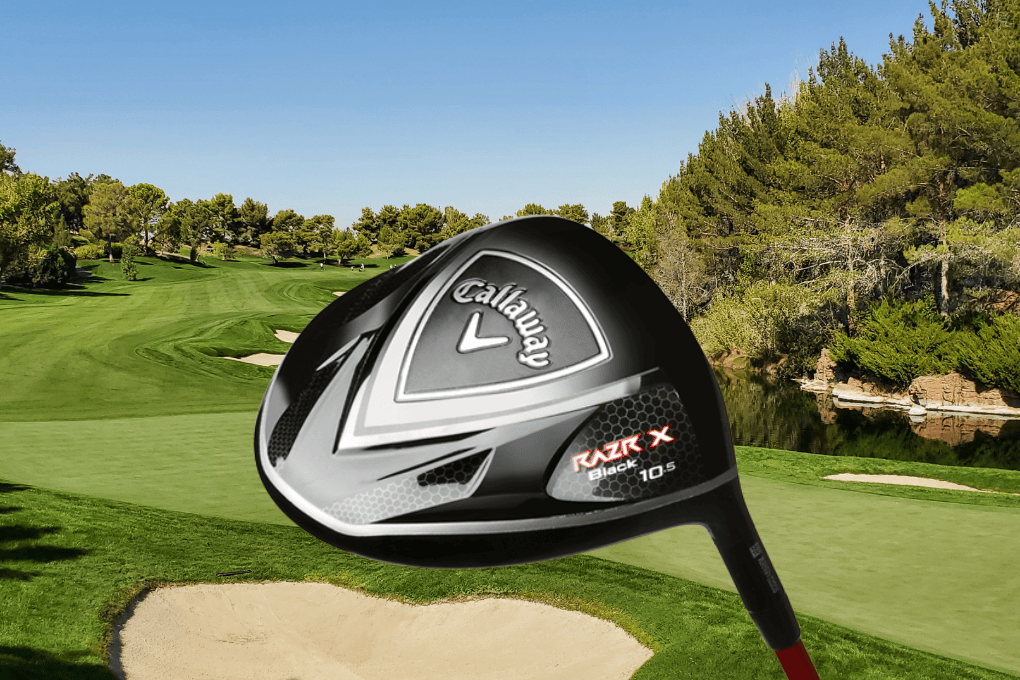
The Callaway Razr X driver represents a pivotal moment in golf club engineering, combining forgiveness with distance in a package designed for mid-to-high handicap golfers. Released as part of Callaway’s innovative Razr series, this driver quickly became a favorite among recreational players seeking consistency off the tee. The Razr X driver features a 460cc titanium head with advanced weighting technology that promotes higher launch angles and reduced spin rates, making it easier to achieve optimal ball flight even on off-center hits. What sets this club apart from its predecessors is the strategic placement of weight in the clubhead, which creates a draw bias that helps players square the face at impact more consistently.
The club’s larger sweet spot and enhanced moment of inertia (MOI) deliver exceptional forgiveness, allowing golfers to maintain distance and accuracy even when contact isn’t perfect. For players struggling with slices or inconsistent drives, the Callaway Razr X driver offers a compelling solution that addresses common swing flaws while maximizing performance potential.
Understanding the Callaway Razr X Driver Technology
The engineering behind the Callaway Razr X driver showcases Callaway’s commitment to making advanced technology accessible to average golfers. At the heart of this driver lies the Forged Composite material in the crown, which was revolutionary when introduced. This carbon composite construction is significantly lighter than traditional titanium crowns, allowing engineers to redistribute 12 grams of weight to more beneficial locations in the clubhead.
This weight redistribution creates a lower and deeper center of gravity (CG), which directly translates to higher launch angles without requiring players to adjust their swing mechanics. The titanium body construction maintains durability while the chemically milled Hyperbolic Face Cup technology expands the sweet spot across a larger area of the face, ensuring that shots struck toward the toe or heel still generate respectable ball speed and distance.
The Callaway Razr X driver also incorporates VFT (Variable Face Thickness) technology, which optimizes face thickness at multiple points to maximize ball speed across the entire face. This technological innovation means that golfers no longer lose significant distance on mishits, a crucial advantage for players who don’t consistently find the center of the clubface. The aerodynamic head shape reduces drag during the downswing, promoting faster clubhead speeds without requiring additional effort from the player. This combination of lightweight materials, strategic weight placement, and face technology creates a driver that genuinely performs better than the sum of its parts, delivering consistent results for golfers across various skill levels.
Performance Specifications and Features
| Specification | Details |
|---|---|
| Head Volume | 460cc |
| Face Material | Titanium with Hyperbolic Face Cup |
| Crown Material | Forged Composite |
| Body Material | Titanium |
| Loft Options | 9°, 10.5°, 12° |
| Adjustability | Fixed hosel (non-adjustable) |
| Standard Length | 45.5 inches |
| Lie Angle | 58° |
| Face Angle | Slightly closed (draw-biased) |
| Stock Shaft | Project X Velocity (various flexes) |
The specifications of the Callaway Razr X driver reveal a club designed with specific performance goals in mind. The 460cc head size represents the maximum volume allowed by USGA regulations, providing golfers with confidence at address and maximum forgiveness on off-center strikes. The slightly closed face angle, typically around 1-2 degrees closed, helps players who struggle with a slice to more easily square the face at impact or even generate a slight draw ball flight. This built-in draw bias has proven particularly beneficial for recreational golfers whose natural swing path tends to leave the face open at impact.
The loft options available for the Razr X driver cater to different swing speeds and launch preferences. The 9-degree option suits faster swing speeds (over 105 mph) who generate sufficient spin naturally, while the 10.5-degree version serves the broadest range of players with swing speeds between 90-105 mph. The 12-degree loft accommodates slower swing speeds (under 90 mph) or players who struggle to achieve adequate launch angle with lower-lofted clubs. Unlike modern drivers with adjustable hosels, the Razr X features a fixed hosel design, which actually benefits from a slightly lower overall weight and simplified construction that focuses performance enhancement into the head design itself.
Distance and Forgiveness Characteristics
The Callaway Razr X driver excels in two critical performance areas that matter most to improving golfers: distance and forgiveness. Independent testing has shown that this driver produces ball speeds within 2-3 mph of tour-level drivers for many amateur golfers, despite being classified as a game-improvement club. The combination of the Hyperbolic Face Cup and VFT technology creates a “hot” face that generates impressive ball speeds even when contact occurs outside the geometric center. Players typically experience only a 5-7% distance loss on toe or heel strikes compared to 12-15% with older driver designs, representing a significant advancement in forgiveness technology.
Distance performance with the Callaway Razr X driver stems from multiple engineering elements working synergistically. The lightweight Forged Composite crown allows for a lower CG position, which increases dynamic loft at impact and promotes higher launch angles with reduced spin. This launch condition combination—high launch with moderate spin—represents the optimal trajectory for maximizing carry distance. Real-world testing with mid-handicap golfers (10-20 handicap) has demonstrated average driving distance increases of 8-15 yards compared to drivers from 3-5 years prior to the Razr X’s release. The draw bias engineered into the club also contributes to distance gains by helping players eliminate the distance-robbing slice that plagues many amateur golfers.
Comparing Razr X to Other Callaway Drivers
When evaluating the Callaway Razr X driver within Callaway’s product lineup, understanding how it differs from related models provides valuable context for potential buyers. The Razr X sits between the more forgiving Razr X Black edition and the lower-spinning, more workable Razr Hawk driver. The Razr X Black features even more extreme draw-bias weighting and a larger offset, making it the best choice for golfers fighting a persistent slice, while the Razr Hawk appeals to better players who prefer a more neutral ball flight with greater shot-shaping capability.
If you’re considering other Callaway options, the Callaway X2 Hot driver represents a newer generation of technology with adjustable hosel options and refined aerodynamics. The X2 Hot line introduced speed frame face technology and modern adjustability features that weren’t available in the Razr series. However, many golfers find the straightforward performance of the Razr X driver more than adequate for their needs, especially when considering the significant price difference between current and used Razr X models. The Razr X maintains relevance because fundamental principles of club design—forgiveness, launch optimization, and draw bias—remain effective regardless of newer technological marketing terms.
The Callaway Razr X driver also compares favorably to contemporary competitors from other manufacturers. When measured against TaylorMade’s Burner SuperFast and Ping’s G20 driver from the same era, the Razr X typically produces similar ball speeds but with noticeably more forgiveness on toe-side misses. The draw bias is more pronounced than the G20’s neutral face angle and less extreme than some dedicated slice-fighting clubs, positioning it as an excellent middle-ground option for players who need help straightening their ball flight without completely eliminating the ability to work the ball when needed.
Who Should Use the Callaway Razr X Driver?
The ideal user profile for the Callaway Razr X driver encompasses a broad range of golfers who prioritize consistency and forgiveness over absolute distance or workability. Golfers with handicaps between 10 and 25 represent the sweet spot for this club, as these players typically possess sufficient swing speed to benefit from the technology while still needing the forgiveness and draw bias the club provides. Players with swing speeds between 85-100 mph will find the Razr X particularly well-suited to their game, as the club’s design optimizes launch conditions specifically for this speed range.
Golfers who consistently battle a slice will discover the Callaway Razr X driver to be particularly beneficial. The closed face angle and heel-biased weighting actively combat the left-to-right ball flight that costs many players both distance and accuracy. Numerous golfers have reported transforming their drives from uncontrollable slices into manageable fades or even slight draws after switching to the Razr X. This transformation occurs because the club’s design characteristics effectively add 2-3 degrees of effective loft at impact while simultaneously helping square the face, two mechanical adjustments that directly address slice causation.
Additionally, players transitioning from older equipment (drivers from 2005 or earlier) will notice substantial improvements in both distance and consistency with the Razr X driver. The technological advances in materials, face design, and aerodynamics accumulated between older drivers and the Razr X represent generational improvements that can genuinely lower scores. Senior golfers with moderate swing speeds also find this driver appealing because the combination of high launch, forgiving face, and draw bias compensates for reduced clubhead speed while maintaining respectable driving distances.
Shaft Options and Fitting Considerations
The stock shaft offering for the Callaway Razr X driver is the Project X Velocity, available in regular, stiff, and senior flex options. This shaft was specifically designed to complement the Razr X’s head characteristics, featuring a mid-high launch profile and smooth feel that suits the driver’s game-improvement orientation. The Project X Velocity weighs approximately 50-55 grams depending on flex, placing it in the lightweight category that promotes faster swing speeds for many amateur golfers. The shaft’s bend profile features a slightly softer tip section that assists with launch angle elevation while maintaining sufficient stability in the butt section to ensure consistent face delivery.
However, shaft fitting remains crucial even with a game-improvement driver like the Callaway Razr X driver. Players with aggressive transitions or faster swing speeds may benefit from aftermarket shaft options that provide additional stability and control. Conversely, golfers with smoother tempos or slower swing speeds might achieve better results with even lighter shaft options in the 45-50 gram range. Professional club fitters often recommend launch monitor testing with various shaft combinations to identify the optimal pairing for individual swing characteristics. Key metrics to evaluate include launch angle (ideally 12-15 degrees for most amateurs), spin rate (2,200-2,800 rpm for optimal distance), and ball speed consistency across multiple strikes.
The standard 45.5-inch length of the Razr X driver represents a traditional length that prioritizes control and consistency over raw distance. Some players experiment with extended lengths to gain clubhead speed, but this approach typically sacrifices accuracy and strike consistency unless the player possesses excellent hand-eye coordination and timing. For most golfers, maintaining the standard length while focusing on strike quality and swing efficiency produces better on-course results than chasing marginal speed gains from additional length.
Condition Assessment and Used Market Values
When shopping for a used Callaway Razr X driver, understanding condition grading and fair market values protects buyers from overpaying or receiving substandard equipment. The used golf club market typically employs standardized grading systems, with “Mint” condition indicating virtually no play wear, “Excellent” showing minimal cosmetic wear but full performance capability, “Good” displaying normal play wear without structural damage, and “Average” exhibiting significant cosmetic wear but remaining fully functional. For the Razr X driver, cosmetic condition has minimal impact on performance since the critical elements—face integrity, crown structure, and internal weighting—remain unaffected by surface scratches or paint chips.
Current market values for used Callaway Razr X drivers typically range from $40-80 depending on condition, included shaft, and grip quality. Mint condition examples with premium aftermarket shafts command prices at the upper end of this range, while well-used examples with stock shafts and worn grips settle toward the lower end. This pricing represents exceptional value considering the driver’s performance capabilities, making it an attractive option for budget-conscious golfers or those testing whether draw-biased drivers suit their game before investing in current-generation equipment. When evaluating used Razr X drivers, inspect the face for cracks (particularly around the perimeter), check the crown for separation or delamination, and verify the shaft remains securely bonded to the head.
The Razr X driver has maintained consistent demand in the used market because its performance characteristics remain relevant despite newer releases. Unlike some older designs that feel outdated compared to modern clubs, the Razr X’s combination of forgiveness, launch optimization, and draw bias continues delivering results that satisfy recreational golfers’ needs. Smart shoppers who prioritize performance over having the latest release can find exceptional value in quality used Razr X drivers, often achieving 80-90% of current driver performance at 25-35% of current driver prices.
Real-World Performance Reviews and User Experiences
Golf forums and equipment review sites contain extensive feedback about the Callaway Razr X driver from players across various skill levels. A consistent theme in user reviews emphasizes the club’s forgiveness and ease of use, with many golfers reporting increased confidence when standing over drives. One common testimonial pattern involves players describing how the Razr X helped them find more fairways while maintaining or slightly improving distance compared to previous drivers. The draw bias receives particular praise from players who previously fought slices, with numerous accounts of the club helping produce straighter or draw-biased ball flights without conscious swing changes.
Professional reviews of the Callaway Razr X driver from golf publications and equipment testing organizations consistently rated it highly for forgiveness and launch characteristics when originally released. Testing data showed the Razr X producing high MOI numbers that translated to minimal distance loss on off-center strikes, validating Callaway’s design claims. Reviewers noted that while the driver wasn’t designed for low-spin, penetrating ball flights preferred by better players, it excelled in its intended role as a forgiving, high-launching option for mid-to-high handicappers. The sound and feel received positive marks, with testers describing a solid, slightly muted impact sensation that conveyed confidence without harsh feedback.
Some players note limitations of the Razr X driver that prospective buyers should consider. The fixed hosel means loft and lie adjustments require professional bending or aren’t possible at all, reducing customization flexibility compared to modern adjustable drivers. The pronounced draw bias, while beneficial for slicers, can produce excessive right-to-left movement for players with neutral or draw-biased swing paths. Better players who prefer working the ball both directions may find the club’s bias limiting, though this represents expected trade-offs when designing for maximum forgiveness and slice correction rather than shot-shaping versatility.
Maintenance and Longevity Expectations
Proper maintenance extends the Callaway Razr X driver’s performance lifespan and preserves its resale value. After each round, wipe down the clubhead with a damp cloth to remove dirt, grass, and other debris that can accumulate in face grooves and crown seams. While drivers don’t feature the same groove structure as irons, keeping the face clean ensures consistent friction characteristics and prevents buildup that might affect spin generation. Pay particular attention to the Forged Composite crown area, as dried mud or grass can work into the material’s texture and prove difficult to remove if allowed to dry completely.
The face of the Callaway Razr X driver warrants particular attention because microscopic cracks or stress fractures can develop over time, especially with frequent use or when striking range balls with harder covers. Every few months, inspect the face carefully under good lighting, looking for hairline cracks radiating from the center or around the face perimeter. Modern driver faces operate near material limits to maximize ball speed, meaning they possess finite lifespans measured in thousands of strikes rather than infinite durability. Most recreational golfers will achieve 5-10 years of use from a Razr X driver before face degradation noticeably affects performance, though high-volume players may experience shorter lifespans.
Grip replacement represents essential maintenance for the Razr X driver that many golfers neglect. Grips deteriorate from oils, sweat, and environmental exposure, typically requiring replacement every 40-60 rounds or annually for frequent players. Worn grips reduce control and consistency because smooth, hardened rubber doesn’t provide the same traction as fresh grips. Replacing the grip costs $5-15 depending on grip selection and whether you perform the work yourself or use professional services. This minimal investment substantially improves control and can restore confidence in a driver that feels like it’s “lost distance” when the actual issue involves grip slippage causing inconsistent release timing.
Technical Specifications Impact on Ball Flight
Understanding how the Callaway Razr X driver’s technical specifications translate to ball flight characteristics empowers golfers to make informed equipment decisions. The driver’s moment of inertia (MOI) measures approximately 5,000+ g-cm², placing it in the high-forgiveness category that resists twisting on off-center strikes. This high MOI directly manifests as smaller dispersion patterns, meaning mishits stay closer to the intended target line compared to lower-MOI drivers. For practical purposes, a player who typically misses fairways by 30 yards might reduce that miss to 20 yards with the Razr X’s forgiveness, creating significantly more playable tee shots even when swing execution isn’t perfect.
The center of gravity location in the Callaway Razr X driver sits low and back in the clubhead, approximately 40mm behind the face and 25mm below the horizontal centerline. This CG position elevates launch angle by approximately 2-3 degrees compared to neutral CG locations while reducing spin by 200-400 rpm through the higher launch efficiency. The practical result creates optimal launch conditions for moderate swing speed players who need help getting the ball airborne but can’t afford excessive backspin that limits distance. Players with swing speeds around 90 mph typically achieve launch angles of 13-15 degrees and spin rates of 2,400-2,800 rpm with the Razr X, representing nearly ideal conditions for maximizing carry distance.
The slightly closed face angle of the Razr X driver measures approximately 1-2 degrees closed at address, though the effective face angle at impact depends heavily on individual swing dynamics. For players with over-the-top swing paths that typically leave the face open 3-5 degrees at impact, the closed face angle helps neutralize this tendency and produce straighter ball flights. However, golfers with neutral or in-to-out paths may find the closed face produces draws or even hooks unless they make compensations. Understanding your swing path and typical face angle tendencies proves essential when evaluating whether the Razr X’s built-in draw bias matches your needs.
Setup and Address Position Fundamentals
Proper setup with the Callaway Razr X driver optimizes the club’s performance characteristics and helps golfers maximize its forgiveness and distance potential. At address, position the ball opposite your front heel or slightly forward of that point, ensuring the driver contacts the ball on the upswing for optimal launch conditions. The Razr X’s design assumes a positive angle of attack (hitting up on the ball), typically 2-5 degrees for amateur golfers, which pairs with the club’s loft to produce the ideal launch angle. Setting up with the ball too far back in the stance negates these design intentions and produces lower launch angles with excessive spin, costing distance.
Weight distribution at address with the Callaway Razr X driver should favor the trail side slightly, with approximately 55-60% of weight on the right foot for right-handed golfers. This setup facilitates the desired positive angle of attack by encouraging a sweeping motion through impact rather than a downward strike. Tilt your spine away from the target by 5-10 degrees, creating the “reverse K” position that many instructors recommend for driver setup. This posture naturally promotes the upward strike angle while positioning your head behind the ball, allowing for maximum power transfer and optimal use of the club’s low CG design.
Grip pressure with the Razr X driver should remain light to moderate, typically rated 4-5 on a scale where 1 is extremely light and 10 is maximum tension. Excessive grip pressure restricts wrist hinge and reduces clubhead speed, while too little pressure risks losing control during the swing. The lightweight nature of the Razr X actually permits slightly lighter grip pressure than heavier drivers because less force is required to control the club throughout the swing. Focus on maintaining consistent pressure from address through impact, avoiding the common error of gradually tightening grip as the backswing progresses.
Practice Drills to Maximize Razr X Performance
Developing consistent ball striking with the Callaway Razr X driver requires focused practice that reinforces proper swing mechanics while building confidence in the club’s performance characteristics. One effective drill involves placing alignment sticks on the ground to establish proper path and face angle. Position one stick along your target line and another parallel to it outside the ball, creating a “gate” your clubhead must pass through. This drill provides immediate feedback about path and face angle, helping you understand how to utilize the Razr X’s draw bias effectively rather than fighting against it with compensations.
Another valuable practice approach for the Razr X driver involves “speed training” sessions focused purely on generating maximum clubhead speed without concern for ball flight. Using the driver without a ball or hitting into a net, make 5-10 swings at progressively increasing speeds, working up to 100-105% of your normal effort level. This practice builds the neural patterns and muscle memory necessary for generating speed, which you can then gradually incorporate into controlled swings. The Razr X’s forgiving nature makes it an excellent club for this training because you can swing more aggressively while maintaining reasonable accuracy even as you push speed boundaries.
Practicing different tee heights with the Callaway Razr X driver helps identify the optimal setup for your swing characteristics. Experiment with tee heights ranging from showing one-quarter of the ball above the crown to showing one-half of the ball above the crown. Lower tee heights generally produce lower launch and more spin, while higher tees promote higher launch and less spin. Most players optimize results with the Razr X when approximately one-third to one-half of the ball appears above the crown at address. Document which height produces the best combination of distance and accuracy for your swing, then consistently replicate that setup during rounds.
Advanced Shot-Shaping Techniques
While the Callaway Razr X driver is designed primarily for straight to draw-biased ball flights, skilled players can still shape shots when necessary by understanding how to work with and against the club’s design characteristics. To hit a fade with this draw-biased club, golfers must make more pronounced adjustments than with neutral-faced drivers.
Open your stance significantly (aim 10-15 yards left of target for right-handed players), maintain a square clubface to your body line rather than the target line, and feel like you’re cutting across the ball with an out-to-in path. The club’s draw bias will fight this movement, typically reducing a normal fade to a straight shot or slight fade rather than the big curve possible with neutral drivers.
Enhancing the natural draw with the Razr X driver proves simpler than fighting against it. For maximum right-to-left movement, set up with a slightly closed stance (aim 5-10 yards right of target), position the ball slightly forward in your stance, and focus on rotating through impact while allowing the club to release naturally. The Razr X’s heel-biased weighting and closed face angle amplify this technique, producing draws that can curve 15-25 yards for most players. This shot proves particularly valuable on dogleg-right holes or when wind conditions favor a drawing ball flight.
Trajectory control with the Callaway Razr X driver involves adjusting tee height and ball position rather than attempting significant swing manipulations. For lower, penetrating drives in windy conditions, tee the ball lower (showing minimal ball above the crown) and position it 1-2 inches back from your normal position. This setup naturally produces lower launch and slightly more spin, creating a ball flight less affected by wind. For maximum height over obstacles or to maximize carry distance in calm conditions, use higher tee heights and forward ball positions, allowing the club’s high-launch design to produce its optimal trajectory.
Integration into Your Overall Club Setup
The Callaway Razr X driver functions most effectively when integrated thoughtfully into your complete club setup, ensuring consistent gapping between clubs and complementary performance characteristics. The driver’s high-launch, draw-biased nature suggests pairing it with a fairway wood that offers similar forgiveness and launch characteristics. Callaway’s Razr X fairway woods provide natural complements, maintaining visual and performance continuity throughout your long game clubs. Alternatively, modern game-improvement fairway woods from any manufacturer with high MOI and forgiving face designs will complement the Razr X driver effectively.
Shaft considerations extend beyond the driver itself when building a cohesive set around the Callaway Razr X driver. If you’ve optimized performance with a lighter-weight shaft in the driver (50-60 grams), maintaining proportional weight progression through your fairway woods and hybrids creates more consistent swing feel and timing. Dramatic weight jumps between clubs disrupt tempo and timing, potentially causing inconsistent ball striking. Professional club fitters recommend shaft weight progressions that increase by 10-20 grams as you move from driver through woods to hybrids, ensuring each club feels like a natural extension of the others.
The Razr X driver’s forgiveness and high launch characteristics might influence your approach to selecting wedges and short game clubs. Since the driver helps maximize distance off the tee, you may find yourself hitting shorter approach shots on average, potentially affecting ideal wedge loft gaps. Players who gain 10-15 yards with the Razr X compared to previous drivers often benefit from adjusting their wedge setup to ensure proper distance coverage in the 120-yard and closer range where improved driving leaves them more frequently.
Tournament and Competition Considerations
Understanding equipment regulations ensures your Callaway Razr X driver remains legal for tournament play under USGA and R&A rules. The Razr X appears on the conforming driver list maintained by these governing bodies, meaning it meets all regulations regarding head size (460cc maximum), spring-like effect limits (COR/CT testing), and other performance specifications. This conformity makes the driver legal for tournament play at all levels, from casual club competitions through high-level amateur championships. Players can confidently use the Razr X knowing it provides legitimate performance advantages through engineering excellence rather than rule-bending specifications.
Mental approach considerations matter when using the Callaway Razr X driver in competitive situations. The club’s forgiving nature can become a strategic advantage by reducing the penalty for slight swing errors that inevitably occur under competitive pressure. Knowing you can make less-than-perfect contact and still achieve reasonable results builds confidence that translates to more aggressive, committed swings. However, some players struggle when transitioning from draw-biased drivers to neutral clubs for certain shots or course conditions, potentially creating comfort zone limitations. Consider practicing with both draw-biased and neutral drivers to develop versatility if you frequently compete on varied course designs.
Course management with the Razr X driver should account for the club’s draw-bias tendencies when developing hole strategies. On courses with predominantly left-to-right hole designs (doglegs left, trouble left), the Razr X’s natural ball flight helps you work with course architecture rather than fighting it. Conversely, on courses with significant right-side trouble or dogleg-right designs, you’ll need to aim more conservatively or develop reliable fade technique with the club. Smart players evaluate how their driver’s ball flight characteristics interact with specific course designs when making equipment decisions for important competitions.
Environmental Factors Affecting Performance
Temperature significantly impacts Callaway Razr X driver performance, affecting both the club’s material properties and ball flight characteristics. In cold conditions (below 50°F), the titanium face becomes slightly less responsive, potentially reducing ball speed by 2-3 mph compared to optimal temperatures. The golf ball’s compression characteristics change even more dramatically in cold weather, compounding distance losses that can total 10-15 yards in temperatures below 40°F. When playing in cold conditions, consider using a lower-compression ball to partially offset these effects and maintain realistic distance expectations for your drives.
Altitude dramatically affects distance with the Callaway Razr X driver because air density decreases at higher elevations, reducing both drag on the golf ball and lift generation. Players can expect approximately 2% distance increase per 1,000 feet of elevation gain, meaning a 250-yard drive at sea level might carry 265 yards at 5,000 feet elevation. The Razr X’s high-launch, moderate-spin characteristics actually work particularly well at altitude because the ball flight achieves optimal trajectory more easily in thin air. Players visiting high-altitude courses should adjust club selection and course management strategies to account for these significant distance changes.
Humidity affects Razr X driver performance less than temperature or altitude but still merits consideration in extreme conditions. High humidity slightly increases air density, potentially reducing distance by 1-2 yards compared to dry conditions. More significantly, humid conditions can cause grips to become slippery, affecting consistency and control. Using all-weather grips or applying grip-enhancing products becomes particularly important when using the Razr X in humid climates where grip security directly impacts the ability to generate clubhead speed and maintain proper face control through impact.
Call to Action: Get Your Callaway Razr X Driver Today
Now that you understand the comprehensive performance characteristics, technological innovations, and practical applications of the Callaway Razr X driver, it’s time to experience these benefits in your own game. Whether you’re fighting a persistent slice, seeking more consistent drives, or simply wanting to maximize distance with your current swing, the Razr X driver delivers proven results for mid-to-high handicap golfers. Visit authorized Callaway retailers or reputable online golf equipment dealers to find the Callaway Razr X driver that matches your specifications, or explore the used market for exceptional value on this still-relevant performance driver.
Don’t let another season pass with inconsistent drives limiting your scoring potential—the Callaway Razr X driver provides the forgiveness, distance, and draw bias that recreational golfers need to find more fairways and lower their scores. Take advantage of demo programs offered by golf retailers or pro shops to test the Razr X alongside other options, experiencing firsthand how its unique combination of features addresses your specific swing challenges. Many golfers find that the confidence gained from the Razr X’s forgiving performance positively impacts their entire game, making it an investment that pays dividends across all aspects of play.
For more information about the Callaway Razr X driver, including detailed specifications, fitting recommendations, and current availability, visit Callaway Golf’s official website where you can explore the complete Razr series and connect with fitting experts who can help optimize your equipment setup. Take action today and discover why thousands of golfers consider the Razr X driver one of the most user-friendly, performance-enhancing clubs ever designed for improving players.
Frequently Asked Questions About the Callaway Razr X Driver
What is the loft of the Callaway Razr X driver?
The Callaway Razr X driver is available in three loft options: 9 degrees, 10.5 degrees, and 12 degrees. Most recreational golfers with moderate swing speeds (85-100 mph) achieve optimal results with the 10.5-degree option, while slower swing speeds benefit from the 12-degree version and faster swingers may prefer the 9-degree loft.
Is the Callaway Razr X driver adjustable?
No, the Callaway Razr X driver features a fixed hosel without adjustability for loft or lie angle. This non-adjustable design was standard when the club was released and actually contributes to lower overall weight and simplified construction. Players seeking adjustability should consider newer Callaway driver models with adjustable hosel systems.
What year was the Callaway Razr X driver released?
The Callaway Razr X driver was released in 2011 as part of Callaway’s innovative Razr series. Despite being over a decade old, the driver remains relevant for recreational golfers due to its excellent forgiveness characteristics and draw-bias design that addresses common swing flaws.
How does the Callaway Razr X driver compare to newer models?
While newer drivers offer adjustability and incremental performance improvements, the Callaway Razr X driver delivers 80-90% of modern driver performance at a fraction of the cost. The fundamental technologies—high MOI, optimized CG location, and forgiving face design—remain effective regardless of age. For budget-conscious golfers, the Razr X represents exceptional value.
What swing speed is ideal for the Callaway Razr X driver?
The Callaway Razr X driver performs optimally for swing speeds between 85-100 mph, though players outside this range can still benefit from its forgiveness and launch characteristics. Slower swing speeds should use the 12-degree loft option, while faster swing speeds can utilize the 9-degree version to optimize launch conditions.
Does the Callaway Razr X driver help fix a slice?
Yes, the Callaway Razr X driver features a closed face angle and heel-biased weighting specifically designed to help golfers who slice the ball. Many players report significantly straighter ball flights or even slight draws after switching to the Razr X, though it’s not a complete substitute for swing improvement lessons.
What shaft comes standard with the Callaway Razr X driver?
The standard shaft for the Callaway Razr X driver is the Project X Velocity, available in senior, regular, and stiff flex options. This lightweight shaft (50-55 grams) complements the driver’s game-improvement design by promoting faster swing speeds and higher launch angles for recreational golfers.
Can I replace the shaft on my Callaway Razr X driver?
Yes, the Callaway Razr X driver uses a standard .335-inch tip shaft adapter, making it compatible with most aftermarket driver shafts. Professional club fitters can remove the stock shaft and install alternative options to better match your swing characteristics, potentially improving performance beyond the stock configuration.
Sources and Citations:
For official specifications, performance data, and additional information about the Callaway Razr X driver, reference materials from Callaway Golf provide authoritative details directly from the manufacturer. Golf equipment review publications and testing organizations offer independent performance verification and comparative analysis that supplement manufacturer specifications with real-world testing data.
