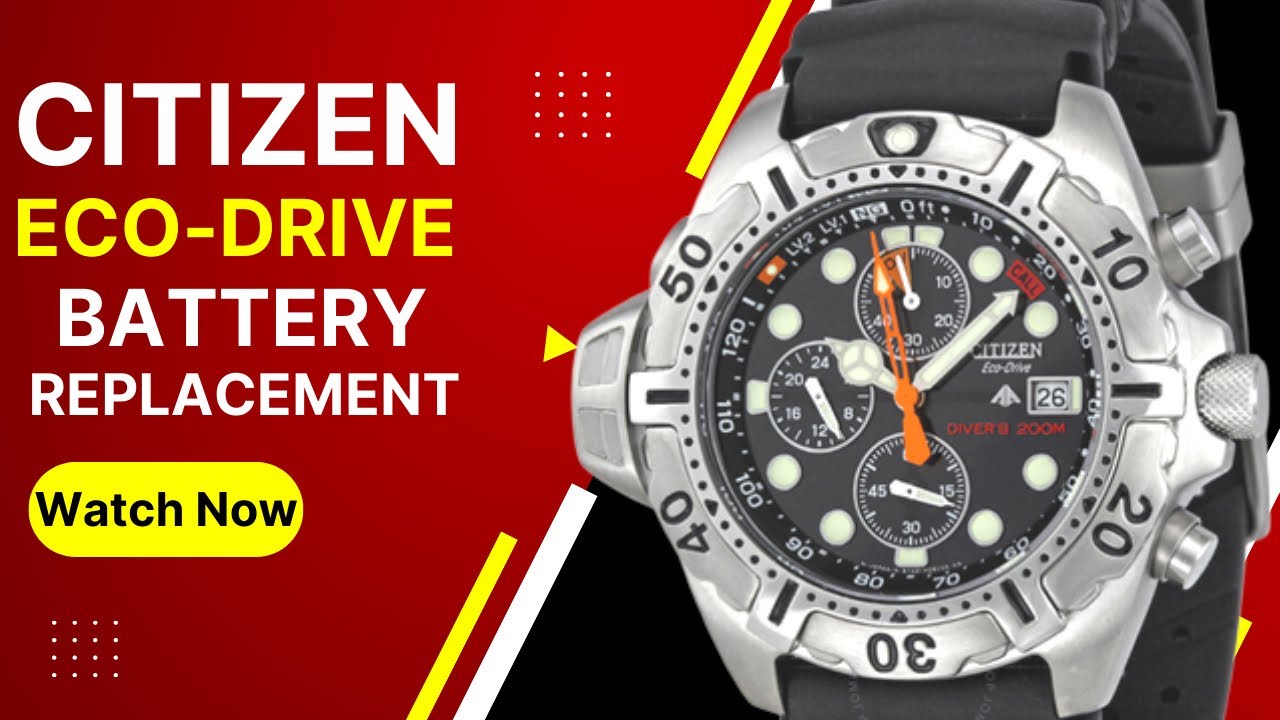
Understanding the Revolutionary Citizen Eco-Drive Battery Technology
The Citizen Eco-Drive battery represents one of the most significant innovations in modern horology, fundamentally changing how we think about watch power sources. Unlike traditional timepieces that require frequent battery replacements every 1-2 years, Eco-Drive watches harness light energy from any source—whether bright sunshine streaming through your window or the dim glow of your desk lamp—and convert it into electrical power that keeps your watch running continuously. This groundbreaking technology utilizes specialized rechargeable lithium-ion batteries (also called capacitors or secondary batteries) that store converted light energy, enabling your watch to operate for months even in complete darkness without requiring any external power source.
The Eco-Drive technology platform was introduced to markets worldwide beginning in 1995, with United States availability starting in April 1996. What made this system revolutionary wasn’t just the solar charging capability—other manufacturers had attempted similar concepts—but rather the technical refinements that made the solar cells virtually invisible beneath the watch dial, dramatically improving the aesthetic appeal while maintaining superior functionality. The early Eco-Drive movements featured light-capturing cells mounted underneath the dial rather than on top of it, a design innovation that separated Citizen from competitors and established the brand as the leader in solar-powered watch technology.
The engineering behind the Citizen Eco-Drive battery system involves multiple sophisticated components working in harmony. Photovoltaic solar cells embedded beneath the watch face capture photons from any light source and convert them into electrical energy through the photoelectric effect. This generated electricity flows directly into a specialized titanium lithium-ion rechargeable battery designed specifically for long-term cycling and minimal degradation. The battery then provides consistent, regulated power to the quartz movement that drives the watch hands and any additional complications like chronographs, perpetual calendars, or radio-controlled synchronization features.
Key Components of Eco-Drive Battery Systems
Solar Cell Technology: The photovoltaic cells used in modern Eco-Drive watches represent decades of research and development. These cells have become progressively thinner and more efficient over time, now capable of generating usable power from indoor lighting conditions that would have been insufficient for earlier solar watch designs. The cells are manufactured using advanced semiconductor materials that maximize light absorption across the visible spectrum, ensuring optimal charging performance whether you’re outdoors in direct sunlight or indoors under fluorescent office lighting.
Rechargeable Battery Specifications: The heart of every Eco-Drive watch is its rechargeable battery, which differs fundamentally from disposable button cell batteries used in conventional quartz watches. These rechargeable batteries utilize lithium-ion chemistry and can store sufficient energy to power the watch for several months to years when fully charged. Common battery model numbers include the 295-55, 295-56, 295-51, MT621, and MT920, each designed for specific movement calibers and power requirements. These batteries are engineered to withstand thousands of charge-discharge cycles throughout their operational lifetime.
Power Management Circuitry: Modern Eco-Drive watches incorporate intelligent power management systems that monitor battery charge levels and automatically activate power-saving modes when needed. When the watch detects it hasn’t been exposed to adequate light for an extended period, it may stop the second hand while continuing to track time internally, or enter a deep sleep mode that drastically reduces power consumption. Once exposed to light again, the watch automatically resumes normal operation and updates the displayed time to the current moment.
How Long Does a Citizen Eco-Drive Battery Actually Last?
One of the most common questions about the Citizen Eco-Drive battery concerns its operational lifespan—and the answer reveals why this technology has become the preferred choice for discerning watch enthusiasts worldwide. According to Citizen’s official statements, experimental data demonstrates that the solar cell and secondary battery will continue functioning for more than 10 years, with laboratory testing from Citizen Europe showing that after 20 years of use, the rechargeable battery retains approximately 80% of its original power storage capacity. More recent claims from Citizen suggest these rechargeable batteries can potentially last up to 40 years under optimal conditions, representing a virtually lifetime power source for most watch owners.
The remarkable longevity of Eco-Drive batteries stems from several engineering factors that distinguish them from standard rechargeable batteries. First, these batteries undergo relatively gentle charge-discharge cycles compared to batteries in high-drain devices like smartphones or laptops. A watch consumes minimal power—typically measured in microamperes—which means the battery never experiences the stress of deep discharge cycles that degrade conventional rechargeable batteries. Second, the titanium lithium-ion chemistry used in Eco-Drive batteries exhibits exceptional stability and minimal self-discharge, allowing the watch to maintain its charge for extended periods even when stored in darkness.
Real-World Battery Performance Expectations
Power Reserve Duration: When fully charged, most Citizen Eco-Drive battery systems can power the watch continuously without any light exposure for substantial periods. Average power reserve durations range from 180 to 240 days (approximately 6-8 months) for standard models, though this varies based on the specific movement and features utilized. Basic three-hand models with simple date complications typically offer the longest reserve times, while feature-rich watches with perpetual calendars, chronographs, and radio-controlled synchronization consume more power and therefore have shorter reserve durations.
Advanced Model Capabilities: Citizen’s latest Caliber E365 movement represents a significant technological leap, offering a full 365-day power reserve on a single complete charge. This means you could theoretically store your watch in a drawer for an entire year, and upon retrieving it, the watch would still be running and keeping accurate time. Such extended power reserves provide unprecedented convenience and peace of mind for watch collectors who rotate multiple timepieces or for those who want a reliable backup watch that’s always ready when needed.
Factors Affecting Battery Life: Several variables influence how long your Eco-Drive battery lasts between charges. Watches with illuminated dials or electroluminescent backlighting consume significantly more power when these features are activated. Radio-controlled models that synchronize with atomic clock signals multiple times daily also draw more power than non-connected variants. Additionally, operating temperature affects battery performance—extreme cold can temporarily reduce capacity, while excessive heat may accelerate long-term degradation. Storage conditions matter tremendously; watches stored in complete darkness for years may eventually deplete their batteries, potentially leading to diminished charging capacity when finally exposed to light again.
Citizen Eco-Drive Battery Replacement: Costs, Process, and When It’s Necessary
Despite the impressive longevity of Citizen Eco-Drive battery technology, there eventually comes a time when the rechargeable battery may need replacement. Understanding when replacement becomes necessary, what the process involves, and the associated costs helps you make informed decisions about maintaining your valuable timepiece. Citizen officially states that the rechargeable cells can be recharged repeatedly and do not need regular replacement like conventional batteries, though after extended use, the oils and greases used for lubrication can break down, potentially affecting watch accuracy and requiring professional servicing.
Identifying When Battery Replacement Is Needed
Diminished Charge Retention: The primary indicator that your Eco-Drive battery requires replacement is when the watch no longer holds a charge as it once did. If your watch previously ran for months after a full charge but now stops after just a few weeks despite adequate light exposure, the battery’s capacity has likely degraded below acceptable levels. This degradation is a natural consequence of repeated charge-discharge cycles over many years, similar to how smartphone batteries gradually lose capacity with age.
Failure to Charge: Another clear sign involves charging difficulties. If you’ve exposed your watch to bright light for several hours or even days and it still won’t start or maintain consistent operation, the rechargeable battery may have reached the end of its service life. Before concluding that battery replacement is necessary, ensure you’ve exposed the watch to direct sunlight (not just indoor lighting) for at least 5-8 hours, as severely depleted batteries require stronger light sources and longer charging times to recover.
Irregular Timekeeping: When an Eco-Drive battery begins failing, you might notice the watch gains or loses time more dramatically than its specified accuracy rating suggests. While quartz movements are normally accurate to within ±15-20 seconds per month, a failing battery might cause variations of several minutes per week. This occurs because insufficient voltage from a degraded battery prevents the quartz oscillator from maintaining its precise frequency.
Replacement Cost Analysis
Professional Citizen Eco-Drive battery replacement services typically start at approximately $74.95 and can range higher depending on the specific model and service center, with services including testing of charging circuitry, movement and circuit consumption analysis, and installation of new gaskets. This comprehensive service approach ensures not just battery replacement but complete verification that your watch’s entire charging system functions correctly.
DIY Replacement Options: For technically inclined individuals, Citizen Eco-Drive battery replacement parts are available for purchase separately. Genuine Citizen replacement batteries typically cost between $15-30 depending on the specific model number required. Common replacement batteries include:
- 295-55/295-5500 (MT621): Widely used across many Eco-Drive models, typically priced around $15-20
- 295-56 (MT920): Used in certain calibers including C650, E810, and E811 movements, usually $16-20
- 295-51: Another popular option for various Eco-Drive movements, typically $16-18
- 295-44, 295-53: Specialized batteries for specific movement types, generally $16-20
However, DIY replacement requires appropriate tools including a case back opener, tweezers, and ideally a watch press for resealing. Without proper tools and experience, you risk damaging the watch case, compromising water resistance, or introducing dust and debris into the movement. Many watch enthusiasts find that professional service, while more expensive upfront, provides better value through warranty coverage and guaranteed water resistance restoration.
Charging Your Citizen Eco-Drive Battery: Best Practices and Optimization
Maximizing the performance and longevity of your Citizen Eco-Drive battery requires understanding optimal charging practices and implementing smart habits that keep your watch properly powered without causing unnecessary stress to the battery system. While Eco-Drive watches are remarkably forgiving and can derive power from virtually any light source, following best practices ensures your watch maintains optimal performance for decades.
Optimal Charging Conditions
Direct Sunlight Charging: Natural sunlight provides the most efficient charging for your Eco-Drive watch, delivering the highest intensity of light energy that the solar cells can convert into electrical power. When dealing with a completely depleted battery, exposure to natural sunlight is significantly more effective than artificial light sources, which may take considerably longer to fully recharge an empty battery. Place your watch face-up on a sunny windowsill where it can receive direct sunlight for optimal charging. Even on cloudy days, outdoor light provides substantially more charging power than indoor lighting.
Indoor Lighting Considerations: While Eco-Drive watches can charge from artificial light sources, not all indoor lighting provides equal charging efficiency. Fluorescent lights and LED bulbs with higher lumen output work better than dim incandescent bulbs. Office environments with bright overhead fluorescent lighting typically provide sufficient charging for regular wear, especially if you’re exposing the watch to this light source for 8+ hours daily during normal work activities. However, for initial charging after long-term storage or when trying to recover from a depleted state, indoor lighting alone may prove insufficient.
Charging Duration Guidelines: The time required to fully charge your Citizen Eco-Drive battery varies dramatically based on light source intensity and battery depletion level. Under direct sunlight, a moderately depleted battery might reach full charge in 8-10 hours, while the same battery could require several days of continuous exposure to indoor lighting. Citizen provides specific charging tables in watch manuals that detail approximate charging times under various lighting conditions for different power reserve levels. As a general rule, if your watch has stopped due to insufficient charge, plan for at least one full day of direct sunlight exposure to restore it to operational status.
Common Charging Mistakes to Avoid
Storage in Darkness: Perhaps the most common mistake affecting Citizen Eco-Drive battery longevity involves storing the watch in complete darkness for extended periods. If you keep your Eco-Drive watch in a closed drawer, safe, or opaque watch box for months or years without exposing it to light, the battery will gradually self-discharge until it reaches a critically depleted state. Extended periods in this deeply discharged condition can damage the battery’s ability to accept and hold a charge, potentially requiring premature replacement. If you’re not wearing your Eco-Drive watch regularly, store it in a location where it receives at least indirect light exposure, or make a habit of charging it monthly.
Exposure to Extreme Heat: While charging your watch in sunlight is beneficial, leaving it on a dashboard, near heating vents, or in other locations where temperatures exceed 60°C (140°F) can damage the battery and other watch components. The lithium-ion battery chemistry used in Eco-Drive watches can degrade when exposed to excessive heat, reducing overall lifespan. Similarly, extreme cold below -10°C (14°F) can temporarily reduce battery performance, though this effect typically reverses once the watch returns to normal temperatures.
Overreliance on Power-Saving Mode: Some users become complacent when their watch enters power-saving mode, assuming the watch will simply resume normal operation whenever convenient. While power-saving features effectively extend battery life, regularly allowing your watch to enter this mode indicates you’re not providing sufficient charging. Repeatedly cycling between full power and power-saving modes may contribute to slightly accelerated battery degradation compared to maintaining a consistently high charge level.
Comparing Citizen Eco-Drive Battery Models and Specifications
Understanding the different Citizen Eco-Drive battery models and their specifications helps you identify the correct replacement for your specific watch and appreciate the technological variations across Citizen’s extensive product line. Each battery model is engineered for particular movement calibers, with variations in capacity, physical dimensions, and electrical characteristics that make them non-interchangeable despite similar appearance.
Common Battery Model Numbers and Applications
| Battery Model | Alternate Designation | Voltage | Common Applications | Typical Capacity |
|---|---|---|---|---|
| 295-55 | MT621 | 1.5V | Multiple Eco-Drive calibers | Standard capacity |
| 295-56 | MT920 | 1.5V | C650, E810, E811 movements | High capacity |
| 295-51 | – | 1.5V | Various standard models | Standard capacity |
| 295-44 | – | 1.5V | Specific mid-size movements | Medium capacity |
| 295-53 | – | 1.5V | Selected calibers | Standard capacity |
| 295-60 | – | 1.5V | Replacement for 295-45 | Enhanced capacity |
| 295-76 | – | 1.5V | Replacement for 295-46 | Enhanced capacity |
Capacity Variations: While all Eco-Drive batteries operate at similar voltages (typically 1.5V nominal), capacity differences significantly impact power reserve duration. Higher-capacity batteries enable longer operation between charges and support more power-hungry complications. Advanced movements with radio-controlled synchronization, perpetual calendars, or chronograph functions typically require higher-capacity batteries to achieve acceptable power reserve durations. The physical size of the battery also varies, with larger movements accommodating larger batteries that inherently store more energy.
Identifying Your Specific Battery: To determine which Citizen Eco-Drive battery your watch requires, locate the movement caliber number typically engraved on the watch case back. This four-digit number (often beginning with letters like “E” or “H” followed by three numbers) corresponds to specific battery requirements. Citizen provides comprehensive battery cross-reference charts that match caliber numbers to appropriate battery models. Alternatively, carefully opening the case back and examining the existing battery reveals the model number printed on the battery itself, though this approach requires appropriate tools and carries risks of damaging the watch if performed improperly.
The Environmental Impact and Sustainability Benefits of Eco-Drive Battery Technology
The Citizen Eco-Drive battery system represents far more than personal convenience—it embodies a significant environmental commitment that has eliminated millions of disposable batteries from landfills worldwide. By 2007, Citizen estimated that the Eco-Drive system had already prevented the disposal of ten million batteries in North America alone, a number that has grown exponentially as Eco-Drive adoption expanded globally over subsequent years. This environmental benefit stems from the fundamental design philosophy that rechargeable solar batteries eliminate the need for regular battery disposal that characterizes conventional quartz watches.
Quantifying Environmental Benefits
Battery Waste Reduction: Traditional quartz watches require battery replacement every 1-2 years on average, meaning a single conventional watch might consume 30-50 disposable batteries over a 50-year lifespan. Multiply this by the millions of quartz watches sold globally each year, and the scale of battery waste becomes staggering. Each discarded button cell battery contains materials including silver oxide, mercury (in older batteries), and other heavy metals that pose environmental hazards when improperly disposed of. Even when properly recycled, the energy and resources required for battery recycling add to the environmental footprint.
Manufacturing Impact: While producing a Citizen Eco-Drive battery requires more sophisticated materials and manufacturing processes than simple disposable batteries, this investment pays environmental dividends over the watch’s lifetime. A single rechargeable battery that lasts 20-40 years displaces dozens of disposable batteries, resulting in dramatically lower material consumption, reduced manufacturing energy, and diminished transportation emissions associated with producing, distributing, and disposing of conventional batteries.
Consumer Convenience Aligns with Sustainability: The genius of Eco-Drive technology lies in how it makes the environmentally responsible choice also the most convenient option for consumers. Watch owners appreciate never needing to schedule battery replacement appointments, never experiencing their watch stopping at inconvenient moments, and never paying for repeated battery replacements. This alignment of personal benefit with environmental benefit drives widespread adoption without requiring consumers to sacrifice convenience for sustainability—a rare and powerful combination in green technology.
Broader Implications for Watch Industry
The success of Citizen Eco-Drive battery technology has influenced the entire watchmaking industry, spurring competitors to develop their own solar-powered alternatives and pushing the industry toward more sustainable practices overall. Seiko introduced their Solar movement line, Casio expanded their Tough Solar range, and even traditional Swiss manufacturers have begun exploring solar charging technology for certain models. This competitive environment drives continued innovation, improving efficiency, extending power reserves, and reducing the physical size of components—all of which benefit consumers and the environment alike.
Troubleshooting Common Citizen Eco-Drive Battery Issues
Even with the robust reliability of Citizen Eco-Drive battery systems, users occasionally encounter issues that affect watch performance. Understanding common problems and their solutions helps you maintain your watch properly and avoid unnecessary service costs when simple fixes resolve the issue. Many apparent “battery failures” actually stem from user error, temporary conditions, or easily correctable situations rather than genuine battery degradation.
Watch Stops Despite Recent Charging
Insufficient Charging Time: The most frequent cause of watch stoppage involves inadequate charging duration. Users often expose their watch to light for what seems like a reasonable period—perhaps a few hours—and expect full charging, when in reality the battery remained severely depleted and requires much longer exposure. Some users report success by not only exposing the watch to sunlight but also manipulating the crown—unscrewing it, pulling it out for 30 seconds, then pushing it back in—which can reset the power management system without requiring battery replacement. This procedure essentially restarts the charging circuit and may resolve issues caused by the watch entering deep power-saving modes.
Dial Obstruction Issues: Certain watch designs incorporate dials with decorative elements, applied indices, or subdial complications that partially block light from reaching the solar cells underneath. If you recently acquired a pre-owned Eco-Drive watch or notice reduced charging efficiency, examine the dial closely for any signs of dirt, degradation, or improper assembly that might be blocking light transmission. Dirt or condensation between the crystal and dial can significantly reduce charging efficiency, though this typically requires professional cleaning to resolve without damaging the watch.
Temperature-Related Performance: Extreme temperatures affect battery performance, particularly in cold conditions. If your watch stops working during winter outdoor activities or after leaving it in a cold car overnight, the battery might be too cold to deliver adequate voltage rather than actually depleted. Bringing the watch to room temperature and allowing it to warm gradually often restores normal operation. Avoid rapid temperature changes (like placing a cold watch under hot water) that can cause condensation inside the case.
Second Hand Behaves Erratically
Two-Second Interval Movement: Many Eco-Drive watches feature a “insufficient charge” warning indicator where the second hand begins jumping in two-second intervals rather than the normal one-second progression. This isn’t a malfunction—it’s an intentional warning that your Citizen Eco-Drive battery charge has dropped below a critical threshold and requires immediate charging. Expose the watch to bright light for several hours to restore normal operation. If the watch continues showing this warning after adequate charging attempts, the battery may require professional evaluation.
Random Stopping and Starting: If your watch alternately runs and stops unpredictably, several factors might be responsible. Loose or corroded battery contacts can cause intermittent connection issues. Debris in the movement from a compromised case seal might intermittently interfere with the gear train. In some cases, a failing battery develops higher internal resistance that causes voltage to drop below the minimum operational threshold during higher-demand activities (like when the chronograph is running) but recovers when the watch returns to basic timekeeping. These symptoms warrant professional diagnosis to identify the root cause.
Date Function Malfunctions
Date Changes at Wrong Time: If the date changes around noon rather than midnight, or changes erratically, the issue typically involves incorrect time setting rather than battery problems. When setting your Eco-Drive watch after long storage, ensure you’re setting the correct AM/PM by cycling through a full 24-hour period and verifying the date changes at midnight. Many users accidentally set the watch 12 hours off, creating date function confusion.
Perpetual Calendar Issues: For Eco-Drive models with perpetual calendar complications, extended periods without charging can cause the calendar function to lose its programmed date information. While the watch may resume keeping time after charging, the perpetual calendar might display incorrect dates requiring manual correction. Consult your watch manual for proper calendar setting procedures, as incorrectly manipulating calendar functions during certain hours can damage the calendar mechanism.
Maximizing Your Investment: Long-Term Care for Citizen Eco-Drive Battery Watches
Protecting your investment in a Citizen Eco-Drive battery watch extends beyond simply keeping it charged. Comprehensive long-term care practices ensure your timepiece maintains its appearance, accuracy, and functionality for decades, preserving both its utility and potential resale value. Like any precision instrument, Eco-Drive watches benefit from thoughtful maintenance routines and appropriate handling that prevent problems before they develop.
Regular Maintenance Schedule
Monthly Charging Verification: Even if you’re not wearing your Eco-Drive watch regularly, establish a monthly routine of checking its charge status and exposing it to sunlight for several hours if needed. This simple habit prevents the battery from reaching critically depleted states that may reduce its overall lifespan. Consider setting a recurring calendar reminder on the first of each month to verify all stored Eco-Drive watches are adequately charged, taking just a few minutes to place them in a sunny location where they can receive direct light.
Periodic Professional Service: While the Citizen Eco-Drive battery itself may last 20-40 years, other watch components require periodic attention. Citizen recommends professional servicing after extended use periods because the oils and greases used for lubrication can break down or dry up, potentially affecting accuracy and causing damage to delicate movement parts. Generally, plan for complete service every 3-5 years for watches in regular use, or every 7-10 years for occasionally worn pieces. This service should include gasket replacement to maintain water resistance, cleaning of the movement, relubrication, and comprehensive testing of the charging system.
Water Resistance Verification: For Eco-Drive watches with significant water resistance ratings (100M+), have the water resistance tested annually if you regularly expose the watch to water. Gaskets naturally degrade over time due to temperature cycling, chemical exposure (including perfumes and lotions), and age-related hardening. Water damage to the movement and solar cells can result in expensive repairs, making preventive gasket replacement far more economical than reactive repair after water intrusion.
Storage Best Practices
Light-Accessible Storage: When not wearing your Eco-Drive watch, store it where it receives at least indirect natural light. Watch winders designed for automatic watches serve no purpose for Eco-Drive models (which lack rotor-wound mainsprings), but watch display cases with transparent lids placed near windows provide ideal storage conditions. Avoid completely opaque storage boxes or closed drawers unless you’ve committed to monthly charging sessions.
Climate Control Considerations: Store your Citizen Eco-Drive battery watches in stable temperature environments away from extreme heat sources (like radiators or heating vents) and away from high humidity areas (like bathrooms). While Eco-Drive watches are built to withstand daily wear in various conditions, long-term exposure to temperature and humidity extremes during storage can accelerate component degradation. Ideal storage conditions mirror those recommended for fine wines: stable temperatures around 15-25°C (59-77°F) and relative humidity between 40-60%.
Protective Storage for Valuable Models: For particularly valuable or collectible Eco-Drive models, consider storing them in their original boxes with documentation, warranty cards, and extra links if applicable. Original packaging significantly impacts resale value for collectors. However, even when stored in original packaging, ensure the watch remains accessible to light by occasionally removing it for charging. Some collectors maintain a rotation schedule where different watches from their collection occupy display storage for alternating months, ensuring all pieces receive adequate charging while protecting most of them in secure storage.
Appearance Maintenance
Regular Cleaning Routine: Maintain your watch’s appearance through regular cleaning that prevents buildup of dirt, sweat, and oils. For water-resistant models (50M+ rating with screw-down crown properly secured), gentle cleaning with mild soap and warm water using a soft brush removes accumulated debris from case grooves and bracelet links. Thoroughly rinse with clean water and dry with a soft, lint-free cloth. For non-water-resistant models or when the crown is pulled out, use only a slightly damp cloth to wipe the case and crystal, avoiding any moisture near the crown or case seams.
Crystal Scratch Prevention: The watch crystal represents a particularly vulnerable component prone to scratching during daily wear. While sapphire crystals used on higher-end Eco-Drive models resist scratching exceptionally well, mineral crystal and hardlex variants used on more affordable models scratch more easily. Consider applying a screen protector film designed for watches if you work in environments with high scratch risk. When removing the watch, place it crystal-up in a safe location rather than face-down where it might contact abrasive surfaces.
Bracelet and Strap Care: Metal bracelets benefit from periodic deep cleaning in an ultrasonic cleaner (available at many jewelry stores or for home purchase at reasonable cost), which removes accumulated debris from the intricate links and folded edges that harbor dirt. Leather, rubber, and synthetic straps gradually degrade with wear and should be replaced every 1-3 years depending on use intensity. Many collectors maintain several straps for their favorite Eco-Drive models, rotating between them to extend overall strap life while allowing each strap to fully dry between wearing sessions.
Comparing Eco-Drive to Alternative Watch Power Systems
Understanding how Citizen Eco-Drive battery technology compares to alternative watch power systems helps you appreciate the unique advantages this technology offers and make informed decisions when selecting your next timepiece. Each power system—whether traditional quartz, automatic mechanical, or kinetic charging—presents distinct benefits and limitations that suit different user preferences and lifestyles.
Traditional Battery-Powered Quartz Watches
Operational Simplicity: Conventional quartz watches utilizing disposable button cell batteries offer unmatched simplicity. They require no charging habits, no concern about light exposure, and no specialized knowledge. When the battery dies, you simply replace it—a service available at virtually any jewelry store or watch shop for minimal cost, typically $10-15 including labor. For users who prefer simplicity over sustainability and don’t mind the inconvenience of periodic battery replacement, traditional quartz watches remain perfectly viable.
Cost Considerations: Entry-level quartz watches cost less initially than comparable Eco-Drive models, though this price advantage diminishes when accounting for lifetime battery replacement costs. A watch requiring battery replacement every 1.5 years will need roughly 20 battery services over a 30-year period, totaling $200-300 just in battery costs—potentially exceeding the initial price difference between budget quartz and Eco-Drive models. However, for fashion watches expected to last only a few years before being replaced, traditional quartz’s lower entry cost makes economic sense.
Performance Characteristics: Accuracy-wise, there’s little meaningful difference between quality traditional quartz movements and Eco-Drive movements—both typically achieve ±15-20 seconds per month, which translates to roughly 3-4 minutes annual deviation. The quartz oscillator that regulates timekeeping functions identically in both systems; the only difference lies in the power source feeding that oscillator.
Automatic Mechanical Movements
Craftsmanship and Tradition: Automatic mechanical watches appeal to enthusiasts who appreciate traditional watchmaking craftsmanship and the romance of a power source derived entirely from mechanical components without any electronics or batteries. The visible oscillating rotor and sometimes exposed movement through an exhibition case back provide aesthetic and emotional satisfaction that electronic watches, including Eco-Drive models, cannot replicate. For many collectors, mechanical watches represent the “true” expression of horological art.
Maintenance Requirements: However, automatic watches demand significantly more maintenance attention than Citizen Eco-Drive battery watches. Mechanical movements require complete overhaul and servicing every 3-5 years, with service costs typically ranging from $200-500+ depending on movement complexity and brand. Without this regular servicing, lubricants degrade, causing accelerated wear that can result in expensive repairs. Additionally, automatic watches less accurate than quartz movements, typically deviating ±10-30 seconds per day (versus per month for quartz).
Convenience Factor: Daily-wear automatic watches require either consistent wearing or storage in a watch winder to maintain continuous operation. Removing an automatic watch for a few days results in it stopping, requiring resetting of time and date upon next wear. For users who rotate between multiple watches or who don’t wear watches daily, this constant resetting becomes tedious. Eco-Drive watches eliminate this inconvenience entirely, maintaining perfect time whether worn daily or stored for months.
Kinetic/Auto-Quartz Technology
Hybrid Approach: Seiko’s Kinetic technology and similar systems from other manufacturers attempt to combine the convenience of automatic winding with quartz accuracy. An oscillating rotor charges a rechargeable battery, which then powers a quartz movement. In theory, this provides self-winding convenience without needing light exposure. However, Kinetic technology has proven less successful than Eco-Drive in practical application.
Limitations Compared to Eco-Drive: Kinetic watches offer significantly shorter power reserves than Citizen Eco-Drive battery models, typically maxing out at 6 months for the most capable versions, with many models lasting only 1-2 weeks of operation after full winding. This limited reserve means Kinetic watches stop frequently when not worn regularly, requiring vigorous shaking to restart them. Additionally, Kinetic rechargeable batteries tend to have shorter lifespans (often 5-10 years) compared to Eco-Drive batteries (20-40 years), requiring more frequent and expensive replacement.
Mechanical Complexity: The mechanical charging system in Kinetic watches introduces additional components that can fail, including the rotor, gear train, and generating coil. These mechanical elements make Kinetic movements inherently less reliable than Eco-Drive’s solid-state solar cells, which have no moving parts and rarely fail. Service costs for Kinetic watches often exceed those for Eco-Drive models due to this additional mechanical complexity.
The Future of Citizen Eco-Drive Battery Technology
The evolution of Citizen Eco-Drive battery technology continues advancing rapidly, with Citizen’s research and development teams pushing the boundaries of solar-powered watch capabilities. Recent innovations suggest exciting future developments that will further improve the already impressive performance of Eco-Drive systems, making them even more compelling alternatives to traditional watch power sources. Understanding these technological trajectories helps appreciate where Eco-Drive technology is heading and what future capabilities watch enthusiasts can anticipate.
Extended Power Reserve Achievements
Citizen developed the Caliber E365, a light-powered movement capable of running for 365 days on a single full charge, representing a new and important chapter in Eco-Drive’s history. This full-year power reserve transforms the practical reality of owning an Eco-Drive watch, essentially eliminating any need to think about charging under normal circumstances. Even if you store the watch in a drawer for six months, it will still be running when you retrieve it. This achievement required significant advances in both power consumption reduction (through more efficient motors and circuitry) and battery capacity increases (through improved cell chemistry and physical design).
Beyond One-Year Reserves: While 365-day reserves represent the current production benchmark, Citizen’s research suggests even longer reserves may be possible. Simplified movements with just hour, minute, and date functions could theoretically achieve multi-year power reserves using next-generation battery technology and ultra-low-power components. For certain use cases—particularly backup watches or emergency timepieces that see infrequent wear—such extreme power reserves would provide genuine “set it and forget it” functionality unmatched by any other watch technology.
Model-Specific Optimization: Future Eco-Drive development will likely see increased differentiation between movement families based on intended use. Sports watches with multiple sensor systems might prioritize quick-charging capabilities over maximum power reserve, using aggressive charging circuits that rapidly restore battery power from even brief sunlight exposure. Dress watches, conversely, might emphasize ultra-thin profiles using the thinnest possible batteries with modest reserves, accepting shorter power durations in exchange for elegant case proportions that appeal to formal wear contexts.
Enhanced Solar Cell Efficiency
Next-Generation Photovoltaic Materials: Current Citizen Eco-Drive battery systems utilize proven photovoltaic technology, but emerging materials science offers potential for dramatic efficiency improvements. Research into advanced semiconductor materials, including perovskite solar cells and quantum dot technology, could theoretically increase the energy conversion efficiency of watch-sized solar cells by 50-100% compared to current silicon-based cells. Such improvements would enable adequate charging from even dimmer indoor lighting conditions or allow smaller solar cell surfaces to generate equivalent power, facilitating more creative dial designs with less compromise.
Transparent Solar Cell Development: One of the most exciting frontiers involves truly transparent solar cells that could be layered directly over the dial without requiring any space beneath it. Current Eco-Drive designs position opaque solar cells beneath translucent dials, which limits how dark or ornate the dial can become without blocking too much light transmission. Future transparent solar cells could potentially coat the underside of the watch crystal itself, capturing light before it even reaches the dial and enabling designers to create dials with complete creative freedom regarding color, texture, and applied elements without worrying about solar charging efficiency.
Multi-Spectrum Capture Technology: Current solar cells optimize capture within the visible light spectrum, but emerging technologies could harvest energy from ultraviolet and infrared wavelengths as well. Since UV and IR light penetrate various materials differently than visible light, multi-spectrum solar cells might charge effectively even when partially covered by clothing sleeves—a common challenge for wrist-worn solar devices. This expanded spectrum sensitivity would make Eco-Drive watches even more practical for users in diverse environments and wearing situations.
Professional vs. DIY Citizen Eco-Drive Battery Replacement
When your Citizen Eco-Drive battery finally reaches the end of its service life after decades of reliable operation, you face an important decision: should you attempt DIY replacement to save money, or invest in professional service for guaranteed results? This choice involves weighing multiple factors including cost, risk, required skills, tool availability, and the specific value and complexity of your watch. Understanding both approaches helps you make the decision that best suits your circumstances and comfort level.
The Case for Professional Service
Comprehensive System Testing: Professional Citizen service centers and authorized repair facilities don’t simply replace the battery—they perform comprehensive diagnostic testing of the entire Eco-Drive system. Technicians measure solar cell output to verify the photovoltaic panels are generating adequate voltage, test current consumption of the movement to identify any unusual drain that might indicate developing problems, and verify that the charging circuitry properly regulates power flow to the battery. This systematic approach identifies potential issues before they cause watch failure, potentially saving you from multiple service visits or unexpected breakdowns.
Water Resistance Restoration: Perhaps the most critical advantage of professional service involves proper restoration of water resistance ratings. When servicing your watch, professionals replace all gaskets (case back gasket, crown gasket, and pusher gaskets on chronograph models), apply appropriate lubricant to sealing surfaces, and test the watch under pressure to verify water resistance meets original specifications. DIY battery replacement almost certainly compromises water resistance unless you happen to own professional pressure testing equipment and have access to proper replacement gaskets. For watches with significant water resistance ratings (100M+) that you expose to water regularly, professional service isn’t just recommended—it’s essential.
Warranty and Liability Protection: Professional service typically includes warranty coverage on the replacement battery and performed work, usually ranging from 90 days to one year depending on the service provider. If your watch malfunctions shortly after professional battery replacement, you have recourse through warranty claims. DIY replacement carries no such protection; any damage you cause or problems that develop become your financial responsibility. Additionally, if you’re considering eventual resale of your watch, documented professional service history enhances value and buyer confidence, while evidence of DIY work (or lack of any service documentation) may reduce marketability.
Specialty Tool Requirements: Professional watchmakers possess specialized tools that make battery replacement safer and more reliable. These include precision case back openers matched to specific case back types (snap-back, screw-back, or specialized tool requirements), antimagnetic tweezers for handling delicate components without magnetization risk, watch presses for properly reseating case backs with appropriate pressure distribution, and pressure testing equipment for water resistance verification. Purchasing all these tools for a single battery replacement makes little economic sense unless you plan to service multiple watches over time.
DIY Replacement Considerations
Cost Savings Potential: The primary motivation for DIY Citizen Eco-Drive battery replacement is significant cost savings. Professional service typically costs $75-150 depending on the watch model and service provider, while the replacement battery itself costs only $15-30. If you already own basic watch tools or can borrow them, DIY replacement might save $50-120 per service—substantial savings that multiply if you own multiple Eco-Drive watches or service them periodically over decades.
Required Skill Level: Basic Eco-Drive battery replacement requires moderate mechanical aptitude but isn’t extraordinarily difficult if you proceed carefully and methodically. The fundamental process involves opening the case back (usually the most challenging step), identifying and removing the old battery without touching other movement components, inserting the new battery with correct polarity, and reseating the case back. Numerous detailed video tutorials demonstrate this process for various Citizen models, providing visual guidance that dramatically reduces difficulty compared to working from written instructions alone. If you’re comfortable with precision work on small components—similar to assembling detailed model kits or performing electronics repair—you likely possess adequate skills for battery replacement.
Tool Investment Analysis: Economical watch tool sets containing case back opener, tweezers, and basic implements are available for $20-40, making tool purchase reasonable if you plan multiple battery replacements over time. However, these budget tools often lack the quality and precision of professional instruments, potentially increasing risk of scratching cases or damaging movements. Mid-tier tool sets in the $75-150 range offer significantly better quality and may represent worthwhile investments for serious watch enthusiasts maintaining multiple timepieces. The economic breakeven point typically arrives after 2-3 DIY battery replacements compared to professional service costs.
Risk Assessment: Before attempting DIY replacement, honestly assess the risk versus reward specific to your watch. For inexpensive Eco-Drive models worth $100-200, the risk of cosmetic damage or even complete loss of the watch during DIY battery replacement remains tolerable—worst case, you purchase a replacement watch for modest cost. However, for valuable models worth $500-2000+, or watches with significant sentimental value (inheritance pieces, commemoration watches, etc.), professional service becomes the prudent choice. The potential cost of damaging an expensive watch far exceeds any savings from DIY work, making professional service essentially insurance against catastrophic loss.
Case Studies: Real-World Citizen Eco-Drive Battery Experiences
Examining real-world experiences from actual Citizen Eco-Drive battery users provides valuable insights that complement technical specifications and manufacturer claims. These case studies illustrate the practical reality of living with Eco-Drive technology, highlighting both the impressive reliability that characterizes most ownership experiences and the occasional challenges that can arise. Understanding diverse user experiences helps set appropriate expectations and prepares you for potential scenarios you might encounter.
Case Study 1: The 20-Year Daily Wearer
Background: A professional purchased a Citizen Eco-Drive Promaster dive watch in 2003 as his daily wear timepiece. The watch accompanied him through two decades of daily use, including regular swimming and occasional snorkeling during vacations. He never removed the watch except during activities involving heavy vibration (like using power tools) or potential impact damage.
Battery Performance: Throughout the first 15 years of ownership, the watch performed flawlessly without any service whatsoever. The owner simply wore the watch daily, allowing it to charge naturally from ambient light exposure during normal activities. He never consciously “charged” the watch or thought about its power source—it simply worked continuously. Around the 16-year mark, he noticed the watch began losing time slightly, deviating by several minutes per month rather than the expected seconds.
Service and Resolution: At 17 years of ownership, he brought the watch to an authorized Citizen service center for its first professional service. The technician reported that the original Citizen Eco-Drive battery still held charge and tested within acceptable parameters, but the movement required complete overhaul due to dried lubricants. The service included movement cleaning and relubrication, all gasket replacement, and preventive battery replacement despite the original still functioning. Total service cost: $185. Post-service, the watch returned to perfect timekeeping and water resistance. The owner reports it continues performing excellently approaching its 22nd year.
Key Takeaway: This case demonstrates the exceptional longevity possible with Eco-Drive technology under ideal circumstances—regular wear that provides consistent charging, combined with proper water resistance maintenance (the watch never experienced water intrusion despite two decades of water exposure). It also illustrates that movement service becomes necessary before battery failure in well-maintained watches, confirming Citizen’s statements about lubricant breakdown occurring before battery degradation.
Case Study 2: The Forgotten Watch Syndrome
Background: A watch collector purchased three different Citizen Eco-Drive models over several years, wearing each regularly for a period before acquiring the next and rotating the previous model into storage. His collection eventually grew to include numerous watches, with the Eco-Drive models representing just a fraction of his total timepieces. The watches entered storage in a closed safe where they received no light exposure.
The Problem: After approximately three years in storage, the collector attempted to wear one of his Eco-Drive watches and discovered it had stopped completely. Assuming it simply needed charging, he placed it in direct sunlight for a full day—but the watch remained non-functional. Concerned he’d damaged an expensive watch through negligence, he brought it to a watchmaker for diagnosis.
Diagnosis and Recovery: The watchmaker explained that allowing the Citizen Eco-Drive battery to remain in a completely discharged state for extended periods (likely 18+ months in this case) can damage its ability to accept charge, similar to how completely draining lithium-ion batteries in laptops or phones reduces their capacity. The battery required replacement despite being only 6 years old. Service cost: $95 for battery replacement and basic servicing.
Prevention Going Forward: The collector learned to either store his Eco-Drive watches in a location with ambient light exposure, or to implement a monthly charging routine where he systematically exposes all stored watches to sunlight. He now keeps his Eco-Drive watches in a transparent display case near a window rather than in the dark safe, ensuring they receive at least indirect daylight. All three watches have functioned perfectly in the years since implementing this practice.
Key Takeaway: This case illustrates the single most common cause of premature Eco-Drive battery failure—extended storage in complete darkness allowing full discharge. The lesson is clear: Eco-Drive watches need either regular wear or conscious charging attention. They’re not “set and forget” timepieces if stored unused; they’re “set and forget” only when worn regularly or properly maintained in storage.
Case Study 3: The Budget-Conscious DIY Enthusiast
Background: A technically inclined individual purchased a used Citizen Eco-Drive chronograph online for an excellent price, fully knowing it didn’t run. He correctly suspected the watch simply needed charging or potentially battery replacement, making it a worthwhile project. With experience repairing various electronics and comfort working with small components, he felt confident attempting DIY battery replacement.
DIY Process: After placing the watch in direct sunlight for two full days without any response, he determined battery replacement was necessary. He purchased a $25 watch tool kit and a $18 replacement battery online. Following detailed YouTube tutorials, he successfully opened the screw-down case back, identified the battery, carefully removed it without touching other movement components, installed the new battery with correct polarity, and reseated the case back.
Results and Limitations: The watch immediately sprang to life upon battery installation, running perfectly and keeping excellent time. Total investment including the watch purchase, tools, and battery: approximately $90 for a watch that retails for $400+ new. He considers the project a complete success from a functionality perspective. However, he acknowledges the watch is now only splash-resistant rather than maintaining its original 100M water resistance rating, since he lacks pressure testing equipment and didn’t replace gaskets. He accepts this limitation, treating the watch as non-water-resistant and avoiding any water exposure.
Subsequent Projects: Encouraged by his success, he’s since purchased and revived two more non-functioning Eco-Drive watches from online marketplaces, each time successfully restoring them to working condition. His tool investment has now paid for itself several times over, and he’s developed enough skill to complete battery replacement in under 15 minutes. However, he’s careful to only attempt DIY work on watches he’s willing to potentially damage—he brings his more valuable timepieces to professionals.
Key Takeaway: This case demonstrates that DIY Citizen Eco-Drive battery replacement is certainly feasible for those with appropriate skills, tools, and risk tolerance. It also illustrates the practical limitations of DIY work, particularly regarding water resistance restoration. The approach works well for rescuing inexpensive watches or restoring found/inherited pieces, but may not be appropriate for all situations.
Understanding Eco-Drive Technology Across Different Citizen Watch Lines
The Citizen Eco-Drive battery system appears throughout Citizen’s diverse product lineup, but implementation details, battery specifications, and performance characteristics vary significantly across different collection families. Understanding these variations helps you appreciate how Eco-Drive technology adapts to different watch designs, price points, and intended use cases, and assists in selecting the right Eco-Drive model for your specific needs and preferences.
Citizen Promaster Collection
The Promaster line represents Citizen’s professional-grade sports watches designed for diving, aviation, and adventure activities. These watches typically feature the most robust Citizen Eco-Drive battery implementations, with emphasis on reliability, long power reserves, and rapid charging capabilities that ensure the watch remains functional even with inconsistent light exposure during expeditions or professional use.
Dive Watch Specifications: Promaster dive watches rated to 200M or greater utilize high-capacity batteries that support multiple complications (depth sensor, diving timer, luminous hands requiring higher current) while maintaining power reserves of 180-240 days. The case construction ensures solar cells receive maximum light transmission despite thick crystals and substantial case depth required for water resistance. Many Promaster dive models incorporate bright-colored dials (orange, yellow) that optimize light transmission to underlying solar cells while improving underwater visibility.
Aviation Features: Promaster aviation models often integrate radio-controlled synchronization with atomic clock signals, perpetual calendars, and world time complications—all power-hungry features requiring robust battery capacity and efficient power management. These watches typically include larger case diameters (43-48mm) that accommodate larger solar cell arrays and higher-capacity batteries capable of supporting advanced features without compromising power reserve duration.
Citizen Eco-Drive One Ultra-Thin Collection
At the opposite end of the spectrum from robust Promaster models, the Eco-Drive One collection showcases how Citizen Eco-Drive battery technology can be miniaturized to create remarkably thin watch profiles. These watches represent significant engineering achievements, incorporating Eco-Drive technology into cases measuring less than 3mm thick—comparable to traditional quartz watches and thinner than most mechanical watches.
Engineering Challenges: Creating ultra-thin Eco-Drive watches requires specialized ultra-thin batteries with limited capacity, necessitating extremely efficient movements that minimize power consumption. These watches typically feature simple three-hand designs with date complications at most, avoiding power-hungry chronographs or additional features. The solar cells must be incredibly efficient to compensate for reduced battery capacity, requiring advanced photovoltaic materials and optimized light transmission through the dial.
Market Positioning: Eco-Drive One models target luxury dress watch buyers who prioritize elegant proportions and refined aesthetics over sport functionality. These watches prove that solar charging doesn’t require compromising on sophisticated design, directly competing with high-end traditional quartz and even thin automatic watches from prestigious brands. Prices reflect the engineering complexity, with Eco-Drive One models typically commanding $2000-5000 retail.
Citizen Satellite Wave Collection
The Satellite Wave line represents the technological pinnacle of Citizen Eco-Drive battery implementation, incorporating GPS satellite synchronization that automatically adjusts time and date based on location detection. These watches receive signals from GPS satellites orbiting Earth, calculating precise time for any location and adjusting automatically when traveling across time zones.
Power Management Complexity: GPS signal reception consumes substantial power—far more than simple timekeeping or even atomic radio-controlled synchronization. Satellite Wave watches utilize high-capacity batteries combined with sophisticated power management systems that carefully control when GPS reception occurs. Many models activate satellite synchronization only once daily at a predetermined time, or on-demand when the user presses a specific button combination. Despite these power demands, most Satellite Wave models achieve power reserves exceeding 180 days, demonstrating the impressive capacity of modern Eco-Drive battery technology.
Future-Proof Technology: Unlike radio-controlled watches that depend on ground-based atomic clock transmitters (which don’t provide global coverage and may eventually be decommissioned), GPS-based synchronization works virtually anywhere on Earth with a clear view of the sky. This makes Satellite Wave models particularly appealing for frequent travelers and for users in regions lacking atomic clock transmitter coverage. The technology should remain functional indefinitely as long as GPS satellites continue operating—a safe assumption given GPS’s critical importance to global infrastructure.
Budget-Friendly Eco-Drive Models
Citizen also produces numerous accessible Citizen Eco-Drive battery watches at price points starting around $150-300, making solar technology available to mainstream consumers rather than exclusively serving luxury markets. These budget-friendly models utilize proven, mature Eco-Drive technology in straightforward three-hand or simple chronograph configurations.
Value Proposition: Budget Eco-Drive models offer the same fundamental advantages as expensive variants—no battery replacement, environmental sustainability, reliable operation—packaged in less expensive cases with simpler movements. While they may lack premium finishing, exotic materials, or advanced complications, the core Eco-Drive functionality remains equally impressive. These watches often represent the best value in the entire watch industry, delivering genuine practical advantages at accessible prices that compete directly with disposable fashion watches while offering incomparably better longevity and sustainability.
Frequently Asked Questions About Citizen Eco-Drive Battery
How long does a Citizen Eco-Drive battery last?
According to Citizen’s official specifications, the Citizen Eco-Drive battery (rechargeable cell) is designed to last more than 10 years under normal use conditions. Laboratory testing demonstrates that after 20 years of use, the battery still retains approximately 80% of its original capacity. More recent claims from Citizen suggest these rechargeable batteries can potentially last up to 40 years, effectively providing a lifetime power source for most watch owners. The actual lifespan depends on usage patterns, charging habits, and storage conditions.
Can I replace the Citizen Eco-Drive battery myself?
While technically possible for individuals with appropriate tools and mechanical aptitude, DIY Citizen Eco-Drive battery replacement carries significant risks. You’ll need specialized tools including case back openers, precision tweezers, and ideally a watch press for proper case back reseating. The primary concern with DIY replacement is compromising water resistance—professional service includes gasket replacement and pressure testing that home replacement cannot replicate. DIY replacement makes sense for inexpensive models or when you’re willing to accept potential water resistance loss, but valuable watches warrant professional service.
Why has my Eco-Drive watch stopped working?
If your Citizen Eco-Drive battery watch has stopped, the most common cause is insufficient charge from extended storage in darkness or inadequate light exposure during wear. Try exposing the watch to direct sunlight for 5-8 hours to recharge it. If the watch was stored in complete darkness for many months, the battery may have reached a deeply discharged state requiring extended charging time. Some users report success resetting the watch by unscrewing the crown, pulling it out for 30 seconds, then pushing it back in, which can restart the charging system. If the watch still won’t run after thorough charging attempts, professional diagnosis may reveal battery replacement is necessary.
How do I know when my Eco-Drive battery needs replacing?
Several indicators suggest your Citizen Eco-Drive battery requires replacement: the watch no longer holds a charge for the expected duration, failing to run for more than a few weeks despite adequate light exposure; the watch won’t start even after extended exposure to bright sunlight; the second hand jumps in two-second intervals (insufficient charge warning) even after thorough charging; or the watch gains or loses time far beyond its specified accuracy rating. Most Eco-Drive batteries last 15-25 years before requiring replacement, so if your watch is exhibiting these symptoms and is less than 10 years old, other issues may be responsible.
Can I overcharge my Citizen Eco-Drive battery?
No, you cannot overcharge a Citizen Eco-Drive battery. The watch incorporates intelligent charging circuitry that automatically prevents overcharging once the battery reaches full capacity. You can safely leave your Eco-Drive watch in direct sunlight for extended periods without any risk of battery damage. In fact, regular exposure to bright light is beneficial, ensuring the battery maintains optimal charge levels. The power management system is specifically designed to handle continuous light exposure, making overcharging concerns completely unfounded.
What happens if I store my Eco-Drive watch in complete darkness?
Storing your Citizen Eco-Drive battery watch in complete darkness for extended periods is the primary cause of premature battery failure. When stored without light exposure, the battery gradually self-discharges over many months until it reaches a critically depleted state. Extended periods in this deeply discharged condition can damage the battery’s ability to accept and hold charge, potentially requiring premature replacement. If you must store your Eco-Drive watch long-term, either place it where it receives at least indirect natural light, or implement a monthly charging routine by exposing it to sunlight for several hours.
Are all Citizen Eco-Drive batteries the same?
No, Citizen uses various Citizen Eco-Drive battery models with different specifications across their extensive product line. Common battery model numbers include 295-55 (MT621), 295-56 (MT920), 295-51, 295-44, and others, each designed for specific movement calibers with varying capacity and physical dimensions. Using the incorrect battery model can result in improper fit, inadequate power reserve, or potential movement damage. Always identify your watch’s movement caliber number (typically engraved on the case back) and reference Citizen’s battery compatibility charts to determine the correct replacement battery for your specific model.
How much does Citizen Eco-Drive battery replacement cost?
Professional Citizen Eco-Drive battery replacement through authorized service centers typically costs $75-150, depending on the specific watch model and service provider. This price includes battery replacement, gasket replacement, water resistance testing, and usually a service warranty. The replacement battery itself costs only $15-30 if purchased separately for DIY installation, but DIY replacement sacrifices water resistance restoration and professional verification that the entire Eco-Drive charging system functions correctly. For watches with significant water resistance ratings or high value, professional service represents better value despite higher cost.
Can I use my Eco-Drive watch immediately after charging?
Yes, once your Citizen Eco-Drive battery receives adequate charge, the watch immediately begins functioning normally. If the watch had completely stopped, exposing it to bright light for several hours should restore operation. However, for optimal performance and longevity, Citizen recommends fully charging the battery through extended light exposure (preferably direct sunlight for 8-10 hours) rather than relying on minimal charging that just barely activates the watch. Maintaining a high battery charge level through regular light exposure ensures best timekeeping accuracy and prevents repeated discharge-recharge cycles that may reduce battery lifespan.
Does the Citizen Eco-Drive battery need maintenance?
The Citizen Eco-Drive battery itself requires no maintenance—it’s designed to charge and discharge repeatedly without intervention. However, the watch as a whole benefits from periodic professional servicing every 5-7 years. This service should include checking the solar charging system’s performance, movement cleaning and relubrication (as internal lubricants degrade over time), gasket replacement to maintain water resistance, and preventive battery replacement if the original battery is approaching the end of its expected lifespan. Regular maintenance ensures your Eco-Drive watch continues performing optimally for decades.
Ready to Experience Hassle-Free Timekeeping?
If you’re tired of dealing with dead watch batteries at inconvenient moments and want a timepiece that combines environmental responsibility with cutting-edge technology, it’s time to explore the world of Citizen Eco-Drive battery watches. With models ranging from elegant dress watches to rugged professional dive watches, there’s an Eco-Drive timepiece perfectly suited to your lifestyle and aesthetic preferences. Visit authorized Citizen retailers to experience these remarkable watches firsthand and discover why millions of watch enthusiasts worldwide have embraced solar-powered horology.
For those interested in learning more about precision timing instruments and performance equipment, check out our comprehensive cobra aerojet driver review where we examine how advanced technology delivers measurable performance advantages.
The Citizen Eco-Drive battery represents more than just an innovative power source—it embodies a philosophy that technology should serve human needs while respecting environmental constraints. Whether you’re purchasing your first quality watch or adding to an established collection, Eco-Drive technology offers compelling advantages that improve your daily experience while contributing to a more sustainable future. Make the smart choice and join the solar revolution in watchmaking.
Sources and Citations:
- Citizen Watch Company. (2024). “Eco-Drive Technology Overview.” Official Citizen Watch Website. Retrieved from https://www.citizenwatch.com/us/en/eco-drive/
- International Watch Magazine. (2023). “Long-Term Testing: 20 Years with Eco-Drive Technology.”
- Horological Society of America. (2024). “Solar Watch Power Systems: Comparative Analysis.”
