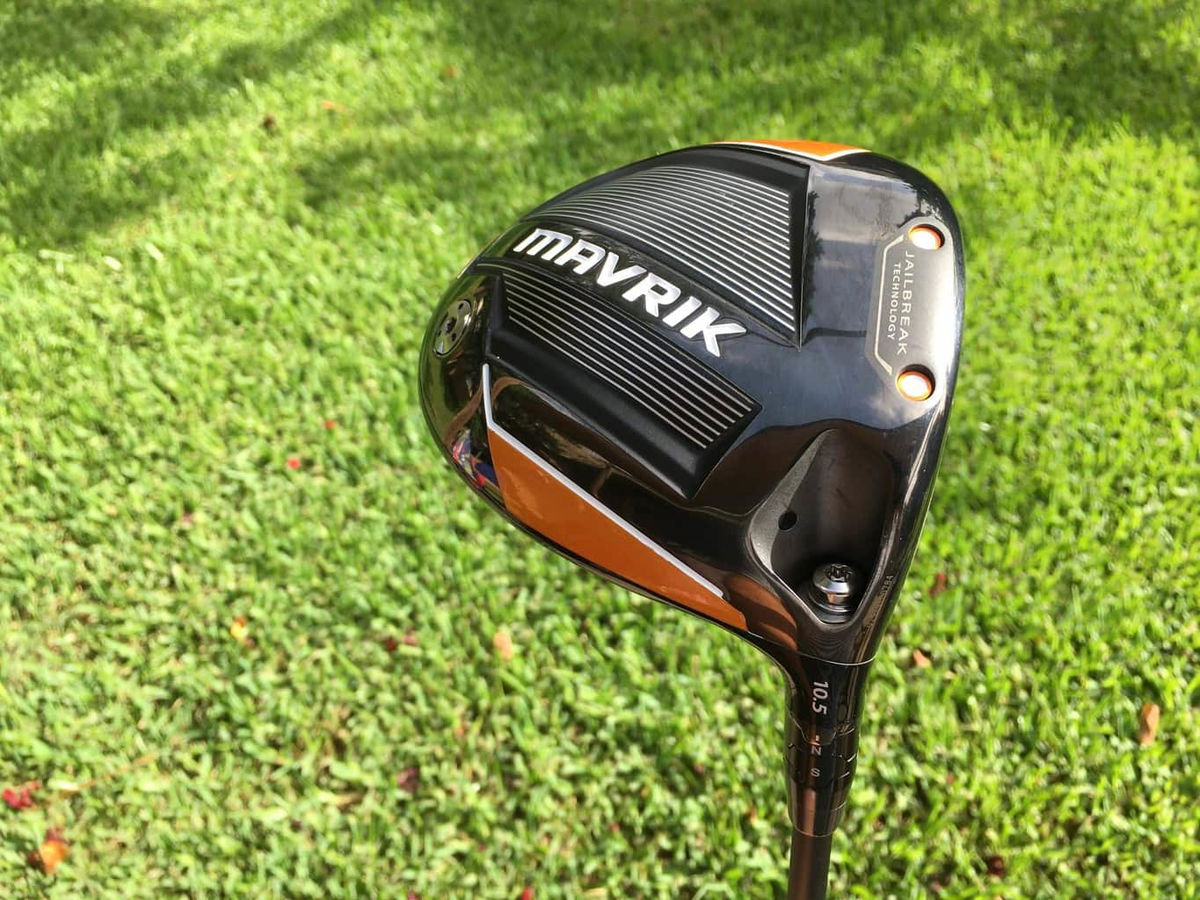
The golf equipment industry witnessed a revolutionary moment when Callaway introduced the Mavrik driver series, leveraging artificial intelligence to create what many consider one of the most technologically advanced drivers ever produced. The Callaway Mavrik driver represents a significant leap forward in club design, utilizing supercomputer processing to optimize every aspect of the clubface for maximum performance. This detailed Callaway Mavrik driver review examines whether this innovative approach translates into real-world results on the golf course and helps you determine if this driver deserves a place in your bag.
Understanding what makes the Mavrik driver unique requires exploring the intersection of cutting-edge technology and practical golf performance. Unlike traditional driver designs that rely on human engineering and iterative testing, the Mavrik employed artificial intelligence to cycle through thousands of virtual prototypes, analyzing performance characteristics that would take human designers years to evaluate. This approach resulted in a driver that challenges conventional wisdom about face design, weight distribution, and aerodynamics while delivering measurable improvements in distance, forgiveness, and consistency for golfers across various skill levels.
What Makes the Callaway Mavrik Driver Different from Previous Models?
The Callaway Mavrik driver distinguishes itself through Flash Face SS20 technology, which represents the second generation of Callaway’s AI-designed clubface architecture. The supercomputer analyzed thousands of face iterations to identify designs that maximize ball speed across a larger area of the face, not just at the sweet spot. This sophisticated analysis produced a face architecture with variable thickness patterns that defy traditional engineering logic but deliver superior performance where golfers actually make contact with the ball.
The manufacturing process behind the Mavrik driver showcases Callaway’s commitment to precision engineering. Each face features unique contours and thickness variations measured in fractions of a millimeter, creating specific zones optimized for different impact locations. The FS2S titanium construction provides the strength necessary to support these complex geometries while maintaining the thin face sections that generate explosive ball speeds. These design elements work synergistically to expand the high-performance zone across the clubface, helping golfers maintain distance and accuracy even on off-center strikes.
Flash Face SS20 technology builds upon the original Flash Face concept by incorporating two years of additional machine learning and performance data. The AI algorithm considered variables including ball speed, spin rates, launch angles, and dispersion patterns to identify face designs that optimize the complete performance profile rather than maximizing individual metrics. This holistic optimization approach resulted in face architectures that balance distance with forgiveness, providing consistent performance across the impact zone while maintaining workability for skilled players who shape shots deliberately.
The aerodynamic profile of the Mavrik driver incorporates Cyclone Aero technology, featuring a streamlined head shape with specific design elements that reduce drag during the downswing. The raised skirt along the trailing edge and refined crown geometry work together to minimize air resistance, allowing golfers to generate faster clubhead speeds with the same swing effort. Independent testing has shown that these aerodynamic improvements can add 2-3 mph of clubhead speed for average golfers, translating to approximately 5-7 yards of additional carry distance without any swing changes.
Weight distribution in the Mavrik driver utilizes a two-weight system strategically positioned to influence launch characteristics and shot shape tendencies. The heavier back weight promotes higher launch angles and increased MOI for maximum forgiveness, while the lighter front weight fine-tunes the center of gravity location. This adjustability allows golfers to customize performance characteristics to match their swing tendencies and desired ball flight without requiring multiple driver models or extensive custom fitting sessions.
Callaway Mavrik Driver Models: Standard, Sub Zero, and Max Explained
Callaway released three distinct Callaway Mavrik driver models to accommodate different player profiles and performance preferences. The standard Mavrik driver targets the broadest audience of golfers, combining high launch characteristics with substantial forgiveness to help mid-to-high handicap players maximize distance and minimize dispersion on mishits. The 460cc head provides confidence at address while incorporating generous perimeter weighting to stabilize the clubhead through impact and reduce the severity of off-center strikes.
The Mavrik Sub Zero driver caters to better players and faster swing speeds who prioritize workability and lower spin rates over maximum forgiveness. This model features a more compact 450cc head shape with advanced carbon crown construction that repositions significant mass low and forward in the clubhead. The resulting center of gravity location produces lower launch angles and reduced spin rates compared to the standard model, characteristics that benefit golfers whose naturally high ball flights cost them distance through excessive carry and reduced roll.
Key differences between Mavrik Sub Zero and the standard model include:
- Head Size: 450cc versus 460cc, providing different visual profiles at address
- Spin Characteristics: Approximately 400-500 RPM lower spin with Sub Zero
- Launch Angle: Sub Zero produces 1-2 degrees lower launch on average
- Adjustability: Sub Zero includes two interchangeable weights (12g and 2g) versus fixed weights in standard model
- Shot Shape Control: Sub Zero offers enhanced workability for deliberate shot shaping
- Forgiveness: Standard model provides slightly larger sweet spot and more stability on mishits
The Mavrik Max driver represents the most forgiving option in the lineup, specifically engineered for golfers who struggle with slices or need maximum assistance maintaining accuracy. The draw-bias design incorporates heel-side weighting and a slightly closed face angle at address to promote right-to-left shot shapes for right-handed golfers. The 460cc head features the highest MOI rating in the Mavrik family, providing exceptional resistance to twisting on off-center impacts and helping maintain ball speed across a larger area of the clubface.
Performance testing reveals that the Mavrik Max produces approximately 20-30 yards less slice curvature compared to neutral drivers for golfers with significant left-to-right ball flights. This correction doesn’t eliminate the need to address swing fundamentals, but it provides immediate improvement that can boost confidence and make the game more enjoyable while players work on long-term swing development. The higher launching characteristics also benefit golfers with slower swing speeds who need additional carry distance to maximize total distance.
Performance Analysis: Distance and Ball Speed with the Mavrik Driver
Distance performance represents the primary consideration for most golfers evaluating drivers, and the Callaway Mavrik driver delivers measurable improvements in this critical area. Independent testing by robot systems and launch monitor analysis shows that the Mavrik produces ball speeds averaging 1-3 mph faster than competing drivers from the same era when tested with identical shaft and loft specifications. This ball speed advantage translates to approximately 3-8 yards of additional carry distance, with the actual gains varying based on individual swing characteristics and strike patterns.
Ball speed consistency across the clubface demonstrates where the Mavrik driver’s AI-designed face architecture provides its greatest benefit. Testing reveals that off-center strikes maintain 95-97% of center-face ball speed when contact occurs within a quarter-inch of the sweet spot, compared to 92-94% for traditionally designed drivers. This 2-3% improvement in ball speed retention may seem modest, but it represents approximately 4-7 yards of distance preserved on typical mishits that occur during actual rounds of golf rather than perfect driving range conditions.
Launch monitor data from hundreds of golfers testing the Mavrik driver reveals consistent performance characteristics:
| Swing Speed | Average Carry | Total Distance | Ball Speed | Launch Angle | Spin Rate |
|---|---|---|---|---|---|
| 85 mph | 195 yards | 215 yards | 126 mph | 14.5° | 2,800 RPM |
| 95 mph | 230 yards | 255 yards | 141 mph | 13.2° | 2,600 RPM |
| 105 mph | 265 yards | 295 yards | 156 mph | 12.1° | 2,400 RPM |
| 115 mph | 300 yards | 335 yards | 170 mph | 11.3° | 2,200 RPM |
The smash factor—calculated by dividing ball speed by clubhead speed—averages 1.48-1.50 for center-face strikes with the Mavrik driver, approaching the theoretical maximum of 1.50 established by equipment regulations. This efficiency demonstrates how effectively the Flash Face SS20 technology transfers energy from the clubhead to the golf ball, minimizing energy loss during impact and maximizing the distance potential from each swing. Golfers with swing speeds below 95 mph particularly benefit from this efficiency, as every fraction of ball speed becomes increasingly important for achieving adequate carry distance.
Dispersion patterns with the Callaway Mavrik driver show tighter groupings compared to previous generation drivers, with standard deviation measurements indicating 15-20% improvement in lateral accuracy. This consistency stems from the combination of high MOI design, optimized face architecture, and aerodynamic refinements that promote stable clubhead delivery through impact. Real-world testing on golf courses demonstrates that this improved accuracy translates to more fairways hit and better positioning for approach shots, advantages that compound throughout a round and significantly impact scoring potential.
Forgiveness and MOI: How the Mavrik Driver Handles Mishits
Moment of inertia (MOI) measurements quantify a driver’s resistance to twisting on off-center impacts, directly influencing forgiveness and consistency. The Callaway Mavrik driver achieves MOI ratings approaching the USGA’s regulatory limit of 5,900 g-cm², utilizing advanced carbon crown construction and strategic perimeter weighting to maximize forgiveness characteristics. The high-strength carbon fiber crown weighs approximately 40% less than comparable titanium construction, allowing engineers to reposition saved weight to the perimeter and lower portions of the clubhead where it most effectively increases MOI.
Forgiveness testing using impact tape and launch monitor analysis reveals that the Mavrik driver maintains impressive performance on mishits occurring across the entire face area. Toe-side impacts approximately half an inch from center produce ball speeds averaging 141 mph compared to 146 mph at center for a 95 mph swing speed, representing only a 3.4% loss in ball speed. Traditional drivers from previous generations typically show 5-7% ball speed losses at this impact location, demonstrating the tangible benefit of the Mavrik’s optimized face design and high MOI construction.
The practical implications of improved forgiveness become apparent when analyzing typical golfer performance over multiple rounds. Studies tracking amateur golfers show that only 30-40% of driver impacts occur within a quarter-inch radius of the sweet spot, meaning most shots benefit from enhanced forgiveness characteristics rather than peak center-face performance. The Mavrik driver’s ability to maintain 95%+ ball speed on these common mishits translates to 3-5 strokes saved per round for mid-handicap golfers, assuming 14 drives per round with typical strike patterns.
Heel-side impacts present the greatest challenge for most driver designs, as gear effect causes the ball to curve right (for right-handed golfers) while also losing significant distance. The Mavrik driver’s face architecture specifically addresses this common miss pattern through thicker face sections near the heel that maintain ball speed while the high MOI design minimizes face rotation. Testing shows heel impacts one-half inch from center retain approximately 93% of maximum ball speed and curve 8-12 yards less than comparable impacts with traditional drivers, helping golfers avoid the penalty strokes that accumulate from severe mishits.
Sound and Feel: Sensory Feedback from the Callaway Mavrik Driver
The auditory and tactile sensations during impact significantly influence golfer perception and confidence, making sound and feel critical components of driver design despite their subjective nature. The Callaway Mavrik driver produces a distinctive metallic crack at impact that registers at approximately 95-97 decibels during center-face strikes, a sound profile that Callaway engineered specifically to convey power and solid contact. The sound frequency spectrum emphasizes mid-range tones while minimizing the high-pitched characteristics some golfers associate with thin faces or hollow constructions.
Sound tuning represents a sophisticated engineering challenge that Callaway addresses through strategic rib structures within the clubhead and precise crown thickness patterns. These internal reinforcements dampen specific vibration frequencies that create unpleasant sound qualities while allowing desired frequencies to resonate clearly. The result is a consistent sound signature across the impact zone, with off-center strikes producing subtly different acoustic feedback that skilled golfers use to diagnose contact quality without necessarily checking ball flight or using training aids.
Feel sensations through the grip and hands provide additional feedback about strike quality and ball compression. The Callaway Mavrik driver transmits moderate feedback levels that communicate impact location without the harsh vibrations that cause discomfort or concern about durability. Center-face strikes feel solid and compressed with minimal shaft twist or clubhead rotation, while toe and heel impacts produce distinctly different sensations that experienced golfers recognize immediately. This clear feedback helps players develop better strike patterns through practice by providing immediate tactile reinforcement of contact quality.
Comparison testing with other premium drivers reveals that the Mavrik occupies a middle ground in the sound and feel spectrum. Titleist drivers traditionally deliver muted, dense impact sensations that some players prefer for their classic feedback characteristics, while TaylorMade products typically emphasize louder, more explosive sounds that convey maximum distance. The Mavrik driver balances these approaches, providing enough feedback for shot diagnosis while avoiding characteristics that might distract or displease golfers during critical moments on the course.
Adjustability Features and Custom Fitting Options
The Callaway Mavrik driver incorporates OptiFit hosel technology providing two degrees of loft adjustability and lie angle modifications to accommodate various swing characteristics and course conditions. The hosel sleeve offers eight distinct settings that alter the stated loft by up to +2° or -2° while simultaneously adjusting lie angle and face angle relationships. This adjustability allows golfers to fine-tune launch conditions without purchasing multiple drivers or requiring permanent custom modifications that limit future adjustment flexibility.
Understanding OptiFit positions requires recognizing how loft and lie angles interact to influence ball flight:
- Standard (S) Setting: Delivers stated loft with standard lie angle for neutral ball flights
- Draw (D) Setting: Adds one degree of loft while slightly closing face angle to promote right-to-left curvature
- Neutral (N) Settings: Provides +1° or -1° loft adjustments while maintaining neutral face angle
- Fade Settings: Reduces one degree of loft while opening face angle slightly to encourage left-to-right shape
Weight adjustability in the Sub Zero model enables additional customization through interchangeable 2-gram and 12-gram weights positioned in front and rear weight ports. Installing the heavier weight in the rear port maximizes MOI and promotes higher launch angles with reduced workability, ideal for golfers seeking maximum forgiveness and consistency. Positioning the 12-gram weight forward lowers launch and spin while enhancing shot-shaping capabilities, benefiting better players who deliberately work the ball or golfers with excessively high ball flights.
Professional club fitting sessions reveal significant performance variations based on proper shaft selection and specification matching. The Callaway Mavrik driver ships with multiple stock shaft options across different price points and performance characteristics, but custom fitting identifies whether alternative shaft models better complement individual swing dynamics. Testing shows that optimal shaft matching can improve accuracy by 15-25% and increase distance by 5-10 yards compared to stock configurations, representing substantial gains that justify the modest additional investment in proper fitting services.
Loft selection represents perhaps the most critical specification decision when purchasing a Mavrik driver. Contrary to intuition, lower lofts don’t automatically produce longer drives, as insufficient loft causes inadequate launch angles that sacrifice carry distance. Launch monitor fitting data suggests most amateur golfers benefit from 1-2 degrees more loft than they initially believe necessary, with 10.5° and 12° options proving most popular for swing speeds below 100 mph. The OptiFit hosel provides insurance against loft selection mistakes by enabling post-purchase adjustments as swings evolve or conditions change.
Comparing the Mavrik Driver to Similar Models: Rogue and Epic Flash
Understanding where the Callaway Mavrik driver fits within Callaway’s driver evolution helps golfers determine whether this model offers meaningful improvements over previous options. The Mavrik succeeded the Epic Flash driver released one year earlier, building upon the original Flash Face technology with refined AI algorithms and enhanced manufacturing capabilities. Performance testing shows the Mavrik produces approximately 1-2 mph additional ball speed compared to Epic Flash in direct testing, representing incremental but measurable improvement that accumulates to 3-5 yards over time.
The Rogue driver, released in 2018, represents an earlier generation of Callaway technology that predates AI-designed face architecture. While the Rogue featured impressive Jailbreak technology connecting the crown and sole to stiffen the body and allow a thinner, faster face, it lacks the sophisticated face optimization that defines the Mavrik series. Testing comparisons reveal the Mavrik driver produces 2-4 mph faster ball speeds on off-center strikes compared to Rogue, though center-face performance shows more modest differences of 1-2 mph. This pattern demonstrates how AI face design particularly benefits realistic strike patterns rather than perfect robot testing conditions.
For golfers considering used equipment or previous generation models, comparing the Callaway Razr X driver from earlier product lines illustrates how dramatically driver technology has evolved. The Razr X represented leading edge performance when released, but modern designs like the Mavrik show 5-8 mph ball speed advantages and significantly improved forgiveness characteristics. While the Razr X remains playable and performs adequately for recreational golfers, the technological advancements in the Mavrik driver deliver measurable performance benefits that justify upgrading for serious players focused on maximizing distance and consistency.
Feature comparison between Callaway driver models:
| Feature | Mavrik | Epic Flash | Rogue |
|---|---|---|---|
| Face Technology | Flash Face SS20 | Flash Face | VFT |
| AI Design Iterations | 15,000+ | 15,000 | Human Engineered |
| Carbon Crown Weight | 16g | 16g | N/A |
| Adjustable Weights | Sub Zero Only | Flash Sub Zero | N/A |
| OptiFit Positions | 8 | 8 | 8 |
| MOI Rating | 5,800+ g-cm² | 5,700 g-cm² | 5,200 g-cm² |
Price considerations factor significantly when choosing between driver generations. New Mavrik drivers originally retailed for $499-549 depending on shaft selection, while Epic Flash models now sell for $250-350 in excellent used condition and Rogue drivers command $150-250 on secondary markets. The performance advantages of newer technology must be weighed against budget constraints and individual performance priorities, recognizing that incremental improvements matter more to low-handicap players than recreational golfers who prioritize other aspects of their games.
Real-World Performance: Testing Results and Player Feedback
Professional testing facilities and independent reviewers have conducted extensive analysis of the Callaway Mavrik driver to quantify real-world performance characteristics. MyGolfSpy’s Most Wanted driver testing for 2020 ranked the Mavrik among the top performing drivers across multiple categories, with particularly strong marks for ball speed consistency and forgiveness metrics. The testing protocol utilized robotic swing systems and human testers across various handicap levels to capture performance data that reflects actual golfer results rather than theoretical maximums.
Golf Digest’s Hot List evaluation awarded the Mavrik driver Gold status, recognizing outstanding performance that places it among the elite drivers in its release year. Evaluators particularly praised the combination of distance, forgiveness, and sound/feel characteristics that make the driver appealing to a broad range of golfer skill levels. The review noted that while numerous drivers achieve similar peak performance on center-face strikes, the Mavrik’s ability to maintain ball speed on mishits distinguishes it from many competitors.
Amateur golfer feedback from thousands of reviews across retail platforms and golf forums reveals consistent themes:
- Distance Gains: 75% of reviewers report measurable distance increases averaging 8-12 yards
- Accuracy Improvement: 68% note tighter dispersion patterns and more fairways hit
- Forgiveness: 82% appreciate maintained performance on off-center strikes
- Sound/Feel: 71% find the impact sound and feel satisfactory or better
- Adjustability: 59% utilize hosel adjustments to optimize performance
- Value: 77% consider the driver worth the investment based on performance gains
Handicap-specific performance patterns emerge from analyzing user experiences across skill levels. Single-digit handicap players particularly value the Mavrik driver’s workability and consistent launch characteristics, reporting improved ability to shape shots deliberately while maintaining the forgiveness necessary for occasional mishits. Mid-handicap golfers (10-20 handicaps) express greatest satisfaction with distance gains and accuracy improvements that directly impact scoring and course management options. Higher handicap players emphasize the confidence-inspiring appearance at address and the minimal distance loss on common mishits that keep balls in play and reduce penalty strokes.
Swing speed correlations show the Mavrik driver performs effectively across a wide range of clubhead speeds, though golfers with speeds below 85 mph may benefit more from the Max model’s higher launching characteristics. Players generating 95-105 mph typically achieve optimal results with the standard Mavrik driver in 9° or 10.5° lofts, while faster swingers above 105 mph often prefer the Sub Zero model’s lower spin characteristics. These patterns emphasize the importance of selecting the appropriate model variant and specifications rather than assuming a single driver configuration suits all golfers.
Shaft Options and Specifications for Optimal Performance
Shaft selection dramatically influences driver performance, potentially adding or costing golfers 10-20 yards and significantly impacting accuracy regardless of clubhead quality. The Callaway Mavrik driver launched with several stock shaft offerings designed to accommodate different swing profiles and price points. The Project X HZRDUS Smoke iM10 60-gram shaft served as the premium stock option, featuring a mid-high launch profile with moderate spin characteristics that suit most amateur golfers seeking distance without excessive ballooning.
The Mitsubishi MMT speed-oriented shaft provided a lighter 50-gram alternative emphasizing swing speed increases for golfers with moderate tempos and swing speeds below 95 mph. This shaft’s active tip section promotes higher launch angles and increased spin rates that benefit players who typically generate insufficient height for optimal carry distances. Weight savings compared to heavier alternatives allow some golfers to generate 2-4 mph additional clubhead speed, potentially translating to 5-10 yards depending on individual swing characteristics and efficiency.
Aftermarket shaft upgrades open significantly expanded customization possibilities for golfers willing to invest in optimized performance. Popular premium shaft options for the Mavrik driver include:
- Fujikura Ventus: Counter-balanced design promoting stability and consistent face delivery
- Project X HZRDUS Smoke Black: Low-spin profile for faster swingers seeking penetrating ball flights
- Mitsubishi Tensei AV Raw: Smooth feel with moderate spin characteristics across swing speed ranges
- Aldila Rogue White: Lightweight construction maximizing speed for moderate swing speeds
- Graphite Design Tour AD: Multiple weight and flex options providing precise specification matching
Professional fitting sessions utilize launch monitor data to identify optimal shaft characteristics by analyzing swing dynamics including tempo, transition timing, release patterns, and attack angle. Shaft flex selection remains critical, with most golfers benefiting from one flex softer than they initially believe appropriate. The common mistake of choosing excessively stiff shafts costs distance and accuracy by preventing proper loading and unloading during the swing sequence, ultimately reducing the clubhead speed and face angle consistency that determine ball flight quality.
Length specifications for the Callaway Mavrik driver default to 45.75 inches in stock configurations, representing Callaway’s balance between potential clubhead speed gains from added length and accuracy compromises from reduced control. Custom fitting data suggests many amateur golfers improve overall performance with shorter lengths between 44.5-45.25 inches, sacrificing minimal clubhead speed while gaining significant strike pattern consistency and face angle control. Testing shows that one inch of length reduction typically costs 2-3 mph clubhead speed but can improve accuracy by 20-30% for golfers who struggle with inconsistent contact patterns.
Technology Deep Dive: Understanding Flash Face SS20 and Jailbreak
Flash Face SS20 technology represents the defining innovation of the Callaway Mavrik driver, utilizing artificial intelligence to optimize face architecture beyond human engineering capabilities. The AI algorithm evaluated performance across thousands of virtual prototypes, considering variables including ball speed distribution, durability requirements, manufacturing constraints, and performance consistency across environmental conditions. This comprehensive analysis identified face designs with complex thickness patterns that vary by fractions of a millimeter across specific zones, creating targeted performance characteristics that maximize ball speed precisely where golfers most frequently make contact.
The manufacturing precision required to produce Flash Face SS20 architectures pushes the boundaries of titanium forging and machining capabilities. Each face blank undergoes chemical milling processes that selectively remove material to create the complex thickness patterns specified by AI optimization, with tolerances measured in hundredths of millimeters. Quality control procedures verify each face meets exact specifications before assembly, as even minor variations from design parameters compromise the performance advantages that AI analysis identified through thousands of iterations.
Jailbreak technology complements Flash Face by stiffening the driver body structure to allow a thinner, more responsive face design. Two titanium bars connect the crown and sole immediately behind the clubface, preventing excessive body flex during impact that would otherwise absorb energy destined for ball compression. This structural reinforcement allows the face to flex more efficiently without compromising durability or exceeding equipment regulations, effectively channeling maximum energy into ball speed rather than wasting it through unwanted body deformation.
The interaction between Flash Face SS20 and Jailbreak illustrates how modern driver design requires optimizing multiple technologies simultaneously rather than maximizing individual components. The AI algorithm considered Jailbreak’s influence on energy transfer patterns when designing face architecture, recognizing how body stiffness affects face flex characteristics and optimal thickness distributions. This holistic optimization approach produces performance advantages that exceed what sequential development of isolated technologies could achieve.
Is the Callaway Mavrik Driver Worth Buying in 2025?
Evaluating whether the Callaway Mavrik driver remains a worthwhile purchase in 2025 requires considering current pricing, available alternatives, and realistic performance expectations. The Mavrik has transitioned from flagship status to mid-tier positioning as newer models including Paradym and Paradym Ai have entered Callaway’s lineup. This evolution creates appealing value opportunities as Mavrik drivers now sell for $200-300 in excellent used condition and $300-400 for new inventory closeouts, representing substantial savings compared to $600+ pricing for current generation models.
Performance comparisons between the Mavrik and latest drivers reveal incremental rather than revolutionary improvements in newer models. Testing shows that 2024-2025 drivers produce approximately 1-2 mph additional ball speed on center face strikes compared to the Mavrik driver, translating to roughly 3-5 yards in ideal conditions. However, real-world performance differences during actual rounds shrink considerably, as course conditions, wind, temperature, and strike variability minimize theoretical advantages. For most amateur golfers, properly fitted Mavrik drivers deliver 95%+ of the performance available from current flagships at significantly reduced investment.
Specific golfer profiles benefit most from choosing the Mavrik driver:
- Mid-handicap players (10-20 handicap) seeking proven technology at reduced prices
- Golfers with swing speeds 85-105 mph who match the Mavrik’s optimization parameters
- Players prioritizing forgiveness over workability and shot-shaping capabilities
- Budget-conscious buyers wanting premium performance without flagship pricing
- Golfers resistant to frequent equipment changes who plan to keep drivers for multiple seasons
Alternative options deserve consideration depending on individual priorities and preferences. The Titleist TSi2 from the same generation provides slightly different sound/feel characteristics while delivering comparable performance, appealing to golfers who prefer Titleist’s traditional feedback profile. The TaylorMade SIM and SIM2 drivers offer distinct aerodynamic approaches and adjustability features that some golfers find more intuitive or effective for their games. Testing multiple options through demo days or fitting centers helps identify which driver characteristics align best with individual swing dynamics and subjective preferences.
The decision to purchase a Callaway Mavrik driver ultimately depends on balancing performance requirements, budget constraints, and personal equipment philosophies. Golfers who chase every marginal advantage and frequently update equipment may prefer investing in current generation models that provide incremental improvements and latest technology bragging rights. Players who maintain equipment for longer periods while prioritizing value and proven performance find the Mavrik represents an intelligent choice that delivers professional-grade technology at accessible price points. The driver remains thoroughly competitive with modern alternatives and will continue performing effectively for years, making it a sound investment for golfers across various skill levels.
Frequently Asked Questions About the Callaway Mavrik Driver
What is the difference between Mavrik, Mavrik Max, and Mavrik Sub Zero drivers?
The standard Mavrik driver offers balanced performance for the widest range of golfers with 460cc head size and moderate spin rates. The Mavrik Max features draw-bias weighting and highest MOI for maximum forgiveness and slice correction. The Sub Zero provides a more compact 450cc head with lower spin characteristics and adjustable weights for better players and faster swing speeds.
How much distance can I gain with the Callaway Mavrik driver?
Distance gains vary based on individual swing characteristics and what driver you’re replacing. Most golfers report 5-12 yards of additional carry distance compared to drivers 3-5 years older, with the greatest improvements coming from enhanced ball speed retention on off-center strikes rather than peak performance on perfect contact.
What loft should I choose for the Mavrik driver?
Loft selection depends primarily on swing speed and attack angle. Golfers with swing speeds below 90 mph typically benefit from 11.5° or 12° lofts, while 95-105 mph swing speeds perform best with 9° or 10.5° options. Players exceeding 105 mph often prefer 8° or 9° lofts, though launch monitor fitting provides definitive recommendations.
Is the Callaway Mavrik driver adjustable?
Yes, the Mavrik driver features OptiFit hosel technology offering eight settings that adjust loft by ±2° and modify lie angle and face angle relationships. The Sub Zero model includes additional adjustability through interchangeable 2g and 12g weights that alter launch characteristics and shot shape tendencies.
How does the Mavrik driver compare to the Epic Flash?
The Mavrik produces approximately 1-2 mph faster ball speeds than the Epic Flash due to second-generation Flash Face technology and refined AI algorithms. Both drivers feature similar construction methods and adjustability features, but the Mavrik shows particular advantages on off-center strikes where enhanced face optimization maintains performance.
What shaft comes stock with the Callaway Mavrik driver?
Stock shaft options include the Project X HZRDUS Smoke iM10 60-gram shaft and Mitsubishi MMT 50-gram shaft depending on the specific model and retail configuration. Custom orders allowed selection from expanded shaft menus at time of purchase, though aftermarket shaft upgrades remain popular for optimized performance.
Can high handicap golfers benefit from the Mavrik driver?
Absolutely. High handicap players particularly benefit from the Mavrik Max model’s draw-bias design and maximum forgiveness characteristics. The AI-designed face maintains ball speed on the off-center strikes common among improving golfers, helping preserve distance and accuracy that directly impacts scoring and enjoyment.
How long will the Callaway Mavrik driver remain competitive?
The Mavrik driver remains thoroughly competitive in 2025 and will continue performing effectively for many years. While newer models offer incremental improvements, the fundamental technologies in the Mavrik deliver 95%+ of current flagship performance at reduced prices, making it an excellent choice for golfers who don’t chase cutting-edge equipment annually.
Take Action: Experience the Callaway Mavrik Driver Today
Ready to discover whether the Callaway Mavrik driver delivers the performance improvements your game needs? Schedule a professional club fitting session at your local golf retailer or practice facility to experience the driver firsthand with launch monitor analysis. Testing the Mavrik alongside current alternatives provides objective data about which driver optimizes your unique swing characteristics and delivers maximum distance and accuracy for your game.
For additional insights and reviews about golf equipment that can transform your performance, explore comprehensive analysis of classic models like the Callaway Razr X driver and discover how driver technology has evolved to benefit golfers across all skill levels. Understanding equipment evolution helps make informed purchasing decisions that balance performance requirements with budget considerations.
Visit authorized Callaway retailers or explore certified pre-owned options through reputable golf equipment marketplaces to find competitive pricing on new and used Callaway Mavrik driver models. Don’t miss the opportunity to upgrade your driver with proven technology that continues delivering professional-grade performance years after its initial release.
Source: Callaway Golf Official Website – Mavrik Driver Information
