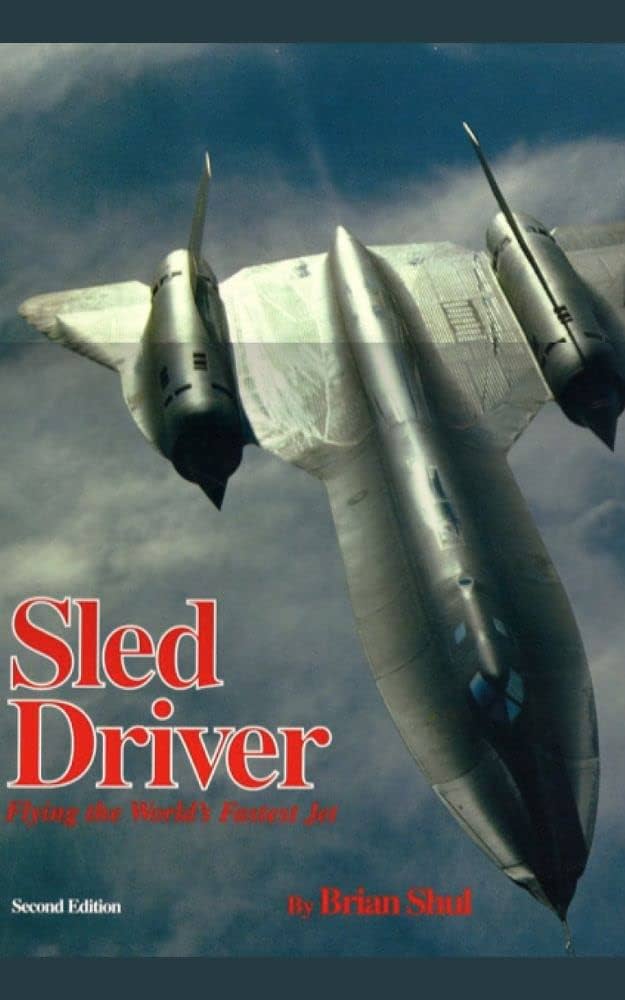
Brian Shul Sled Driver. The story of Brian Shul and his legendary book Sled Driver represents one of the most captivating narratives in aviation history. For decades, aviation enthusiasts, military historians, and curious readers have sought out this remarkable collection of SR-71 Blackbird stories, making it one of the most sought-after aviation books ever published. The combination of Shul’s incredible photography, gripping firsthand accounts, and the mystique surrounding the world’s fastest jet have transformed Sled Driver from a simple memoir into a cultural phenomenon that continues to inspire new generations of aviation lovers.
Brian Shul’s journey from a severely burned Vietnam War pilot to commanding the SR-71 Blackbird stands as a testament to human resilience and determination. His book captures not just the technical marvel of flying at Mach 3+, but the human element behind one of the Cold War’s most classified programs. Understanding the legacy of Brian Shul’s Sled Driver requires exploring both the man behind the stick and the magnificent machine he flew.
Who Is Brian Shul and Why Does Sled Driver Matter?
Major Brian Shul served as a reconnaissance pilot in the United States Air Force, but his path to the SR-71 cockpit was anything but conventional. During his service in the Vietnam War, Shul flew low-level reconnaissance missions in the OV-10 Bronco when his aircraft was shot down over enemy territory. The crash left him with severe burns covering much of his body, and military doctors initially gave him little chance of survival. Multiple surgeons told him he would never fly again, with some suggesting he might never walk normally.
Through sheer determination and countless painful rehabilitation sessions, Brian Shul not only recovered but fought his way back into the cockpit. He eventually qualified to fly the SR-71 Blackbird, one of the most demanding aircraft ever built, requiring pilots to possess exceptional skill, physical fitness, and mental acuity. His selection for the SR-71 program represented the ultimate vindication of his refusal to accept the limitations others tried to impose on him.
The significance of Sled Driver extends far beyond typical aviation literature. Published in 1991, the book combines Shul’s stunning aerial photography with firsthand accounts of flying the Blackbird. Unlike dry technical manuals or sanitized official histories, Sled Driver brings readers into the cockpit through vivid storytelling that captures both the technical complexity and the sheer exhilaration of flying at the edge of space. Shul’s background as a professional photographer meant the book featured extraordinary images that many people had never seen before, showcasing the SR-71 from angles and perspectives that revealed its otherworldly beauty.
What makes Brian Shul’s Sled Driver particularly valuable is its timing. Published shortly after the SR-71’s retirement in 1990, the book emerged when many classified details about the aircraft were finally being declassified. Shul could share stories and information that had been closely guarded secrets throughout the Cold War. The book became an immediate collector’s item, with initial print runs selling out quickly. As demand continued to grow while supply remained limited, Sled Driver transformed into one of the most expensive aviation books on the secondary market, with copies regularly selling for thousands of dollars.
The SR-71 Blackbird: The Sled That Brian Shul Flew
Understanding why Sled Driver resonates so powerfully requires appreciating the extraordinary aircraft at its center. The SR-71 Blackbird stands as perhaps the most iconic aircraft ever built, a titanium marvel that pushed the boundaries of what seemed aerodynamically possible. Designed by Lockheed’s legendary Skunk Works division under Kelly Johnson’s leadership, the SR-71 entered service in 1966 and flew operational missions until its retirement in 1990.
The specifications of the SR-71 read like science fiction even today. The aircraft could cruise at speeds exceeding Mach 3.2 (over 2,200 miles per hour) at altitudes above 85,000 feet, flying so high that pilots could see the curvature of the Earth. At operational speed and altitude, the Blackbird flew faster than a rifle bullet, and its standard evasive maneuver against surface-to-air missiles was simply to accelerate and outrun them. No SR-71 was ever shot down by enemy fire during its operational career, a testament to its incredible performance capabilities.
The aircraft earned its “Sled” nickname from pilots like Brian Shul because of how it handled at different speeds. At lower speeds, the SR-71 was famously difficult to fly, requiring constant attention and feeling somewhat ungainly. But at operational speed and altitude, the aircraft transformed into something magical. Pilots described how the Sled would “come alive” as it accelerated through Mach 3, becoming smooth, stable, and responsive. The aircraft was literally designed to fly fast—its titanium skin would heat to over 600 degrees Fahrenheit at cruise speed, causing the aircraft to expand by several inches. The fuel tanks were designed to leak on the ground, only sealing properly when the metal expanded during high-speed flight.
Sled Driver captures these extraordinary technical details while making them accessible and exciting to readers. Brian Shul explains how pilots wore full pressure suits similar to spacesuits, how they had to pre-breathe pure oxygen before flights to prevent decompression sickness, and how the view from the cockpit revealed a dark purple sky that hinted at the blackness of space just above. These details, combined with Shul’s photographic documentation, give readers an intimate look at an aircraft that remains classified in many respects decades after its retirement.
The Famous Speed Check Story from Sled Driver
No discussion of Brian Shul Sled Driver would be complete without addressing the legendary speed check story, which has become one of the most beloved and frequently shared aviation tales ever told. This story, featured prominently in the book, has taken on a life of its own, spreading across the internet, appearing in forums, and being shared countless times across social media platforms. The tale perfectly captures both the SR-71’s incredible performance and the culture among military aviators.
The story takes place during a routine training flight in the southwestern United States. Shul and his Reconnaissance Systems Officer (RSO) were cruising along the programmed route when they began hearing various aircraft on the radio requesting their ground speed from air traffic control. First, a Cessna pilot asked for his speed and received “90 knots” as a response. Then a twin-engine Beechcraft requested his ground speed and was told “120 knots.” Next, a Navy F-18 pilot, clearly wanting to show off, requested his ground speed, and the controller responded with “525 knots.”
At this point, Brian Shul and his RSO had been listening to this exchange, knowing that they were moving considerably faster than any of these aircraft. Shul’s RSO, displaying the perfect timing and deadpan humor that military aviators are known for, keyed the radio and calmly asked, “Center, Aspen 20, you got a ground speed readout for us?” After a brief pause, the controller replied, “Aspen 20, I show you at 1,982 knots across the ground.” The RSO responded with equal calm, “Uh, that’s probably a little closer to the truth. We’ve got you at 2,000 knots on the money.”
The beauty of this Sled Driver speed check story lies not just in the impressive numbers but in how it illustrates the unique position the SR-71 held in aviation. While other aircraft were fast, the Blackbird operated in a completely different performance category. The story also reveals the camaraderie and good-natured competition among military pilots, as well as the cool professionalism required to fly such an extreme aircraft. Shul’s telling of the story in the book captures both the humor and the pride that SR-71 crews felt in flying such an extraordinary machine.
This anecdote has become so famous that it’s often shared without attribution, but it originated in Brian Shul’s Sled Driver book. The story has been embellished and altered in various retellings, but Shul’s original version remains the authoritative account. It perfectly encapsulates why the book resonates so strongly with readers—it makes the SR-71 program accessible and human while maintaining the sense of awe that the aircraft deserves.
Why Sled Driver by Brian Shul Became So Rare and Valuable
The scarcity and value of Sled Driver has become almost as legendary as the stories within its pages. Original copies of the book regularly sell for $2,000 to $5,000, with some pristine first editions commanding even higher prices. This extraordinary value for a relatively recent book stems from a combination of factors that created a perfect storm of high demand and severely limited supply.
Brian Shul self-published Sled Driver through his own company, making it an independent production rather than a major publisher release. The initial print run was relatively small, aimed primarily at aviation enthusiasts, SR-71 veterans, and military history collectors. Shul made the decision to prioritize quality over quantity, producing a large-format coffee table book with exceptional printing quality that showcased his photographs properly. The book measured 11 by 14 inches with heavy, glossy paper stock that did justice to the stunning imagery inside.
The production costs for such a high-quality book were substantial, limiting how many copies could be economically produced. Additionally, Brian Shul retained tight control over the book’s publication and distribution, choosing not to license it to major publishers who might have produced larger print runs. This decision preserved the book’s quality and Shul’s artistic vision but also meant that Sled Driver never achieved the widespread distribution that a major publisher could have provided.
Demand for the book exploded as word spread through aviation communities about its exceptional quality and unique content. The combination of Shul’s incredible photographs, gripping firsthand stories, and the mystique surrounding the SR-71 program created intense interest. As original buyers held onto their copies and the initial inventory sold out, the secondary market prices began climbing rapidly. Each subsequent limited printing sold out quickly, never quite meeting the sustained demand.
The internet age amplified this phenomenon. As the famous speed check story and other excerpts from Sled Driver circulated online, more people learned about the book and wanted to own a copy. Aviation forums, social media groups, and websites dedicated to military aviation history all contributed to growing awareness. Meanwhile, Brian Shul continued to limit print runs, maintaining the book’s exclusivity and quality. Some critics have suggested that larger print runs could have made the book more accessible, but Shul has remained committed to his original vision of producing a premium product rather than mass-market edition.
Brian Shul’s Photography and Storytelling in Sled Driver
What elevates Sled Driver beyond typical aviation memoir fare is Brian Shul’s exceptional talent as both photographer and storyteller. Before becoming an SR-71 pilot, Shul had developed significant skills as a photographer, understanding composition, lighting, and how to capture dramatic moments. This background proved invaluable when documenting the SR-71 program, as Shul had access to perspectives and opportunities that few photographers ever experienced.
The photographs in Brian Shul Sled Driver showcase the SR-71 from angles that reveal its alien beauty and technological sophistication. Shul captured the aircraft on the ground with its distinctive chined fuselage and twin vertical stabilizers, in flight against dramatic cloud formations, and during aerial refueling operations where the Blackbird met up with KC-135Q tankers. His images show the intricate details of the aircraft’s construction, the special fuel trucks required to service it, and the complex procedures involved in preparing for each mission.
Beyond technical documentation, Shul’s photography captures the human element of the SR-71 program. Images of pilots in their pressure suits, ground crews servicing the aircraft, and the specialized equipment required for operations all contribute to a comprehensive picture of what it took to operate the world’s fastest jet. The photographs have become historically valuable documents, preserving visual records of procedures, equipment, and perspectives that might otherwise have been lost when the program ended.
The storytelling in Sled Driver matches the quality of the photography. Brian Shul writes with a novelist’s sense of pacing and detail, building tension and excitement while explaining complex technical concepts in accessible language. His accounts of specific missions convey the intensity and pressure of operational flying while celebrating the extraordinary capabilities of the aircraft and crew. Stories range from routine training flights that became memorable through unexpected events to operational missions that tested both man and machine to their limits.
Shul’s writing style makes readers feel present in the cockpit, experiencing the physical sensations of high-speed flight, the mental calculations required for navigation and systems management, and the intense focus necessary to safely operate such an extreme aircraft. His descriptions of accelerating through Mach 3, watching the fuel gauges carefully during aerial refueling, and scanning instruments while simultaneously maintaining situational awareness place readers directly into the SR-71 experience. This immersive quality explains much of the book’s enduring popularity and why readers return to it repeatedly.
The SR-71 Program History and Brian Shul’s Role
The SR-71 Blackbird program represents one of the Cold War’s most significant technological achievements, and Brian Shul’s Sled Driver provides unique insights into this classified world. The aircraft emerged from urgent national security requirements during the height of Cold War tensions when the United States needed reliable intelligence about Soviet military capabilities and intentions. Existing reconnaissance methods proved inadequate or too risky, creating demand for an aircraft that could fly deep into hostile territory, gather critical intelligence, and return safely despite enemy attempts to shoot it down.
Lockheed’s Skunk Works division, led by the legendary engineer Kelly Johnson, developed the SR-71 from the earlier A-12 program. The engineering challenges were immense—creating an aircraft that could sustain speeds above Mach 3 required solving problems that had never been addressed before. Conventional aluminum aircraft structure would melt at the temperatures generated by air friction at those speeds, necessitating the use of titanium alloy throughout the airframe. The Soviet Union controlled most of the world’s titanium production, requiring elaborate efforts to obtain sufficient materials without revealing their intended purpose.
The engines designed for the SR-71, the Pratt & Whitney J58, represented technological marvels in their own right. These powerplants functioned as both traditional turbojets and ramjets, transitioning between modes as speed increased. At maximum velocity, approximately 80% of the thrust came from the ramjet bypass ducts rather than the traditional turbojet core. This innovative design enabled sustained Mach 3+ flight, something no other operational aircraft has achieved.
Brian Shul joined the SR-71 program after his remarkable recovery from his Vietnam War injuries, becoming part of an elite community of pilots selected for the Blackbird. The selection process was rigorous, requiring not just exceptional flying skills but also the right temperament and physical characteristics. SR-71 pilots needed to remain calm under pressure, make rapid decisions with limited information, and maintain focus during missions that could last many hours while wearing full pressure suits.
Throughout his time flying the Sled, Brian Shul participated in various operational and training missions that took the SR-71 across the globe. The aircraft flew reconnaissance missions over hostile territory, participated in international exercises, and conducted training flights that maintained crew proficiency. Each mission required extensive planning, careful coordination with support elements, and flawless execution. Sled Driver documents these experiences, providing readers with authentic accounts of what it meant to be part of this extraordinary program.
Content and Chapters Within Sled Driver
The structure of Brian Shul Sled Driver takes readers on a comprehensive journey through the SR-71 experience, organized thematically rather than strictly chronologically. This approach allows Shul to group related stories and concepts together, building understanding progressively while maintaining narrative momentum. Each section of the book combines dramatic storytelling with technical education, ensuring readers gain both emotional connection and factual knowledge.
The opening sections of Sled Driver establish context by explaining how Brian Shul came to fly the Blackbird, including his Vietnam War experience, severe injuries, and determination to return to flying. This personal narrative creates immediate reader investment in Shul’s journey while establishing his credibility and authority on the subject. By sharing his struggles and ultimate triumph, Shul makes the SR-71 story more accessible and human, connecting the technological marvel to individual determination and achievement.
Subsequent chapters explore various aspects of SR-71 operations, including:
- Pre-flight preparation procedures: Detailed explanations of the complex checklists, specialized equipment, and extensive preparation required before each mission
- Pressure suit operations: Accounts of wearing full pressure suits for extended periods, including the physical and psychological challenges involved
- Aerial refueling techniques: Stories about the delicate art of connecting with tanker aircraft at high speeds and altitudes
- Mission profiles: Descriptions of actual reconnaissance missions, training flights, and special operations
- Technical systems: Accessible explanations of the aircraft’s complex navigation, reconnaissance, and propulsion systems
- Ground crew operations: Recognition of the essential support personnel who maintained and serviced the aircraft
- International deployments: Accounts of flying the SR-71 from forward operating locations around the world
Each chapter in Brian Shul’s Sled Driver combines multiple elements—personal anecdotes, technical information, historical context, and stunning photography. This multimedia approach keeps the content engaging while ensuring comprehensive coverage of the SR-71 experience. Shul’s writing never becomes dry or overly technical, maintaining accessibility for general readers while providing sufficient depth to satisfy aviation enthusiasts and professional pilots.
The book also includes sections on the culture and community of SR-71 crews, exploring the relationships between pilots and Reconnaissance Systems Officers, the camaraderie among Blackbird personnel, and the unique challenges of operating such a classified program. These human elements prevent Sled Driver from becoming merely a technical manual, instead creating a rich tapestry that captures both the machine and the people who flew it.
How to Find and Acquire Brian Shul Sled Driver
Acquiring a copy of Brian Shul Sled Driver has become a significant challenge due to the book’s rarity and high demand. Prospective buyers face several options, each with distinct advantages and considerations. Understanding the market for Sled Driver helps potential purchasers make informed decisions about how to add this legendary book to their collections.
The primary source for Sled Driver remains Brian Shul’s official channels when copies become available. Shul occasionally announces limited print runs through his website and social media presence. These official releases represent the best opportunity to acquire an authentic copy at reasonable prices, though even these direct sales typically cost several hundred dollars due to production costs. Buyers interested in obtaining copies through official channels should monitor Shul’s announcements carefully and be prepared to act quickly when new printings are announced, as they sell out rapidly.
The secondary market offers another avenue for acquisition, though prices can be substantially higher. Online marketplaces, rare book dealers, and auction sites regularly feature copies of Brian Shul Sled Driver, with prices varying based on condition, edition, and seller. Key factors affecting secondary market prices include:
- Edition and printing: First editions and early printings typically command premium prices
- Condition: Pristine copies in original condition with dust jackets are most valuable
- Signatures: Copies signed by Brian Shul or other SR-71 crew members carry additional value
- Provenance: Documented history of ownership can increase desirability
- Completeness: All original components including dust jacket and any inserts must be present
Buyers considering secondary market purchases should exercise caution and verify authenticity, as the book’s high value has occasionally attracted counterfeiters. Working with reputable dealers, requesting detailed photographs, and understanding what authentic copies should look like all help protect against fraudulent listings. Legitimate copies of Sled Driver feature specific printing characteristics, paper quality, and binding methods that distinguish them from reproductions.
Some libraries and aviation museums hold copies of Brian Shul Sled Driver in their collections, offering another option for those wanting to experience the book without purchasing a copy. Major aviation museums like the National Air and Space Museum, the Museum of Aviation at Robins Air Force Base, and the Strategic Air Command & Aerospace Museum maintain research libraries where visitors can request access to rare aviation books. University libraries with strong aviation or military history collections may also own copies available for on-site consultation.
Digital alternatives exist for those unable to obtain physical copies, though these do not fully capture the book’s intended experience. Brian Shul has shared selected stories and photographs through his website, presentations, and social media channels. While these excerpts provide taste of Sled Driver’s content, they represent only a fraction of the complete work. The book’s large format and exceptional print quality contribute significantly to its impact, making the physical book a markedly different experience than digital samples.
For travelers exploring aviation history, experiencing Sled Driver can be part of a broader journey. Just as enthusiasts might plan trips from Calgary to Banff drive to experience natural wonders, aviation fans often visit museums housing SR-71 aircraft and research libraries holding rare books like Sled Driver. These pilgrimages allow deep engagement with aviation history in ways that online research cannot fully replicate.
The Legacy and Impact of Brian Shul’s Sled Driver
The influence of Brian Shul Sled Driver extends far beyond its role as an aviation book, shaping how multiple generations understand and appreciate the SR-71 Blackbird program. The book’s impact manifests across various domains—historical preservation, popular culture, aviation education, and collector communities. Understanding this multifaceted legacy reveals why Sled Driver occupies such a unique position in aviation literature.
From a historical preservation perspective, Sled Driver serves as an invaluable primary source document about the SR-71 program. While official histories and technical manuals provide facts and specifications, Shul’s firsthand accounts capture details, procedures, and experiences that formal documentation often omits. His descriptions of operational realities, crew interactions, and daily challenges provide future historians and researchers with insights unavailable elsewhere. As SR-71 veterans age and pass away, books like Brian Shul’s Sled Driver become increasingly important repositories of personal knowledge and experiential wisdom.
The book has significantly influenced popular understanding of the SR-71 Blackbird, shaping how the public perceives both the aircraft and its Cold War context. The famous speed check story in particular has become perhaps the most widely known SR-71 anecdote, shared countless times across internet forums, social media platforms, and aviation communities. This single story has introduced millions of people to the Blackbird who might never have otherwise learned about it, creating broader public appreciation for the aircraft and its capabilities.
Within aviation education, Sled Driver serves as an inspirational text that motivates students, aspiring pilots, and aviation professionals. Flight schools, aviation colleges, and military training programs reference the book when discussing aircraft performance, operational procedures, and pilot mindset. Brian Shul’s personal story of overcoming severe injuries to fly the world’s fastest jet provides powerful lessons about determination, resilience, and refusing to accept limitations. These inspirational elements give the book value beyond its technical and historical content.
The collector community surrounding Brian Shul Sled Driver has grown into a significant subculture within aviation collecting. Enthusiasts trade information about editions, printings, and availability through dedicated forums and social media groups. Some collectors focus on acquiring multiple editions or signed copies, while others seek associated memorabilia like photographs, presentation materials, and other items connected to Brian Shul or the SR-71 program. This active collecting community maintains interest in the book and ensures continued demand for copies.
Brian Shul’s Other Work and Contributions
While Sled Driver remains Brian Shul’s most famous work, his broader contributions to aviation history and photography deserve recognition. Following Sled Driver’s success, Shul continued documenting aviation subjects and sharing SR-71 stories through various media, building a body of work that extends his influence beyond the single book.
Shul has produced additional books exploring aviation themes, though none have achieved Sled Driver’s legendary status. These subsequent works include photographic collections of various aircraft, books about military aviation history, and volumes focusing on specific aspects of flight operations. While different in scope and focus from his SR-71 work, these books demonstrate Shul’s continued passion for aviation photography and storytelling. They maintain the same commitment to quality and authenticity that characterizes Sled Driver, even if market forces and production realities have made some more widely available.
As a public speaker, Brian Shul has shared his SR-71 experiences with audiences around the world. He regularly appears at aviation conferences, museum events, military reunions, and corporate functions, delivering presentations that bring his stories to life. These appearances allow people who cannot obtain copies of Sled Driver to still experience Shul’s storytelling and gain insights into the SR-71 program. His presentations typically include dramatic photography, video footage, and the kind of personal anecdotes that made his book so compelling.
Shul’s photography work extends beyond aviation into other subjects, demonstrating his versatility as a visual artist. He has produced landscape photography, travel images, and documentary projects exploring various themes. This broader portfolio reveals how his photographic skills developed independently of his flying career, with his aviation work representing the intersection of two distinct passions rather than simply documenting his military service.
The inspiration that Brian Shul provides through his personal story equals his contributions through documentation and art. His journey from severe burn victim to SR-71 pilot resonates with people facing their own challenges and obstacles. Shul speaks openly about the physical and psychological difficulties of recovery, the doubt and discouragement he faced, and the determination required to achieve his goals. These messages about resilience, refusing to quit, and pursuing excellence regardless of circumstances have touched countless lives beyond the aviation community.
Comparing Sled Driver to Other SR-71 Books
The literature surrounding the SR-71 Blackbird includes numerous books by various authors, but Brian Shul Sled Driver occupies a unique position within this collection. Comparing Shul’s work to other significant SR-71 books illuminates what makes Sled Driver special and why it commands such devotion among readers.
Richard Graham’s SR-71 Revealed: The Inside Story provides comprehensive technical and operational information about the aircraft, drawing on Graham’s experience as an SR-71 pilot and his extensive research. Graham’s book excels at explaining technical systems, performance capabilities, and operational procedures in detail that satisfies engineers and aviation professionals. However, it maintains a more formal, technical tone compared to Brian Shul’s Sled Driver, prioritizing information density over narrative flow. Readers seeking exhaustive technical details often turn to Graham’s work, while those wanting emotional engagement and storytelling prefer Shul’s approach.
Skunk Works by Ben Rich and Leo Janos explores the development and engineering of the SR-71 and other Lockheed advanced projects from the perspective of the engineers and designers who created them. This book provides fascinating insights into the technical challenges and innovative solutions that made the Blackbird possible. However, it focuses primarily on the development phase rather than operational experience, creating a complementary rather than competitive relationship with Sled Driver. Reading both books provides a more complete understanding—Rich and Janos explain how the SR-71 came to be, while Brian Shul shows what it was like to actually fly the result.
Paul Crickmore has authored multiple books about the SR-71, including Lockheed SR-71: The Secret Missions Exposed and Lockheed Blackbird: Beyond the Secret Missions. Crickmore’s works are extensively researched and well-documented, featuring declassified information about specific missions and operations. His books serve as important historical references, though they lack the personal perspective and emotional resonance that makes Brian Shul Sled Driver so compelling. Crickmore provides the historical framework, while Shul provides the human experience within that framework.
The visual quality of Sled Driver distinguishes it from most other SR-71 books. While other authors include photographs and illustrations, Brian Shul’s professional photography background and his access as an active SR-71 pilot enabled him to capture images of exceptional quality and rare perspectives. The book’s large format and premium production values showcase these photographs properly, creating a visual experience that standard-sized aviation books cannot match. This commitment to photographic excellence justifies Sled Driver’s higher price point and contributes to its status as a premium product.
Frequently Asked Questions About Brian Shul Sled Driver
What is the Brian Shul Sled Driver book about?
Brian Shul Sled Driver is a firsthand account of flying the SR-71 Blackbird reconnaissance aircraft, combining stunning photography with personal stories from Shul’s time as an SR-71 pilot. The book documents both the technical aspects of operating the world’s fastest jet and the human experiences of the pilots and crews who flew it, including the famous speed check story and numerous other memorable missions. It covers everything from pre-flight preparation to operational missions, providing readers with comprehensive insights into the SR-71 program.
Why is Sled Driver by Brian Shul so expensive?
The high cost of Sled Driver stems from its limited production runs, premium quality construction, and overwhelming demand that far exceeds supply. Brian Shul self-published the book with exceptional production values including large format, heavy glossy paper, and superior printing quality. Combined with limited print runs and the book’s legendary status within aviation communities, these factors have driven secondary market prices to $2,000-$5,000 or more for original copies.
Where can I buy Brian Shul Sled Driver?
Copies of Brian Shul Sled Driver occasionally become available through Brian Shul’s official channels when he announces new limited print runs. Otherwise, the secondary market through rare book dealers, online marketplaces, and auction sites offers opportunities to purchase copies, though at significantly elevated prices. Buyers should verify authenticity when purchasing through secondary markets and be prepared for substantial investment given the book’s rarity and collector demand.
What is the famous speed check story from Sled Driver?
The speed check story from Brian Shul’s Sled Driver describes a radio exchange where various aircraft requested their ground speeds from air traffic control, with each progressively faster—a Cessna at 90 knots, a Beechcraft at 120 knots, and an F-18 at 525 knots. When Shul’s SR-71 requested their speed, the controller responded with “1,982 knots,” dramatically demonstrating the Blackbird’s superior performance. This story has become one of the most shared aviation anecdotes in history, perfectly capturing the SR-71’s extraordinary capabilities.
Did Brian Shul write other books besides Sled Driver?
Yes, Brian Shul has authored additional books focusing on aviation photography and military aircraft, though none have achieved the legendary status of Sled Driver. He continues producing photographic work and has explored subjects beyond aviation throughout his career as a photographer. However, Sled Driver remains his most famous and influential work, representing the perfect intersection of his experiences as an SR-71 pilot and his skills as a professional photographer.
How many copies of Sled Driver were printed?
The exact print run numbers for Brian Shul Sled Driver have not been publicly disclosed, but evidence suggests relatively small quantities produced across multiple limited editions. Brian Shul maintained control over production and distribution, deliberately limiting quantities to preserve quality and exclusivity. This limited availability combined with sustained demand has contributed to the book’s rarity and high secondary market values.
Is there a digital version of Sled Driver available?
No complete authorized digital version of Brian Shul Sled Driver exists for purchase or download. Brian Shul has shared selected excerpts, stories, and photographs through his website and presentations, but has not released a full digital edition. The book’s large format and exceptional print quality are integral to its intended experience, making physical copies the definitive way to experience the complete work.
What makes Brian Shul’s photography in Sled Driver unique?
Brian Shul’s professional photography background and his position as an active SR-71 pilot gave him unprecedented access to capture the Blackbird from perspectives few others could achieve. His understanding of composition, lighting, and dramatic visual storytelling combined with intimate knowledge of the aircraft and its operations resulted in photographs that both document and celebrate the SR-71. The technical quality and artistic merit of these images distinguish Sled Driver from typical aviation books, contributing significantly to its legendary status.
Ready to learn more about legendary aviation stories? Discover the incredible world of Brian Shul Sled Driver and experience firsthand accounts of flying the world’s fastest jet. Visit Brian Shul’s official website to stay updated on rare book availability and explore more SR-71 Blackbird content.
Sources: Brian Shul’s official accounts and presentations, SR-71 program documentation, aviation history archives, and firsthand accounts from Blackbird pilots and crew members.
