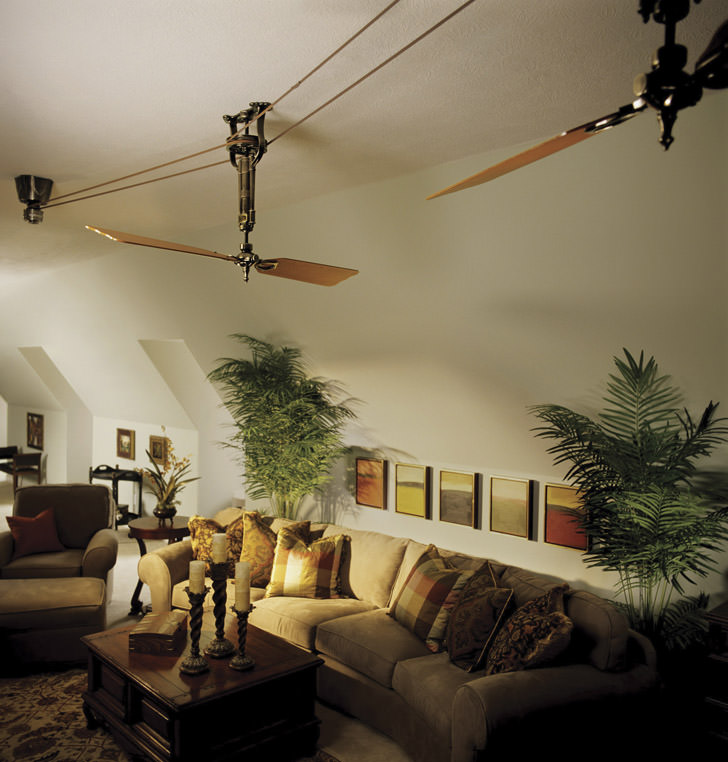
When it comes to cooling your home efficiently and elegantly, few options match the timeless appeal and robust performance of a belt driven ceiling fan. Unlike their direct-drive counterparts that dominate today’s market, belt driven ceiling fans represent a return to superior engineering principles that prioritize durability, power, and whisper-quiet operation. These fans utilize a belt and pulley system to transfer motor power to the blades, creating a mechanical advantage that delivers exceptional airflow while maintaining remarkably low noise levels.
The resurgence of interest in belt driven ceiling fans stems from growing consumer awareness about product longevity and performance quality. In an era where most ceiling fans are designed with planned obsolescence in mind, belt driven models stand as paragons of sustainable manufacturing and long-term value. Homeowners, business owners, and restoration enthusiasts are increasingly recognizing that the initial investment in a belt driven ceiling fan pays dividends through decades of reliable service, reduced energy consumption, and the ability to move significantly more air than comparably-sized direct-drive units. Whether you’re furnishing a new home, upgrading an existing space, or restoring a historic property to period-appropriate specifications, understanding the intricacies of belt driven technology will empower you to make an informed decision that serves your cooling needs for years to come.
Understanding Belt Driven Ceiling Fan Technology and Mechanics
The fundamental distinction between a belt driven ceiling fan and modern direct-drive fans lies in the power transmission system. In belt driven designs, the motor shaft connects to a drive pulley, which turns a belt that subsequently rotates a larger driven pulley attached to the fan blade assembly. This configuration creates a mechanical advantage similar to the gear ratios in a bicycle, allowing the motor to operate at higher, more efficient speeds while the blades rotate at optimal velocities for maximum air circulation. The belt itself typically consists of reinforced rubber compounds designed to withstand continuous operation without stretching, slipping, or degrading over extended periods.
This mechanical separation between the motor and blade assembly provides several critical advantages that directly impact performance and user experience. First, the belt acts as a vibration dampener, preventing the motor’s mechanical oscillations from transferring to the blade assembly and subsequently to the mounting hardware and ceiling structure. This vibration isolation results in dramatically quieter operation compared to direct-drive fans, where every motor vibration transmits directly through rigid mechanical connections. Second, the pulley ratio can be engineered to optimize the relationship between motor speed and blade rotation, allowing manufacturers to utilize more powerful, higher-RPM motors while maintaining blade speeds that maximize air movement without creating excessive noise or turbulence. Third, the physical distance between the motor and blades improves heat dissipation, as the motor’s thermal output doesn’t concentrate directly at the blade hub where it could affect bearing performance and reduce component lifespan.
Key Components of Belt Driven Systems:
- Drive Motor: Typically ranges from 1/8 to 1/2 horsepower, significantly more powerful than direct-drive equivalents
- Drive Pulley: Smaller diameter pulley attached directly to the motor shaft
- Belt: Usually a V-belt or flat belt design rated for continuous duty cycles
- Driven Pulley: Larger diameter pulley that reduces rotational speed while increasing torque
- Bearing Assembly: Heavy-duty bearings that support the blade hub and handle increased mechanical loads
- Tension Adjustment: Mechanism for maintaining proper belt tension over the fan’s operational lifetime
The engineering behind belt driven ceiling fans draws from industrial ventilation principles where reliability and performance outweigh manufacturing cost considerations. Many vintage belt driven fans from the early to mid-20th century remain operational today, testament to the inherent durability of this design philosophy. Modern reproductions and new designs incorporating belt drive technology benefit from advanced materials science, utilizing contemporary bearing technologies, improved belt compounds, and more efficient motor designs while retaining the fundamental mechanical advantages that made these fans legendary for their performance and longevity.
Performance Benefits and Air Circulation Advantages
When evaluating cooling solutions for residential or commercial spaces, the performance metrics of a belt driven ceiling fan consistently outperform direct-drive alternatives in multiple measurable categories. The most significant advantage manifests in cubic feet per minute (CFM) ratings, which quantify the volume of air a fan moves. Belt driven fans typically deliver 30-50% higher CFM values than direct-drive fans with similar blade spans, primarily due to their ability to maintain consistent rotational speeds under load and their capacity to utilize more powerful motors without transmitting excessive vibration or noise to occupied spaces.
The superior airflow generation stems from the belt drive system’s ability to maintain optimal blade tip speeds regardless of air resistance or environmental conditions. As humidity increases or as dust accumulates on blade surfaces, direct-drive fans experience measurable performance degradation because their less powerful motors struggle to overcome increased resistance. Belt driven systems, conversely, maintain their specified performance characteristics because the mechanical advantage provided by the pulley ratio ensures consistent blade rotation even as operational conditions change. This consistent performance proves particularly valuable in large spaces, high-ceiling applications, or environments where air circulation requirements remain critical regardless of seasonal variations or occupancy patterns.
Comparative Performance Data:
| Feature | Belt Driven Fan | Direct Drive Fan |
|---|---|---|
| Average CFM (52″ blade) | 6,000-8,500 CFM | 4,000-5,500 CFM |
| Operational Noise Level | 35-45 decibels | 45-55 decibels |
| Motor Lifespan | 25-50+ years | 8-15 years |
| Blade Speed Consistency | ±2% variation | ±8% variation |
| High-Ceiling Performance | Excellent | Moderate |
| Energy Efficiency | 85-92% | 70-80% |
The energy efficiency advantages of belt driven ceiling fans deserve particular attention, as they directly impact long-term operational costs and environmental footprint. While the motors in belt driven systems typically consume slightly more wattage at peak operation compared to modern DC motor direct-drive fans, the superior air movement efficiency means they achieve desired cooling effects while operating at lower speeds for shorter durations. When factoring in the extended lifespan and reduced replacement frequency, the total energy and resource consumption over a belt driven fan’s lifetime substantially undercuts the cumulative impact of purchasing and disposing of multiple direct-drive units over the same period.
Furthermore, the cooling effectiveness of a belt driven ceiling fan translates directly into reduced air conditioning usage and associated energy costs. Studies conducted by the Department of Energy indicate that effective ceiling fan usage can reduce air conditioning costs by 30-40% during summer months by creating a wind-chill effect that allows occupants to maintain comfort at higher thermostat settings. Given that belt driven fans move significantly more air than their direct-drive counterparts, this energy offset becomes even more pronounced, particularly in larger rooms or open-concept spaces where air circulation challenges would otherwise demand higher air conditioning output.
Installation Considerations and Mounting Requirements
Installing a belt driven ceiling fan requires more careful planning and structural consideration than typical direct-drive fan installations, primarily due to the increased weight and enhanced performance characteristics of these units. Belt driven fans typically weigh between 35-75 pounds depending on blade span and construction materials, compared to 15-25 pounds for average direct-drive fans. This substantial weight difference necessitates robust mounting solutions that exceed standard electrical box specifications, often requiring dedicated support structures anchored directly to ceiling joists or specialized fan-rated junction boxes designed for heavy-duty applications.
The physical dimensions of belt driven fans also demand attention during the planning phase, as the belt and pulley assembly requires additional vertical space between the ceiling and the blade plane. Most belt driven designs require 16-24 inches of downrod length to accommodate the mechanical components while maintaining safe blade clearances from both ceiling and floor surfaces. Building codes typically mandate minimum clearances of seven feet from floor to blade tips and twelve inches from ceiling to blade tops, but optimal performance occurs with greater clearances that allow unrestricted air intake above the blade plane and adequate circulation volume below. For rooms with standard eight-foot ceilings, this clearance requirement often proves challenging, making belt driven fans better suited for spaces with nine-foot or higher ceilings where the installation can be executed according to manufacturer specifications without compromising safety or performance.
Pre-Installation Checklist for Belt Driven Fans:
- Verify ceiling height meets minimum clearance requirements (9+ feet recommended)
- Locate ceiling joists and confirm structural capacity for 100+ pound dynamic loads
- Assess electrical supply adequacy (most require dedicated 15-amp circuits)
- Measure room dimensions to select appropriate blade span (divide room diagonal by 5)
- Confirm attic access if ceiling reinforcement becomes necessary
- Determine control preferences (wall switch, pull chain, or remote operation)
- Review local building codes regarding fan installations and permits
The electrical requirements for belt driven ceiling fans generally align with standard residential wiring specifications, though the higher motor wattages may necessitate dedicated circuit installations in homes with older electrical systems or limited circuit capacity. Most belt driven fans operate on standard 120-volt household current and draw between 1.5-3.5 amps during normal operation, well within the capacity of typical 15-amp lighting circuits. However, electrical best practices recommend dedicating a circuit to ceiling fan applications when feasible, preventing potential interference with other electrical devices and ensuring consistent power delivery that maximizes motor performance and longevity. Professional electricians can assess existing electrical infrastructure and make recommendations for optimal installation approaches that comply with National Electrical Code requirements while supporting reliable fan operation.
When considering installation costs, budget for professional mounting and electrical work unless you possess extensive experience with ceiling structural modifications and electrical system interactions. While a competent DIY enthusiast with proper tools and knowledge can successfully install a belt driven ceiling fan, the combination of substantial weight, mechanical complexity, and electrical requirements makes professional installation advisable for most homeowners. Professional installation typically costs between $200-$500 depending on regional labor rates, existing ceiling structure, and any necessary electrical upgrades, representing a worthwhile investment that ensures safe, code-compliant installation and optimal fan performance. For those seeking cost-effective solutions across various home improvement projects, exploring options from a best budget driver can help balance quality and affordability in your toolkit.
Maintenance Requirements and Long-Term Care
One of the most compelling advantages of investing in a belt driven ceiling fan emerges through the lens of long-term maintenance requirements and overall ownership experience. Unlike sealed direct-drive units that offer no user-serviceable components and must be entirely replaced when motors fail or bearings wear out, belt driven fans embrace a philosophy of maintainability and component replacement that extends functional lifespan decades beyond conventional alternatives. The accessible design of belt drive mechanisms allows owners or qualified technicians to perform routine maintenance tasks that preserve performance characteristics and prevent premature failure, transforming what would otherwise be disposable appliances into multi-generational household fixtures.
The primary maintenance task for belt driven systems involves periodic belt inspection and replacement, typically required every 5-10 years depending on operational hours and environmental conditions. Belt wear manifests through visible cracking, glazing, or loss of flexibility, and replacement represents a straightforward process requiring basic hand tools and 15-30 minutes of work. Replacement belts cost between $8-25 depending on size and quality, making this maintenance requirement exceptionally affordable compared to replacing an entire fan unit. During belt replacement, owners should simultaneously inspect pulley condition, checking for wear grooves, alignment issues, or bearing play that might indicate additional service needs. Proper belt tension proves critical for optimal performance and longevity, with correctly tensioned belts exhibiting approximately 1/2 inch of deflection when pressed firmly at the belt’s midpoint between pulleys.
Annual Maintenance Schedule:
- Every 3 Months: Dust blade surfaces and motor housing to prevent accumulation
- Every 6 Months: Check belt tension and adjust if necessary; inspect for visible wear
- Annually: Lubricate bearings if equipped with grease fittings (some models feature sealed bearings)
- Every 2-3 Years: Clean pulley grooves and inspect for alignment issues
- Every 5-10 Years: Replace drive belt regardless of appearance as preventive maintenance
- Every 10-15 Years: Consider bearing replacement as proactive service
Bearing maintenance constitutes the second critical service area for belt driven ceiling fans, though bearing service intervals typically extend far beyond belt replacement cycles. Quality belt driven fans utilize either sealed lifetime bearings requiring no maintenance or greaseable bearings equipped with zerk fittings that accept periodic lubrication. For fans with serviceable bearings, applying 2-3 pumps of high-quality bearing grease annually ensures smooth operation and prevents premature wear caused by insufficient lubrication. Even when bearings do eventually require replacement after decades of service, the cost and complexity of bearing replacement pale in comparison to complete fan replacement, with bearing sets typically costing $30-75 and installation requiring only moderate mechanical aptitude and standard tools.
The motor itself represents the most durable component in a well-maintained belt driven ceiling fan, with quality motors routinely delivering 30-50 years of reliable service when properly maintained and operated within design specifications. Motor longevity stems from the reduced mechanical stress inherent in belt drive designs, where the motor operates at consistent speeds without the variable loads and vibrations that plague direct-drive configurations. Should a motor eventually fail despite proper maintenance, replacement motors remain available for most popular belt driven fan models, allowing owners to restore functionality for a fraction of complete fan replacement costs. This parts availability extends the practical lifespan of belt driven fans essentially indefinitely, as long as structural components remain sound and replacement parts continue manufacturing or remain available through specialty suppliers serving the restoration and vintage fan communities.
Selecting the Right Belt Driven Ceiling Fan for Your Space
Choosing an appropriate belt driven ceiling fan requires careful consideration of multiple factors that influence both immediate performance and long-term satisfaction. The selection process begins with accurate room measurement and airflow requirement calculation, as blade span must correspond to room dimensions to achieve optimal air circulation without overwhelming smaller spaces or under-serving larger areas. Industry guidelines recommend blade spans of 42-48 inches for rooms up to 225 square feet, 52-56 inches for spaces between 225-400 square feet, and 60 inches or larger for rooms exceeding 400 square feet. However, these recommendations assume standard eight-foot ceiling heights; rooms with higher ceilings benefit from larger blade spans than dimensional calculations alone might suggest, as the increased air volume requires proportionally greater fan capacity to achieve effective circulation.
Motor power represents another critical specification that directly impacts fan performance and suitability for specific applications. Belt driven fans typically feature motors ranging from 1/8 horsepower for smaller residential models up to 1/2 horsepower or greater for commercial and industrial applications. For residential use in rooms with 9-12 foot ceilings, 1/6 to 1/4 horsepower motors provide excellent performance while maintaining reasonable energy consumption and noise levels. Larger rooms, higher ceilings, or applications requiring maximum air movement justify more powerful motors, though buyers should recognize that increased motor power generally correlates with higher purchase prices, greater energy consumption, and potentially elevated noise output, though belt driven designs mitigate noise concerns far more effectively than direct-drive alternatives at comparable power levels.
Blade Material Considerations:
- Solid Wood: Premium appearance, excellent durability, requires periodic refinishing, heavier weight enhances momentum
- Engineered Wood: Cost-effective alternative, good performance, less susceptible to warping than solid wood
- Metal (Aluminum/Steel): Industrial aesthetic, lightweight, maintenance-free finish, optimal for high-humidity environments
- Composite Materials: Balance of performance and affordability, moisture-resistant, consistent performance characteristics
Aesthetic considerations play a significant role in fan selection, particularly for belt driven models that often serve as statement pieces within their installed environments. Belt driven fans naturally evoke vintage, industrial, or craftsman styling due to their exposed mechanical components and robust construction, making them particularly well-suited for spaces decorated in complementary design languages. Many manufacturers offer customization options including blade finishes, motor housing colors, and decorative hardware that allow buyers to coordinate fans with existing décor or create intentional contrast that highlights the fan as an architectural focal point. For homeowners prioritizing authenticity in historic restoration projects, several manufacturers produce faithful reproductions of classic belt driven designs from the early 20th century, complete with period-appropriate details and finishes that maintain historical accuracy while incorporating modern safety features and electrical standards.
The control system interface deserves consideration during the selection process, as belt driven fans accommodate various control approaches with different complexity levels and functionality. Basic pull-chain controls offer simple, reliable operation with minimal installation complexity, though they require users to physically access the fan for speed adjustments. Wall-mounted speed controls provide convenient access without requiring proximity to the fan itself, typically offering variable speed control through rheostat-style interfaces or stepped switching that selects between preset speed settings. Remote control systems represent the most sophisticated option, delivering convenient operation from anywhere in the room while often incorporating additional features like reversing switches, timer functions, and programmable operation schedules, though remote systems add $50-150 to overall system costs and introduce additional electronic components that may eventually require service or replacement.
Commercial Applications and Industrial Use Cases
While residential applications dominate discussions of belt driven ceiling fan technology, commercial and light industrial environments represent ideal deployment scenarios where belt driven advantages shine most brilliantly. Large retail spaces, restaurants, warehouses, workshops, and agricultural facilities all benefit tremendously from the superior airflow, reliability, and low maintenance requirements that characterize quality belt driven designs. In commercial contexts where fan failure disrupts business operations or where climate control costs significantly impact profitability, the enhanced durability and serviceability of belt driven systems justify their higher initial costs through reduced downtime, lower long-term maintenance expenses, and superior energy efficiency compared to multiple smaller direct-drive units.
Restaurant and hospitality applications particularly benefit from the quiet operation characteristics of belt driven fans, as noise pollution directly impacts customer experience and perceived establishment quality. A single 60-inch belt driven ceiling fan operating at moderate speed can effectively circulate air throughout a 600-800 square foot dining area while producing less noise than the ambient conversation levels, maintaining comfort without creating intrusive mechanical sounds that detract from the dining atmosphere. The superior air movement also helps manage cooking odors, prevents temperature stratification that creates uncomfortable hot spots near kitchen areas, and reduces the load on HVAC systems that would otherwise struggle to maintain consistent temperatures throughout spaces with varying occupancy densities and heat sources.
Industrial and Commercial Benefits:
- Warehouse Cooling: Single large fans replace multiple small units, reducing installation complexity
- Energy Cost Reduction: 25-40% reduction in climate control expenses in properly designed installations
- Destratification: Eliminates temperature layering in high-ceiling spaces, improving heat distribution efficiency
- Air Quality: Enhanced air circulation reduces airborne contaminants and moisture concentration
- Employee Comfort: Improved working conditions enhance productivity and reduce heat-related safety concerns
- Maintenance Simplicity: Serviceable design minimizes downtime and reduces replacement costs
Agricultural applications represent another domain where belt driven ceiling fans deliver exceptional value, particularly in livestock facilities where air quality and temperature management directly impact animal health, growth rates, and mortality percentages. Dairy barns, poultry houses, and swine facilities all require robust ventilation systems that operate continuously under challenging conditions including high humidity, airborne particulates, and corrosive atmospheric compounds from animal waste. Belt driven fans withstand these harsh operating environments far more effectively than sealed direct-drive units, as serviceable components allow operators to maintain optimal performance through routine maintenance rather than facing premature failures that compromise ventilation adequacy during critical periods. The enhanced airflow capacity of belt driven designs also means fewer total fan installations are required to achieve desired ventilation rates, reducing both initial installation costs and ongoing energy consumption compared to ventilation approaches relying on numerous smaller fans.
Manufacturing facilities and workshops benefit from belt driven fan installations that manage heat generated by machinery and processes while maintaining acceptable noise levels that comply with occupational safety standards. Metal fabrication shops, woodworking facilities, and light manufacturing operations all generate substantial heat loads that can create uncomfortable or even unsafe working conditions without adequate air circulation. High-capacity belt driven ceiling fans address these cooling challenges efficiently while their durable construction withstands the rigors of industrial environments including vibration from nearby machinery, airborne dust and debris, and occasional impacts that might disable more delicate direct-drive alternatives. The ability to service and repair belt driven fans on-site using readily available components minimizes downtime compared to sealed units requiring complete replacement, ensuring consistent climate control that supports both worker comfort and process requirements.
Cost Analysis and Return on Investment
Understanding the complete financial picture surrounding belt driven ceiling fan ownership requires looking beyond initial purchase prices to evaluate total cost of ownership over realistic operational timeframes. Belt driven fans typically command premium prices ranging from $400-1,500 for residential models and $800-3,000+ for commercial-grade units, compared to $150-500 for quality direct-drive alternatives. This substantial price differential understandably gives many buyers pause, particularly when evaluating options for multiple room installations where cost differences multiply significantly. However, comprehensive cost analysis that factors in replacement frequency, maintenance expenses, energy consumption, and HVAC offset savings reveals that belt driven fans typically achieve cost parity with direct-drive alternatives within 8-12 years, after which they continue delivering positive financial returns for decades.
The longevity advantage constitutes the primary driver of belt driven fans’ superior long-term economics, as their 30-50 year operational lifespan dwarfs the 8-15 year expectancy of direct-drive models. Over a 30-year evaluation period, a homeowner installing direct-drive fans can expect to purchase and install replacement units 2-3 times, incurring not only equipment costs but also installation labor expenses for each replacement cycle. When accounting for inflation and the general trend toward increasing consumer goods prices, the cumulative cost of multiple direct-drive fan purchases easily exceeds the initial investment in a single belt driven unit. Additionally, the environmental and resource consumption implications of manufacturing, shipping, and disposing of multiple fan units over this timeframe adds hidden costs that responsible consumers increasingly factor into purchasing decisions.
30-Year Total Cost Comparison (Per Fan):
| Cost Category | Belt Driven Fan | Direct Drive Fan (3 Units) |
|---|---|---|
| Initial Purchase | $800 | $300 × 3 = $900 |
| Installation | $300 | $200 × 3 = $600 |
| Maintenance | $200 | $0 (sealed units) |
| Energy (@ $0.12/kWh) | $1,296 | $1,620 |
| Total 30-Year Cost | $2,596 | $3,120 |
| Annual Cost | $86.53 | $104.00 |
Energy consumption analysis reveals that while belt driven motors often consume slightly more power than modern DC motor direct-drive fans at comparable speeds, the enhanced air movement efficiency means belt driven units achieve desired cooling effects at lower speed settings and shorter operating durations. A typical belt driven ceiling fan consuming 75 watts while moving 7,000 CFM proves more energy efficient than a direct-drive unit consuming 50 watts while moving only 4,500 CFM, as the belt driven fan delivers the desired cooling effect more rapidly and maintains that effect with less frequent operation. When factoring in the HVAC offset savings that result from reduced air conditioning usage, belt driven fans typically generate net energy savings of $30-75 annually in moderate climates, accelerating their return on investment timeline while simultaneously reducing household carbon footprints.
The resale value and transferability of belt driven fans represent additional financial considerations that favor these premium units, particularly for homeowners who may relocate before reaching the end of a fan’s operational lifespan. Quality belt driven ceiling fans retain substantial resale value in secondary markets, with well-maintained units often commanding 40-60% of their original purchase price even after years of service. This residual value recovery partially offsets initial costs for homeowners who choose to remove fans during relocation, while buyers purchasing homes with installed belt driven fans recognize the value proposition and often factor fan presence into property valuation. Direct-drive fans, conversely, typically hold minimal resale value and are often simply left behind during moves as their low replacement cost doesn’t justify removal and reinstallation efforts.
Where to Buy Belt Driven Ceiling Fans and What to Look For
Sourcing quality belt driven ceiling fans requires more targeted shopping approaches than purchasing conventional direct-drive models, as belt driven options represent specialty products not typically stocked by mass-market retailers. Specialty lighting and fan retailers, both online and in physical locations, represent the primary distribution channel for belt driven fans, offering curated selections from manufacturers specializing in premium and performance-oriented ceiling fan designs. Online retailers provide the widest selection and often the most competitive pricing, though buyers sacrifice the opportunity to examine build quality and mechanical components firsthand before purchase. Physical specialty retailers offer valuable consultation services and hands-on product evaluation but typically maintain smaller inventories and may charge premium prices reflecting their enhanced service offerings and showroom overhead costs.
Reputable manufacturers specializing in belt driven designs include established brands with decades of experience in industrial and commercial fan applications, as well as newer companies bringing contemporary design sensibilities to traditional belt drive technology. When evaluating manufacturers and specific models, prioritize companies offering comprehensive warranties covering both mechanical components and motors for extended periods—quality manufacturers typically provide 5-10 year warranties on motors and mechanical assemblies, reflecting confidence in their products’ durability and performance longevity. Warranty coverage should explicitly address belt drive specific components including belts, pulleys, and tensioning mechanisms, as these represent the serviceable elements that distinguish belt driven fans from sealed alternatives. Be wary of manufacturers offering limited warranties of only 1-2 years, as short warranty periods often signal inferior component quality or limited manufacturer confidence in product longevity.
Evaluation Criteria for Belt Driven Fan Purchases:
- Motor Quality: Look for permanently lubricated or greaseable bearings, thermal overload protection
- Bearing Construction: Heavy-duty ball or roller bearings, sealed or greaseable configurations
- Belt Specifications: Industrial-grade belts rated for continuous duty, easily sourceable replacement sizes
- Blade Attachment: Robust mounting hardware, preferably through-bolted rather than set-screw designs
- Finish Quality: Powder-coated or similar durable finishes resistant to corrosion and UV degradation
- Documentation: Comprehensive installation and maintenance manuals, parts diagrams, service procedures
- Parts Availability: Manufacturer commitment to maintaining replacement parts inventory or using standard components
Customer reviews and ratings provide valuable insights into real-world performance and reliability, though buyers should approach reviews critically and look for patterns rather than individual experiences. Multiple reviews mentioning installation challenges might indicate inadequate documentation or non-standard mounting requirements, while recurring comments about noise issues could signal design flaws or quality control problems. Conversely, consistent praise for customer service responsiveness and parts availability indicates manufacturer commitment to long-term customer support that proves invaluable should service needs arise years after purchase. When possible, seek out reviews from customers who have owned their fans for extended periods (3+ years), as these long-term experiences reveal more about durability and sustained performance than initial impressions from recent installations.
For those seeking authentic vintage belt driven ceiling fans, specialized dealers in architectural salvage and antique building materials offer access to original units from the early to mid-20th century. These genuine antiques provide unmatched character and build quality but require careful evaluation to assess restoration needs and operational condition. Vintage fans often need rewiring to meet contemporary electrical codes, may require bearing service or replacement, and could need refinishing or component fabrication if original parts have deteriorated beyond use. Budget $200-500 for professional restoration services beyond the fan’s purchase price, though the resulting unit will likely outperform and outlast any contemporary alternative while providing authentic period character impossible to replicate with modern reproductions.
You can explore more options and find detailed information about belt driven ceiling fan models from specialized retailers who understand the unique requirements and benefits of this traditional technology.
Energy Efficiency and Environmental Impact
The environmental implications of choosing a belt driven ceiling fan extend well beyond simple energy consumption calculations to encompass product lifespan, manufacturing impact, and end-of-life disposal considerations. From a holistic sustainability perspective, belt driven fans represent superior choices compared to disposable direct-drive alternatives, primarily due to their dramatically extended operational lifespans and repairable construction that prevents premature obsolescence. Manufacturing a single durable ceiling fan that operates for 40-50 years consumes far fewer resources than producing three to five replacement units over the same period, reducing the cumulative environmental burden associated with raw material extraction, manufacturing processes, packaging materials, shipping logistics, and eventual disposal or recycling of obsolete units.
The energy efficiency equation for belt driven ceiling fans proves more nuanced than simple wattage comparisons might suggest, as true efficiency measures must account for air movement effectiveness rather than just power consumption. A fan consuming 80 watts while moving 8,000 cubic feet per minute delivers superior energy efficiency compared to a unit consuming 50 watts while moving only 4,000 CFM, as the higher-performing fan accomplishes the desired cooling effect more rapidly and maintains that effect with less frequent operation. This performance-based efficiency becomes particularly significant when considering HVAC offset potential, as effective ceiling fan usage allows homeowners to reduce air conditioning usage substantially. Research indicates that each degree of thermostat increase during summer months reduces cooling costs by approximately 3-5%, and effective ceiling fan circulation can comfortably support thermostat increases of 4-6 degrees, translating to potential air conditioning cost reductions of 12-30% without sacrificing comfort levels.
Environmental Advantages Summary:
- Reduced Manufacturing Impact: Single 40-year unit vs. multiple 10-year replacements
- Material Conservation: Repairable design prevents premature disposal of functional components
- Lower Shipping Emissions: Fewer lifetime shipments reduces transportation carbon footprint
- Recycling Potential: Component-based design facilitates material recovery at end-of-life
- Energy Payback Period: Manufacturing energy recovered within 2-3 years through operational efficiency
- HVAC Offset: Reduces household cooling energy consumption by 15-30% annually
The materials composition of belt driven ceiling fans generally favors recyclability and environmental responsibility compared to sealed direct-drive units containing integrated electronic controllers and sealed motor assemblies that complicate end-of-life processing. Belt driven fans consist primarily of metal components (steel, aluminum, cast iron) that retain substantial scrap value and can be efficiently recycled through established metal recovery streams. Wooden blade elements can be repurposed, composted, or combusted for energy recovery, while belt materials, though not typically recyclable, represent minimal mass compared to the fan’s overall composition. Direct-drive fans, conversely, contain electronic components, sealed motor assemblies, and composite materials that resist disassembly and often end up in landfills rather than being properly recycled, as the labor costs associated with dismantling these units for material recovery exceed the value of recoverable materials.
The carbon footprint analysis of ceiling fan ownership must consider both operational emissions from electricity consumption and embodied carbon from manufacturing and transportation. While belt driven fans may consume marginally more electricity during operation compared to the most efficient DC motor direct-drive alternatives, this operational differential pales in comparison to the embodied carbon savings achieved through extended product lifespan. Manufacturing processes for ceiling fans generate substantial carbon emissions through raw material processing, component fabrication, assembly operations, and global shipping, with estimates suggesting typical ceiling fan production generates 100-200 kg of CO₂ equivalent emissions. Over a 30-year comparison period, purchasing and disposing of three direct-drive fans generates roughly three times the embodied carbon compared to a single belt driven unit, creating an emissions differential of 200-400 kg CO₂—equivalent to driving 500-1,000 miles in a typical passenger vehicle.
Noise Levels and Acoustic Performance
Among the most immediately noticeable advantages of quality belt driven ceiling fans, acoustic performance stands out as a defining characteristic that transforms the user experience from merely functional to genuinely pleasant. The mechanical isolation provided by belt drive systems fundamentally alters the noise generation profile compared to direct-drive designs, as the belt absorbs and dampens vibrations that would otherwise transmit directly from motor to blades and subsequently to mounting hardware and ceiling structure. This vibration isolation results in dramatically reduced noise emissions across the entire operational speed range, with well-designed belt driven fans producing sound levels comparable to ambient room noise even at maximum speed settings where direct-drive fans would generate clearly audible mechanical sounds.
The acoustic advantages stem from multiple engineering factors working synergistically to minimize noise generation at its sources rather than attempting to mask or absorb sound after generation. The physical separation between motor and blade assembly prevents direct transmission of motor vibration frequencies into structural building elements that could act as sound amplifiers, while the belt itself functions as an elastic isolator that breaks the rigid mechanical coupling responsible for much of the noise associated with direct-drive configurations. Additionally, the ability to utilize larger, slower-rotating blades while maintaining high air movement through increased torque delivery means belt driven fans can achieve superior performance at lower blade tip speeds where aerodynamic noise generation remains minimal. Blade tip speed represents a critical determinant of fan-generated noise, as speeds exceeding approximately 6,000 feet per minute begin producing noticeable aerodynamic sounds regardless of mechanical noise control measures.
Typical Noise Level Comparisons:
- Belt Driven Fan (Low Speed): 30-35 decibels (library quiet, whisper level)
- Belt Driven Fan (Medium Speed): 38-43 decibels (quiet conversation level)
- Belt Driven Fan (High Speed): 45-50 decibels (moderate conversation, refrigerator hum)
- Direct Drive Fan (Low Speed): 40-45 decibels (moderate room noise)
- Direct Drive Fan (Medium Speed): 48-53 decibels (normal conversation level)
- Direct Drive Fan (High Speed): 55-60 decibels (loud conversation, office environment)
Bedroom applications particularly benefit from the quiet operation characteristics of belt driven ceiling fans, as sleep quality proves highly sensitive to ambient noise levels and particularly to rhythmic or mechanical sounds that attract attention and disrupt the transition to sleep. Many individuals find that conventional ceiling fans generate sufficient noise to prove distracting during the falling-asleep period, forcing choices between thermal comfort and acoustic comfort that compromise rest quality. Quality belt driven fans eliminate this compromise, providing robust air circulation that maintains comfortable sleeping temperatures while operating quietly enough to fade into the acoustic background indistinguishable from ambient environmental sounds. This acoustic performance proves especially valuable for light sleepers, individuals with sensory sensitivities, or households with young children whose sleep patterns are easily disrupted by mechanical noises.
The longevity of acoustic performance represents another advantage of belt driven designs, as proper maintenance preserves quiet operation characteristics throughout the fan’s lifespan rather than experiencing the gradual acoustic degradation common with aging direct-drive units. As direct-drive fan bearings wear and mechanical tolerances increase over years of operation, vibration and noise levels typically increase noticeably, transforming initially acceptable fans into irritating noise sources that eventually drive replacement decisions. Belt driven fans, conversely, maintain their acoustic characteristics virtually unchanged over decades when properly maintained, as serviceable bearings can be lubricated or replaced before wear generates noticeable noise increases, and belt replacement addresses the only wear-prone component in the power transmission path before acoustic performance degrades.
Design Styles and Aesthetic Integration
The visual presence of a belt driven ceiling fan in residential and commercial spaces represents a distinctive design statement that works harmoniously with particular aesthetic vocabularies while potentially clashing with others. The exposed mechanical components, robust construction, and substantial physical presence characteristic of belt driven designs naturally complement industrial, rustic, craftsman, and vintage-inspired interiors where visible mechanical elements enhance rather than detract from overall design cohesion. The honest expression of function inherent in belt drive systems—where belts, pulleys, and substantial motor housings remain visible rather than hidden behind decorative shrouds—resonates with design philosophies valuing authenticity, craftsmanship, and the beauty of purposeful engineering over superficial ornamentation.
Contemporary interior design trends increasingly embrace industrial and mixed-material aesthetics where exposed mechanical elements, metal finishes, and functional hardware serve as intentional design focal points rather than
elements to be concealed. This design evolution creates ideal conditions for belt driven ceiling fan integration, as their mechanical honesty and robust construction align perfectly with spaces featuring exposed ductwork, visible structural elements, Edison-style lighting, and metal accent pieces. The substantial visual weight of belt driven fans makes them particularly effective in spaces with high ceilings or large open areas where conventional fans might appear undersized or insignificant, providing both functional air circulation and visual anchoring that helps define spatial proportions and create appropriate scale relationships within oversized rooms.
Design Style Compatibility:
- Industrial/Loft: Natural aesthetic fit with exposed mechanics complementing raw materials and visible infrastructure
- Farmhouse/Rustic: Wooden blades and aged metal finishes enhance authentic rural character
- Craftsman/Bungalow: Period-appropriate designs support architectural authenticity in historic homes
- Transitional: Bridge traditional and contemporary elements through mechanical interest and clean lines
- Workshop/Studio: Functional aesthetic appropriate for creative spaces prioritizing utility
- Commercial/Hospitality: Professional appearance suitable for restaurants, breweries, and retail environments
Customization options for belt driven ceiling fans extend beyond basic finish selections to encompass comprehensive aesthetic personalization that allows integration into diverse design contexts. Many manufacturers offer blade options in multiple wood species, finishes, and lengths, enabling buyers to specify fans that coordinate precisely with existing millwork, furniture, and architectural details. Motor housing finishes typically include powder-coated options in contemporary colors alongside traditional choices like oil-rubbed bronze, brushed nickel, and matte black that work across multiple design periods and styles. Some specialty manufacturers even accommodate custom finish requests, powder-coating components to match specific color requirements for projects demanding precise aesthetic coordination or brand color compliance in commercial applications.
The blade pitch and configuration choices available with belt driven ceiling fans influence both performance characteristics and visual appearance, with steeper blade angles creating more aggressive, purposeful aesthetics while flatter angles present more subtle, understated profiles. Standard residential fans typically employ blade pitches between 12-15 degrees, balancing air movement efficiency with noise control and visual presence. Higher-performance models may utilize pitches up to 18-20 degrees, maximizing air displacement at the cost of increased aerodynamic noise and more pronounced visual impact. The number of blades similarly affects both function and appearance, with three-blade configurations offering maximum efficiency and unobstructed visual simplicity, four-blade designs providing balance between performance and refined appearance, and five-blade arrangements delivering the most traditional aesthetic profile though with marginally reduced efficiency compared to three-blade alternatives.
Historic restoration projects benefit tremendously from the availability of period-accurate belt driven ceiling fan reproductions that maintain visual fidelity to original designs while incorporating modern safety features and electrical standards. Manufacturers specializing in architectural reproduction hardware offer fans based on early 20th-century designs, complete with era-appropriate details like cast iron motor housings, brass pulley components, and authentic finish patinas that would be virtually impossible to distinguish from original period fans without close inspection. These reproduction units allow homeowners and restoration professionals to maintain historical accuracy in significant properties while enjoying the reliability and performance of contemporary manufacturing quality and materials science, eliminating the restoration challenges and potential safety concerns associated with actual vintage equipment.
Safety Considerations and Code Compliance
Operating a belt driven ceiling fan safely requires attention to installation quality, structural adequacy, and ongoing maintenance that ensures mechanical components remain in proper condition throughout the fan’s operational life. The increased weight and enhanced performance of belt driven designs create more demanding installation requirements compared to lightweight direct-drive alternatives, making professional installation advisable for most applications unless the installer possesses extensive experience with ceiling structural modifications and heavy fixture mounting. Improper installation represents the primary safety concern with ceiling fans generally, as inadequate mounting hardware or insufficient structural support can allow fans to detach from ceilings during operation, creating serious injury risks and substantial property damage potential.
National Electrical Code (NEC) requirements mandate that ceiling fans be supported by outlet boxes specifically rated for fan applications and capable of withstanding dynamic loads of at least 70 pounds, though this minimum rating proves inadequate for most belt driven installations. Fan-rated junction boxes designed for heavy-duty applications or direct joist-mounting approaches using fan support brackets provide appropriate structural support for belt driven fans, with installation methods varying based on ceiling construction, joist accessibility, and specific fan weight specifications. Suspended ceiling installations present particular challenges, as standard ceiling grid systems lack the structural capacity to support ceiling fans of any type, requiring either reinforced grid sections specifically designed for fan mounting or independent support structures that bypass the ceiling grid entirely and anchor directly to the building’s structural framework.
Critical Safety Requirements:
- Structural Support: Minimum 100-pound rated mounting hardware anchored to structural framing
- Electrical Supply: Dedicated circuit with properly sized conductors and overcurrent protection
- Clearances: Minimum 7 feet floor-to-blade, 12 inches ceiling-to-blade, 18 inches wall-to-blade
- Balance: Proper blade alignment and weight distribution to prevent wobble and bearing stress
- Guards: Downrod safety cables or additional support mechanisms for high-traffic areas
- Maintenance Access: Adequate clearance for service procedures without ladder instability risks
Electrical safety considerations for belt driven ceiling fans align with general ceiling fan requirements, though the higher motor wattages characteristic of belt driven designs may necessitate dedicated circuit installations in homes with limited electrical capacity or older wiring systems. All electrical connections must comply with NEC requirements including proper grounding, appropriate conductor sizing, and secure connection methods that prevent loosening from vibration over extended operational periods. Ground fault circuit interrupter (GFCI) protection is not typically required for ceiling fan circuits in residential applications unless installations occur in locations specifically mandated by code such as within certain distances of water sources, though GFCI protection provides additional safety margins that may prove valuable in high-humidity environments or outdoor covered applications.
Belt-specific safety considerations center on maintaining proper belt tension and condition throughout operational life, as worn or improperly tensioned belts can fail during operation or generate excessive noise and vibration that accelerates wear on other mechanical components. Regular visual inspections of belt condition should identify developing problems before failure occurs, with replacement indicated when belts show visible cracking, glazing, fraying, or loss of flexibility. Excessively loose belts may slip during operation, creating burning odors from friction heat and potentially causing sudden speed changes that could startle occupants or dislodge improperly secured blade elements. Conversely, over-tightened belts place excessive loads on bearings and pulley shafts, accelerating wear and potentially causing premature bearing failure or shaft damage that necessitates more extensive repairs than simple belt replacement.
Child safety considerations apply to all ceiling fan installations but prove particularly relevant for belt driven units installed in homes with young children, as the exposed mechanical components and moving belt present potential finger-trap hazards if children gain access to the fan’s mechanical assembly. Installations using longer downrods to achieve proper clearances in high-ceiling applications should ensure that the mechanical assembly remains beyond children’s reach even with furniture-assisted climbing, generally requiring mechanical components to be positioned at least 8-9 feet above finished floor levels. For installations where children’s access remains a concern, some manufacturers offer optional protective shrouds or guards that enclose mechanical components while maintaining adequate ventilation for motor cooling, though these accessories add cost and may slightly increase noise levels by trapping and reflecting sound that would otherwise dissipate freely into the surrounding space.
Troubleshooting Common Belt Driven Fan Issues
Even with proper installation and routine maintenance, belt driven ceiling fans occasionally develop performance issues or operational anomalies that require troubleshooting and corrective action to restore optimal function. Understanding common problems, their symptomatic presentations, and appropriate corrective measures empowers owners to address minor issues independently while recognizing situations requiring professional service intervention. The accessibility and serviceability inherent in belt driven designs makes troubleshooting significantly more straightforward than diagnosing problems with sealed direct-drive units, as owners can visually inspect all mechanical components and directly observe system operation to identify malfunction sources.
Excessive noise represents the most common complaint with belt driven fans, though noise issues can stem from multiple distinct causes requiring different corrective approaches. Squealing or chirping sounds typically indicate belt slippage caused by insufficient tension, belt glazing from overheating, or pulley misalignment that causes the belt to ride improperly in pulley grooves. Initial troubleshooting should assess belt tension, with properly tensioned belts exhibiting approximately 1/2 inch deflection when pressed firmly at the midpoint between pulleys. If tension appears adequate, examine the belt surface for glazing—a shiny, hardened appearance indicating heat damage—and inspect pulley alignment by sighting along the belt path to confirm both pulleys lie in the same plane. Belt replacement resolves most squealing issues, while pulley misalignment requires loosening mounting hardware, adjusting pulley position, and retightening while maintaining proper alignment.
Common Issues and Solutions:
| Problem | Likely Cause | Corrective Action |
|---|---|---|
| High-pitched squealing | Belt slippage or glazing | Adjust tension or replace belt |
| Clicking or ticking | Blade imbalance or loose hardware | Balance blades, tighten all fasteners |
| Grinding or rumbling | Bearing wear or failure | Lubricate or replace bearings |
| Vibration or wobble | Blade imbalance or mounting issues | Use balancing kit, verify mounting security |
| Intermittent operation | Electrical connection problems | Inspect and secure all connections |
| Reduced airflow | Belt wear or motor issues | Replace belt, verify motor operation |
Wobbling or vibration issues generally stem from blade imbalance caused by uneven dust accumulation, blade warping, or manufacturing tolerances that create weight distribution irregularities. Blade balancing represents a straightforward process using inexpensive balancing kits available from fan retailers, with the procedure involving attaching weighted clips to blade trailing edges in various positions until wobble minimizes. After identifying the optimal clip position through trial and error, a self-adhesive weight permanently affixes to the blade surface, resolving the imbalance. Before undertaking blade balancing, verify that all blade mounting hardware remains tight and that blades haven’t sustained damage causing distortion or weight changes, as hardware tightening alone sometimes resolves minor wobble issues without requiring formal balancing procedures.
Bearing noise manifests as grinding, rumbling, or rough-running sounds that intensify over time as bearing wear progresses, typically indicating insufficient lubrication or bearing component degradation. For fans equipped with greaseable bearings, applying high-quality bearing grease through zerk fittings often resolves noise issues if caught early before significant wear occurs. Bearings producing grinding sounds despite fresh lubrication have likely suffered damage requiring replacement, a procedure requiring moderate mechanical aptitude and basic tools but remaining well within the capabilities of mechanically inclined homeowners following manufacturer service procedures. Bearing replacement costs typically range from $30-75 for parts plus labor if professional service is required, representing a fraction of complete fan replacement costs while restoring like-new operational smoothness.
Electrical problems manifest as intermittent operation, failure to start, or complete non-operation, with troubleshooting beginning with basic checks of circuit breaker status, wall switch functionality, and connection security at both the fan and electrical supply junction. Many apparent electrical failures result from vibration-loosened wire connections rather than actual component failure, making connection inspection and tightening worthwhile as an initial diagnostic step. If connections appear secure and power reaches the fan, motor failure represents a possibility requiring professional diagnosis or motor replacement, though motor failures remain relatively uncommon in properly maintained belt driven ceiling fans compared to their frequent occurrence in direct-drive designs. When motor replacement becomes necessary, the fan’s repairable construction allows motor swapping without replacing the entire unit, preserving the investment in mounting hardware, blades, and mechanical components while restoring functionality for far less than complete fan replacement costs.
Seasonal Operation and Reversing Functions
Maximizing the year-round utility of a belt driven ceiling fan requires understanding and utilizing reversing functions that adapt airflow patterns to seasonal heating and cooling requirements. During warm weather, fans should rotate counterclockwise (when viewed from below) to create downward airflow that produces the wind-chill effect cooling occupants through increased air movement across skin surfaces. This summer mode operation allows thermostat increases of 4-6 degrees while maintaining comparable comfort levels, translating directly into reduced air conditioning costs and energy consumption. The strong downward airflow characteristic of belt driven fans proves particularly effective for summer cooling applications, as their superior air movement capacity creates noticeable breezes even in large rooms or high-ceiling spaces where weaker fans would fail to generate perceptible air movement at floor level.
Winter operation reverses this airflow pattern, with clockwise rotation (viewed from below) creating upward airflow that draws cool air from floor level and pushes it toward the ceiling where it mixes with stratified warm air accumulating near ceiling surfaces. This destratification process redistributes heat that would otherwise remain trapped near ceilings, improving heating system efficiency by making warm air available at occupancy level rather than wasting energy heating uninhabited ceiling zones. Operating fans at low speeds during winter prevents creating uncomfortable drafts while still achieving beneficial air mixing, with the gentle upward flow remaining imperceptible to occupants while improving temperature uniformity throughout vertical room dimensions. Heating energy savings from winter fan operation typically range from 10-15% compared to non-fan-circulated spaces, though actual savings vary based on ceiling height, insulation quality, and heating system efficiency.
Seasonal Operation Guidelines:
- Summer (Cooling): Counterclockwise rotation, medium to high speed, operate continuously during occupied hours
- Winter (Heating): Clockwise rotation, low speed, operate during heating system operation and occupied periods
- Spring/Fall: Adjust direction and speed based on daily temperature patterns and comfort preferences
- Night Operation: Reduce speed or use timer functions to prevent over-cooling during sleep hours
- Unoccupied Periods: Turn off fans in unoccupied rooms to conserve energy, as fans cool people not rooms
Motor reversing mechanisms in belt driven ceiling fans vary by manufacturer and model, with implementation methods including reversible motors controlled by wall switches, pull-chain reversing switches integrated into fan housings, or remote control systems offering electronic direction control. Reversible motor designs remain most common, requiring only a simple wall switch or pull-chain toggle to change rotation direction without any mechanical adjustments. Some vintage or specialty belt driven fans utilize non-reversible motors requiring mechanical pulley repositioning to change rotation direction, though this design approach has largely been superseded by reversible motors offering convenient direction changes without mechanical disassembly. When selecting a belt driven fan, confirm that reversing functions align with intended usage patterns and personal preferences regarding control convenience, as retrofitting reversing capability onto non-reversible motors proves impractical in most circumstances.
The effectiveness of winter destratification operation increases proportionally with ceiling height, making belt driven ceiling fans particularly valuable in great rooms, vaulted ceiling spaces, and commercial facilities with high ceilings where temperature stratification creates substantial efficiency losses. In spaces with 12-foot or higher ceilings, temperature differentials between floor and ceiling levels can exceed 10-15 degrees Fahrenheit without air circulation, meaning heating systems must maintain excessively high ceiling temperatures to achieve adequate comfort at floor level. Fan-driven air mixing eliminates most of this stratification, reducing the temperature differential to 2-3 degrees and allowing heating system thermostats to be reduced by 3-5 degrees while maintaining equivalent comfort levels at occupancy heights. For commercial spaces operating continuously throughout heating seasons, these energy savings can represent thousands of dollars annually, providing compelling economic justification for belt driven fan installations even when cooling benefits alone wouldn’t justify the investment.
Integration with Smart Home Systems
Modern belt driven ceiling fans increasingly incorporate smart home integration capabilities that allow remote operation, automation, and integration with broader home control ecosystems despite their fundamentally mechanical nature. While the belt driven mechanical systems themselves remain purely mechanical without electronic components, the motor control systems can accommodate smart switches, controllers, and receivers that provide contemporary convenience features without compromising the mechanical advantages that make belt driven fans desirable. This integration of traditional mechanical excellence with modern control technology represents an optimal balance, preserving reliability and serviceability while adding functionality that contemporary homeowners expect.
Smart ceiling fan controllers replace conventional wall switches with intelligent devices offering remote operation via smartphone apps, voice control through systems like Amazon Alexa or Google Assistant, and automation based on temperature sensors, occupancy detection, or schedule programming. These controllers modulate power delivery to fan motors through variable voltage or switching approaches that control speed while monitoring energy consumption and providing usage analytics through associated mobile applications. Installation typically involves replacing existing wall switches with smart controllers, a straightforward electrical upgrade requiring no modifications to the fan itself while immediately adding comprehensive smart home functionality. Controller costs range from $40-120 depending on feature sets and integration capabilities, representing modest investments that substantially enhance fan usability and convenience.
Smart Home Integration Features:
- Voice Control: Operate fans through natural language commands to virtual assistants
- Remote Access: Control fans from anywhere via smartphone apps, ideal for vacation homes
- Automation: Temperature-based operation, occupancy-triggered activation, schedule programming
- Energy Monitoring: Track consumption patterns and optimize operation for efficiency
- Scene Integration: Include fans in whole-home automation scenes and routines
- Geofencing: Automatic operation adjustments based on homeowner proximity to residence
Alternatively, some homeowners prefer integrating belt driven ceiling fans into smart home systems through smart outlets or relay modules that control power delivery without requiring wall switch replacement. This approach proves particularly useful in rental properties or situations where permanent electrical modifications face restrictions, as smart outlets simply plug into existing receptacles without any wiring changes. However, this control method typically offers only on/off functionality rather than variable speed control, limiting operational flexibility compared to dedicated smart fan controllers. For applications where simple automated on/off scheduling meets operational requirements, smart outlets provide cost-effective integration solutions requiring minimal installation effort.
Sensor-driven automation represents perhaps the most valuable smart home integration capability for ceiling fans, as automated operation based on temperature, humidity, or occupancy eliminates the need for manual adjustments while optimizing comfort and energy efficiency. Temperature-based automation can activate fans when room temperatures exceed predetermined thresholds, providing supplemental cooling that reduces air conditioning runtime and associated energy costs. Humidity-triggered operation proves valuable in bathrooms or other moisture-prone areas where fan operation helps control humidity levels and prevent mold growth, with automated operation ensuring adequate ventilation without requiring occupant intervention. Occupancy-based control activates fans upon room entry and deactivates them after departure, preventing wasted energy from fans operating in unoccupied spaces while ensuring immediate comfort upon room occupancy.
The long operational lifespan of belt driven ceiling fans makes them particularly well-suited for smart home integration investments, as the control infrastructure installed today will continue providing value for decades as the fan remains operational. This contrasts sharply with direct-drive fans whose limited lifespans mean smart home integrations may outlive the fans themselves, requiring reinstallation and reconfiguration with replacement fans. The stability of belt driven mechanical systems also enhances smart home integration reliability, as the absence of internal electronics means electromagnetic interference, electronic component failures, or compatibility issues remain impossible, with all smart functionality residing in external controllers that can be independently serviced or upgraded without affecting fan operation.
Professional vs. DIY Installation Decisions
Determining whether to professionally install a belt driven ceiling fan or undertake installation as a do-it-yourself project requires honest assessment of skill levels, tool availability, and the specific challenges presented by your installation location. While mechanically competent homeowners with electrical experience can successfully install belt driven fans, several factors complicate these installations compared to standard direct-drive fan projects, including substantial weight requiring secure structural mounting, electrical requirements potentially involving circuit modifications, and mechanical assembly procedures that demand attention to belt tension and alignment specifications. Professional installation eliminates uncertainty and ensures code-compliant results while providing warranty protection against installation-related issues, though at costs typically ranging $250-500 depending on complexity and regional labor rates.
DIY installation becomes viable when multiple favorable conditions align, including accessible ceiling structure allowing straightforward mounting hardware installation, adequate existing electrical supply eliminating the need for circuit modifications, comfortable working conditions with stable ladder positioning, and installer confidence working with both electrical systems and mechanical assemblies. The weight of belt driven fans necessitates two-person installation teams for most projects, as one person alone struggles to safely position and secure 40-70 pound fans while working from ladders at ceiling heights. Even with assistance, plan for 3-5 hours to complete first-time belt driven fan installations, accounting for unpacking and component inventory, mounting hardware installation, electrical connections, mechanical assembly, belt installation and tensioning, blade mounting and balancing, and final functional testing and adjustment.
DIY Installation Requirements:
- Tools: Stud finder, drill with various bits, screwdrivers, adjustable wrenches, wire strippers, voltage tester, ladder, belt tension gauge (optional but recommended)
- Skills: Basic electrical work, ceiling structural modifications, mechanical assembly, troubleshooting
- Assistance: Second person for lifting and positioning during critical installation phases
- Time: 3-5 hours for straightforward installations, potentially longer with complications
- Knowledge: Understanding of electrical code requirements, structural load paths, ceiling construction types
Professional installation provides value beyond mere labor, as experienced installers bring expertise in ceiling structure assessment, appropriate mounting hardware selection, electrical code compliance, and mechanical assembly techniques that ensure optimal performance from initial operation. Professionals also carry liability insurance covering property damage or injuries resulting from installation errors, protection that proves invaluable should catastrophic mounting failures occur. Many belt driven ceiling fan manufacturers require professional installation to maintain warranty validity, particularly for commercial applications or higher-value residential models, making professional installation a prerequisite for warranty protection regardless of DIY capability. Review warranty terms carefully before proceeding with self-installation, as voiding warranty coverage through improper installation could prove expensive should manufacturing defects or component failures manifest after installation.
The complexity differential between replacing existing ceiling fans and new installations favors DIY approaches for replacement scenarios where structural mounting and electrical supply already exist in appropriate configurations. Replacing a failed fan with a belt driven upgrade requires only disconnecting the old unit, potentially upgrading mounting hardware if weight ratings prove insufficient, making electrical connections, assembling mechanical components, and balancing blades—procedures within reach of moderately skilled DIYers. New installations in locations without previous fan presence present greater challenges, as they typically require ceiling structure modifications to install appropriate blocking or fan-rated junction boxes, running new electrical circuits from service panels to fan locations, and cutting ceiling openings in finished surfaces—procedures that individually present challenges and cumulatively argue for professional installation unless the homeowner possesses comprehensive remodeling experience.
Cost-benefit analysis of professional versus DIY installation should account for time value, tool acquisition needs, and risk factors beyond simple labor cost comparisons. If installation requires purchasing specialized tools unlikely to see future use, professional installation costs may actually undercut DIY expenses when amortizing tool purchases across single-project usage. Similarly, time invested in DIY installations carries opportunity costs representing alternative activities forgone during installation periods, whether recreational pursuits, family time, or income-producing activities. For professionals or businesspeople whose time carries high implicit values, professional installation often proves more economical even before considering expertise differences or risk mitigation factors.
Frequently Asked Questions About Belt Driven Ceiling Fans
What is a belt driven ceiling fan and how does it differ from regular fans?
A belt driven ceiling fan uses a belt and pulley system to transfer power from the motor to the blades, rather than the direct connection found in standard fans. This mechanical separation provides superior air movement, quieter operation, and dramatically longer lifespan—typically 30-50 years compared to 8-15 years for direct-drive models.
Are belt driven ceiling fans more expensive to operate?
While belt driven fans may consume slightly more electricity per hour than modern DC motor fans, they actually prove more cost-effective over time. Their superior airflow allows lower speed operation for equivalent cooling, and their 30-50 year lifespan eliminates the repeated replacement costs associated with shorter-lived alternatives, typically achieving cost parity within 8-12 years and generating net savings thereafter.
How often does the belt need to be replaced?
Under normal residential use, belts typically require replacement every 5-10 years depending on operational hours and environmental conditions. Belt replacement represents a simple 15-30 minute maintenance task costing $8-25 for replacement belts, making this periodic maintenance exceptionally affordable compared to complete fan replacement.
Can I install a belt driven ceiling fan on an 8-foot ceiling?
While technically possible, belt driven fans perform best on ceilings 9 feet or higher due to their mechanical assembly requiring 16-24 inches of downrod length. Building codes mandate minimum clearances of 7 feet from floor to blade tips, which can prove challenging to achieve on 8-foot ceilings while maintaining proper ceiling clearances and accommodating the belt mechanism.
Are belt driven ceiling fans noisy?
Quality belt driven ceiling fans operate more quietly than direct-drive alternatives, typically producing 35-50 decibels depending on speed settings—comparable to quiet conversation or library environments. The belt acts as a vibration dampener, preventing motor oscillations from creating the mechanical noise common with direct-drive designs.
Do belt driven fans work with smart home systems?
Yes, belt driven fans integrate easily with smart home systems through smart switches or controllers that replace conventional wall switches. These devices provide voice control, remote operation, automation, and scheduling without requiring modifications to the fan’s mechanical systems, preserving reliability while adding contemporary convenience features.
Where can I buy replacement belts and parts?
Replacement belts for standard belt driven ceiling fans are available through fan manufacturers, specialty fan retailers, and industrial supply distributors. Many belt driven fans use standard belt sizes available at automotive or industrial supply stores, ensuring parts availability even decades after purchase. Manufacturers committed to long-term customer support maintain replacement parts inventories for their fan models indefinitely.
Can belt driven fans be used outdoors?
Yes, many manufacturers offer belt driven ceiling fans rated for outdoor use in covered applications such as porches, patios, and pavilions. Outdoor-rated models feature weather-resistant finishes, sealed bearings, and corrosion-resistant materials designed to withstand humidity and temperature variations while delivering the same performance and longevity advantages as indoor models.
Ready to experience superior cooling performance that lasts for decades? Explore the extensive selection of premium belt driven ceiling fan models available from specialized retailers who understand your unique requirements. These timeless mechanical marvels deliver unmatched air circulation, whisper-quiet operation, and remarkable durability that transforms them from simple appliances into multi-generational household fixtures. Whether you’re furnishing a new home, upgrading existing cooling infrastructure, or restoring a historic property, investing in a belt driven ceiling fan represents a commitment to quality, sustainability, and long-term value that will serve your family for decades to come. Don’t settle for disposable cooling solutions when superior belt driven technology offers proven performance that stands the test of time.
